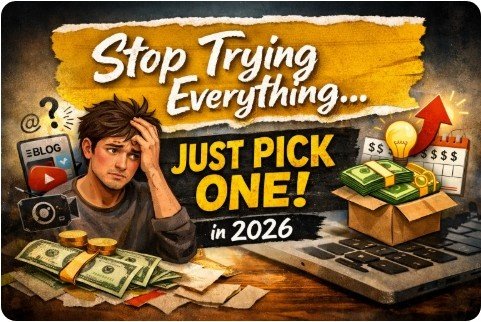
I didn’t get this at first. Honestly… I used to chase quick money online. You know, those random ₹500 here, ₹1000 there kind of wins. Felt good for a day. Maybe two. Then nothing. Back to zero.
And it’s weird how exhausting that is. Like… you’re always starting over. Always hunting. No stability. No idea what next month looks like.
Then somewhere along the way, I heard this phrase — online monthly income — and I kinda ignored it. Sounded boring. Slow. Not exciting like “earn fast money today.” But… yeah. That’s the point.
Because one-time money? It disappears. Fast.
Recurring income online? It stays. Or at least… it tries to stay.
In 2026, everything feels unstable. Jobs don’t feel permanent. Prices keep going up. Even side hustle 2026 ideas… half of them are just trends that die in 3 months. I’ve tried a few. Didn’t last. Didn’t pay consistently.
So now I think differently.
I don’t ask, “Can I make money today?”
I ask, “Will this pay me next month… and the month after that?”
Big difference.
Like freelancing once vs having a client who pays you every month.
Or writing one random blog vs building something that brings traffic again and again.
Or selling one product vs something people keep buying.
That’s when online earning in 2026 starts making sense.
It’s not about doing more work. It’s about doing something once… and letting it keep working a little longer. Not fully passive, no. That word is kinda overrated. But still… less panic. Less chasing.
And yeah, building multiple income streams online sounds fancy, but really it just means… not depending on one fragile thing. Because I’ve been there. One source disappears and everything collapses. Not fun.
So if you’re thinking, “is online earning worth it in 2026?” — I mean… yeah, but not the quick-money version.
Go for something that repeats.
Something small. Something boring even.
Because boring money… is actually the most peaceful kind.
Section 2: How I ranked the best online methods
Okay… so I didn’t just sit down and randomly list ideas like most posts do. I’ve actually tried a bunch of these. Some worked. Some… yeah, wasted weeks of my life I’m not getting back.
At some point I got tired of that feeling — you know, jumping from one “best online method” to another, hoping this one will finally give monthly income. So I slowed down and asked myself a simple question:
Why do some methods actually pay every month… and others don’t?
That’s where this little ranking system came from. Not perfect. But honestly, it saved me from chasing nonsense.
The way I looked at each method
I kept it very basic. No fancy formulas. Just stuff that actually matters in real life.
- Startup cost
Like… can I start this with ₹0 or do I need to invest? Because not everyone has money sitting around. I didn’t. - Time to first income
This one hurt me the most. Some things take months before you earn even ₹1. Others? You can get paid in a week if you move fast. - Difficulty / skill level
Be honest here. If something needs years of skill, it’s not “beginner friendly,” no matter what YouTube says. - Monthly income potential
Not just “you can earn money”… but can it actually give consistent monthly income? That’s the whole point. - Passive potential
Can it keep earning even when you’re tired, sick, or just don’t feel like working? Or does income stop the second you stop? - Scalability
This one is big. Can you grow it… or are you stuck trading time for money forever?
The part most people skip (and regret later)
I didn’t just ask, “Can this make money?”
I asked:
- Will this still work after 6 months?
- Will I burn out doing this daily?
- Can this become stable… not just random income?
Because honestly… making ₹5,000 once feels good.
But making ₹5,000 every month? That hits different.
Why this matters (like actually matters)
When people search things like:
- which online income method is best for beginners
- best online income ideas with low investment
- fastest online income methods
They don’t want 50 ideas. They want one thing that works for them.
I didn’t understand that earlier. I kept collecting ideas like bookmarks. Never stuck to one.
So yeah… this framework? It’s basically me trying to fix my own mess.
And if you’re reading this thinking, “I just want something that actually works and pays monthly”…
same. That’s exactly why this section exists.
Section 3: Quick comparison table of the best online methods
I wish someone had just shown me something like this earlier.
Not a long lecture. Not 50 “ideas” that all sound good but go nowhere. Just… a simple comparison. Like, okay, what actually works, how fast, how hard, and will it pay rent or just chai money?
Because I’ve tried random stuff. Jumped from one thing to another. Blogging one week, freelancing the next, then watching YouTube videos thinking “this is it”… and then nothing. So yeah… this little table? This is the kind of thing I needed when my brain was already tired.
Anyway, here it is — a very real, no-nonsense online income comparison. Not perfect, but honest.
Quick comparison (don’t overthink it… just scan and feel it)
| Method | Best for | Startup cost | Time to first income | Monthly income potential | Passive or active | Difficulty |
|---|---|---|---|---|---|---|
| Freelancing | People with skills (writing, design, coding) | ₹0–₹5,000 | 1–4 weeks | ₹20K–₹2L+ | Active (can become semi-passive) | Medium |
| Blogging | Patient people (long-term thinkers) | ₹3K–₹10K | 3–6 months | ₹10K–₹1L+ | Passive-ish | Medium |
| Affiliate marketing | Content creators | ₹0–₹5,000 | 2–4 months | ₹20K–₹2L+ | Passive | Medium |
| Digital products | Creative thinkers | ₹0–₹3,000 | 1–3 months | ₹10K–₹1L+ | Passive | Medium |
| Online tutoring | Teachers / subject experts | ₹0 | 1–2 weeks | ₹15K–₹80K | Active | Easy–Medium |
| Content creation | Consistent creators | ₹0–₹5,000 | 2–6 months | ₹10K–₹3L+ | Mixed | Hard (at start) |
| E-commerce / POD | Business-minded people | ₹5K–₹20K | 1–2 months | ₹20K–₹2L+ | Semi-passive | Medium–Hard |
| Virtual assistant | Beginners / admin skills | ₹0 | 1–3 weeks | ₹10K–₹50K | Active | Easy |
Look… no method here is “easy money.” I hate when people say that.
Even the ones marked “easy”… they’re only easy to start, not to stick with. That’s the part nobody tells you. You get bored. You doubt yourself. You refresh your phone every 5 minutes waiting for that first payment notification… nothing comes… you feel stupid. Yeah, been there.
But if you’re trying to figure out the best online method for monthly income, don’t pick based on hype. Pick based on you.
- If you need money fast → freelancing or tutoring
- If you can wait → blogging or affiliate
- If you hate clients (like me sometimes) → digital products or content
I mean… even this online side hustle comparison isn’t perfect. Life isn’t a table. You’ll still mess up, switch paths, come back again. That’s normal.
Just don’t try all of them at once. That’s where everything breaks.
Pick one. Stick. Struggle a bit. Then… maybe it starts working.
Slowly. Annoyingly slowly. But yeah… it does.
Section 4: Freelancing – the fastest skill-based path to monthly income
I didn’t start freelancing because I was passionate about it.
I started because… honestly, I needed money. Like, actual monthly income, not this random ₹500 here, ₹1000 there kind of thing.
I remember sitting with my laptop, slow internet, half-working keyboard, and typing “how to start freelancing in 2026”… and getting overwhelmed. Everyone looked successful. Everyone already knew something. I didn’t.
I mean… what even is freelancing for beginners, right? It sounds fancy. It’s not.
It’s just… you have a skill, someone needs that skill, you agree on money. That’s it. No office. No boss (well… clients are mini bosses, but okay).
So what skills actually work?
This part confused me a lot in the beginning. I thought I needed something “special.” Some rare talent.
Nope.
The stuff that works is very normal:
- content writing (blogs, website content… literally what you’re reading now)
- graphic design (logos, thumbnails, social media posts)
- video editing (short videos, reels, YouTube edits)
- web development (websites, landing pages)
- social media management (posting, replying, growing accounts)
And here’s the weird thing…
you don’t need to be amazing at first. You just need to be slightly better than someone who knows nothing.
I wasn’t confident at all. My first writing gig? I charged way too low. Like embarrassingly low. But I got paid. That feeling… different.
Best niches (aka where the money actually is)
Okay so not all freelancing work pays the same. Some niches… they just pay better.
From what I’ve seen (and struggled through):
- SaaS writing (tech companies, boring but pays well)
- YouTube video editing (huge demand right now)
- Instagram / short-form content editing
- website design for small businesses
- email marketing copywriting
- local business social media management
Basically… if a business can make money from your work, they’ll pay you.
Simple logic, but I ignored it for months.
Platforms… where do you even start?
Everyone talks about platforms. Upwork, Fiverr, Freelancer… yeah, they work. But also… they’re crowded. Like really crowded.
I tried Fiverr first. Nothing happened for weeks. I almost quit.
Then I randomly messaged a small business on Instagram. Not even a perfect message, just something like:
“Hey, I saw your page… I can help with your content if you want.”
That turned into my first proper client.
So yeah:
- Upwork (good but competitive)
- Fiverr (slow at first)
- LinkedIn (underrated honestly)
- Instagram (surprisingly powerful)
- cold emails (awkward… but works)
If I had to restart, I’d focus more on direct outreach instead of just waiting on platforms.
The retainer thing (this changed everything for me)
At first, I worked per project.
One article → paid
One design → paid
Then… nothing
And I’d panic again. Because no consistency.
Then someone told me about retainers.
Basically:
“Hey, I’ll work with you every month for a fixed amount.”
Game changer.
Example:
- 10 posts per month = ₹15,000
- or 4 videos per week = ₹25,000/month
Now suddenly… you have freelance monthly income, not random payments.
It’s more stable. Less stressful. Still not perfect, but way better.
Getting your first 3 clients (this part is messy)
No one tells you how uncomfortable this is.
You’ll doubt yourself. You’ll overthink every message. You’ll feel like you’re bothering people.
I did all of that.
What actually worked for me:
- Pick ONE skill (don’t try everything)
- Create 2–3 sample works (even fake ones… yeah, I did that)
- Message people daily (like 10–20… feels painful but do it)
- Don’t sound robotic… just be normal
- Follow up (most people ignore first message)
And yeah… expect rejection. Or silence. Mostly silence.
But then one reply comes. Then another. Slowly it builds.
Realistic monthly income (not the fake YouTube numbers)
Let me be honest here because I got misled a lot.
First month? Maybe ₹5,000 – ₹10,000
After 2–3 months? ₹15,000 – ₹30,000
After 6 months (if consistent)? ₹50,000+ is possible
Some people earn way more. But they’ve been doing it longer.
Freelancing isn’t instant money. But it’s probably the fastest way to build online monthly income using just skills… no big investment, just time and effort.
I still remember the first time I crossed ₹20,000 in a month from freelancing. It didn’t feel like success… it felt like relief.
Like okay… this can actually work.
And yeah, it’s not perfect. Clients can be annoying. Work can pile up. Some days you question everything.
But compared to doing nothing and waiting… this feels real.
So if you’re stuck, confused, scrolling through “best freelancing skills for monthly income” and not starting…
Just pick one thing.
Mess it up.
Learn.
Repeat.
That’s literally how it begins.
Section 5: Affiliate marketing – best for content-driven recurring income
I didn’t get affiliate marketing the first time I heard about it.
Honestly, I thought it was some scammy thing… like those random links people drop and say “buy this and I’ll get money.” Felt weird. Felt fake. So I ignored it.
Then one random night — around 2 AM, scrolling YouTube — I saw a guy explaining how he makes money from a blog he wrote like… two years ago. And I paused. Went back. Watched again.
Wait… money from something you already made?
That part stuck.
So yeah, affiliate marketing is basically this — you recommend something (a product, tool, service), and if someone buys through your link, you earn a commission. That’s it.
But… the real magic is not the link.
It’s the content.
Blog vs YouTube vs social media (this confused me a lot)
I used to think you need a blog. Like a proper website, fancy theme, all that.
Not true.
You can do this in three main ways:
- Blog / niche website → slow… but steady, like planting a tree and waiting
- YouTube → faster trust, people see your face (or even faceless videos now)
- Social media (Instagram, Twitter, even WhatsApp groups) → quick reach, but kinda unstable
I tried Instagram first. Big mistake.
I posted random stuff. No niche. No plan. Just vibes.
Result? Zero clicks. Zero income. Just likes from friends who didn’t buy anything.
Then I switched to writing… simple review content. Not perfect. Not SEO expert level. Just… “I used this tool, this is what happened.”
That’s when things started moving. Slowly. Very slowly. But still.
How commissions actually become “monthly income”
This part no one explains clearly.
You don’t earn monthly because of one sale. That’s not how it works.
You earn monthly because:
- your content stays online
- people keep finding it
- they keep clicking your links
It stacks.
One blog post → maybe ₹0
Then suddenly → ₹200
Then ₹1,500
Then ₹7,000… and you’re like wait, what just happened?
I still remember the first time I earned money while sleeping. Not even joking. I woke up, checked email, saw “commission earned.”
I thought it was fake.
It wasn’t.
That feeling… yeah, hard to explain.
Best niches (learned this the hard way)
Not all niches work the same.
I wasted months writing about random stuff — motivation, quotes, general topics. People read, but no one buys anything there.
Affiliate income comes from intent.
These niches work better:
- Tech tools (hosting, AI tools, apps)
- Finance (credit cards, investing apps)
- Education (courses, software, learning platforms)
- Health (but tricky, needs trust)
- Blogging / making money online (meta, I know…)
Basically… anything where people are already thinking:
“Should I buy this?”
That’s your moment.
Content that actually converts (not what I expected)
I thought long articles would work best. Like 3000+ words.
But nah… what worked for me:
- “Best tools for X”
- “X vs Y comparison”
- “Honest review after 30 days”
- “Is this worth it in 2026?”
Simple. Direct. No drama.
People don’t want poetry. They want answers.
And weirdly… the posts I wrote casually performed better than the ones I tried to make “perfect.”
So yeah… perfection is overrated here.
Common mistakes (I made almost all of them)
Let me just list them… because I wish someone told me earlier:
- Promoting too many things at once
- Not trusting the product (this one hurts your credibility fast)
- Writing without understanding what people are searching
- Giving links without context
- Expecting quick money (big one… like really big)
I remember refreshing my dashboard every hour… nothing.
It takes time. Like… annoying amount of time.
But once it clicks, it kinda keeps going.
So… how much can affiliate marketing make per month?
Depends.
I know, boring answer. But true.
- Some people earn ₹5,000/month
- Some ₹50,000
- Some way more
It depends on:
- traffic
- niche
- trust
- consistency
But yeah, if you’re wondering how to start affiliate marketing in 2026, you don’t need money. You just need… patience. And a bit of stubbornness.
Because you’ll feel like quitting. A lot.
Anyway…
If you like writing, or talking, or even just explaining things in your own weird way… affiliate marketing kinda fits.
It’s not fast. It’s not easy.
But it’s one of those things where — once it starts working — it doesn’t stop just because you took a day off.
And honestly… that part matters more than anything.
Section 6: Blogging and niche websites – slow start, strong long-term income
I’ll be honest… blogging didn’t make me money for a long time.
Like, months. Not days. Not weeks. Months where I kept refreshing my analytics like an idiot, thinking—maybe today something will happen. Nothing.
I remember writing 20… maybe 30 posts. Felt proud. Thought I cracked something. My earnings? Zero. Not even ₹1. That kind of silence messes with your head a bit.
But… I didn’t quit. Not because I was confident. More like I had no better option at that time.
So yeah, if you’re thinking about blogging for income, just know this upfront—it’s slow. Painfully slow in the beginning. But weirdly… once it clicks, it doesn’t stop easily.
That’s the part people don’t explain properly.
First thing — what even is a niche blog?
I messed this up early.
I wrote about everything. Tech one day. Motivation next day. Then random cricket stuff. Basically… no direction. Just vibes.
Google doesn’t like vibes.
A niche blog is simple—you pick one topic. Stick to it.
Not forever, but long enough that Google starts trusting you.
Like:
- finance for beginners
- weight loss for women
- AI tools for students
- real estate tips in India
Something specific. Not “everything under the sun.”
Because when you go narrow… traffic starts coming from the right people.
So how does a blog actually make money?
This part confused me for a long time. I thought traffic = money.
Nope. Not that simple.
There are layers to website monetization. Let me break it how I understood it, not how experts explain.
1. Ad revenue (the “lazy” income)
Once your blog starts getting traffic… you can put ads.
Google AdSense first. Later maybe better networks.
It’s not crazy money at the start. You’ll earn like ₹2, ₹10, ₹50… and feel weirdly happy about it.
I remember my first ₹100. I literally checked it like 10 times. Felt unreal.
But yeah—this works only when you have SEO traffic coming consistently. No traffic = no money.
2. Affiliate income (this is where things get interesting)
This changed everything for me.
Instead of just showing ads… you recommend something.
A tool, a product, a course… anything useful.
If someone clicks and buys—you earn.
That’s how an affiliate blog works.
And honestly… this is where monthly income starts to feel real.
Because one good article can keep earning for months. Sometimes years.
Not every day, but steady… drip drip drip. Like water from a tap you forgot to close.
3. Sponsored posts (unexpected but nice)
At some point—if your blog grows—people reach out.
“Hey, can you write about our product?”
First time this happened, I thought it was spam. Ignored it. Then they followed up again.
That’s when I realized… okay, this is a thing.
Brands pay for exposure. Not crazy money at first. But it adds up.
4. Digital products (this is where control comes in)
This one took me time to understand.
You don’t always have to promote others.
You can create something:
- ebook
- template
- checklist
- mini course
Even a simple PDF.
And sell it.
No middleman. No commission cuts. Just your thing.
This part feels different. More… personal. Also harder. But worth it.
But yeah… timeline matters
This is where most people quit.
You won’t get monthly income in 10 days. Not even 30.
More like:
- 0–3 months → confusion + no results
- 3–6 months → small traffic, maybe first earnings
- 6–12 months → things start connecting
- 1 year+ → real monthly income potential
It’s not fixed. Some people grow faster. Some slower.
But it’s never instant. Never.
Can blogging give monthly income in 2026?
Yeah… it can.
But not because blogging is “easy.” It’s because once your content ranks… it keeps working even when you don’t.
Like… you sleep, someone reads your article, clicks a link, you earn. That part still feels strange to me sometimes.
Not magical. Just… quiet income.
One thing I wish someone told me earlier
Don’t start 5 blogs.
Start one. Stick with it.
Even when it feels boring. Even when nothing happens.
Because most people don’t fail at blogging because it doesn’t work…
they fail because they stop right before it starts working.
I almost did that too.
Anyway… if you’re thinking about this, just go in with the right expectation.
It’s slow. It’s frustrating. You’ll doubt yourself a lot.
But if you keep showing up… writing… learning a bit of SEO… understanding what people actually search for…
At some point, it shifts.
Not loudly. Not dramatically.
Just quietly… your blog starts making money every month.
And you sit there thinking—
wait… this is actually working?
Section 7: Selling digital products – templates, ebooks, courses, printables
I didn’t plan to get into digital products. Honestly… I thought it was one of those “guru” things. You know… people on Instagram selling some random PDF and calling it passive income.
I rolled my eyes. Closed the app. Went back to scrolling reels.
But then one random night — I think it was around 1:30am — I was tired, kinda frustrated, no money coming in that month… and I saw someone selling Notion templates. Like… simple stuff. To-do lists. Study planners. Habit trackers.
And I remember thinking, wait… this is it? This is what people are buying?
That was the moment something clicked. Not like a big life-changing click… more like a quiet “huh… maybe I should try this” kind of feeling.
So… what actually sells?
Not everything. That’s the mistake I made first.
I created this super detailed ebook. Took me like 5 days. Thought it was genius. Uploaded it.
Zero sales.
Like… literally zero.
Then I did something different. I stopped thinking like a “creator” and started thinking like someone who just wants help.
What do people actually need every day?
That’s where things changed.
Stuff that sells consistently:
- Canva templates (Instagram posts, resumes, YouTube thumbnails)
- Notion templates (study planners, business trackers, daily routines)
- Printables (budget sheets, fitness trackers, habit trackers)
- Ebooks (but only if they solve one clear problem)
- Mini online courses (not huge 20-hour things… small, focused ones)
The boring stuff wins. Not the fancy stuff.
People don’t wake up thinking, “I want a beautiful digital product today.”
They wake up thinking, I need help organizing my life, or I need to make money, or I need to fix something.
That’s what sells every month.
Where do you even sell this stuff?
This part confused me a lot at first. I thought I needed a website, branding, logo… all that.
Nope.
You can literally start with:
- Gumroad
- Etsy
- Payhip
- Shopify (later, not day one)
- Even Instagram + Google Drive (yeah… people do that)
I started on Gumroad. No design skills. No audience. Just uploaded a basic template and shared it in random places.
It felt awkward. Like… “why would anyone buy this from me?”
But someone did.
Not many. Just one person.
But that one sale… idk… it hits different.
Passive income? Yeah… but also not really
People say digital products are passive. And technically, yes… once you create it, it can sell again and again.
But here’s the part no one says clearly:
It’s passive after the hard part.
The “hard part” is:
- figuring out what people want
- creating something useful (not perfect)
- getting it in front of people
And that takes effort. Sometimes a lot.
Like, I remember tweaking the same template 6 times because no one was buying. Changed the title. Changed the preview image. Changed the description.
Suddenly… it started selling.
So yeah… passive income. But only after you stop making beginner mistakes.
How do you know what people actually want?
This is where I messed up big time.
I created what I liked. Not what people needed.
Wrong move.
Now I do this instead:
- I search on Etsy → see what’s already selling
- I read comments on YouTube → what are people struggling with
- I check Reddit → people literally tell you their problems there
- I look at trending templates on Canva / Notion
You don’t need to invent something new. Just… improve something that already works.
That’s it.
Selling digital products in 2026… is it still worth it?
I asked myself this recently.
Because honestly, it feels crowded. Everyone is selling something.
But then… I thought about it.
People are still:
- starting businesses
- studying
- trying to get organized
- trying to make money
So yeah… demand isn’t going anywhere.
And if you’re wondering about best digital products to sell in 2026… it’s still the same simple stuff. Tools that save time. Tools that reduce stress. Tools that make life easier.
Not revolutionary. Just useful.
Final thought (kind of messy, but real)
If you’re thinking about this… just start small.
Don’t build a full course. Don’t write a 100-page ebook.
Make one simple thing:
- a checklist
- a planner
- a template
Upload it somewhere. Share it. See what happens.
It might not sell immediately. Mine didn’t.
But when it does… even once… something shifts in your brain.
You stop thinking, “Can I make money online?”
And start thinking, “Okay… how do I do this again?”
And honestly… that’s where things start getting interesting.
Section 8: Online tutoring and coaching – best for experts and teachers
I didn’t think I could teach online. Seriously.
Like… who am I to teach someone anything? I barely understood half the stuff myself back in college. And the idea of sitting in front of a laptop, explaining things to a stranger… felt weird. Almost fake.
But then one random evening — I remember this clearly — I helped my cousin with his maths exam over a WhatsApp call. Just basic stuff. Fractions, percentages… nothing fancy. And he said, “Anna, you explain better than my teacher.”
That stuck with me. Like… okay. Maybe I can do this.
So yeah, online tutoring isn’t some big “expert-only” thing like people make it sound. If you know something — even just a little better than someone else — you can probably teach it.
Not perfectly. Not like a professor. Just… enough.
What can you even teach?
This is where I got stuck at first.
I kept thinking:
“I don’t have a degree in teaching.”
“I’m not fluent enough.”
“I’m not that smart.”
But honestly? That’s just overthinking.
People are literally earning monthly income from teaching online things like:
- school subjects (math, science, English)
- spoken English or language tutoring (huge demand, btw)
- coding basics
- interview preparation
- even random stuff like Canva, Excel, or… yeah, soft skills
I’ve seen people teach Telugu to foreigners. No joke.
And here I was thinking I had nothing to offer 😅
Platforms… or just start messy?
At first, I thought I needed some “official” platform.
You know… those big names. Fancy dashboards. Verification. All that.
But… I didn’t get approved anywhere in the beginning. Rejections. Silence. One platform literally ghosted me.
So I did something stupid-simple.
I posted in a small WhatsApp group:
“If anyone needs help with basic English speaking or exams, I can teach.”
That’s it.
Two people replied.
Not 200. Not viral. Just… two.
But that was enough to start.
Later, yeah, you can go to platforms. Plenty exist. But honestly? Your first student might come from somewhere random. Friend of a friend. Telegram. Instagram. Anywhere.
Group classes vs 1:1… this confused me a lot
In the beginning, I did only 1:1 sessions.
Because it felt safer. Less pressure. One person. One conversation.
But it also meant:
- more time
- limited income
- more burnout (ugh, that part hit hard)
Then I tried a small group session… 3 students.
I was nervous. My voice literally cracked in the first 5 minutes. But after that… something changed. It felt more alive. Less awkward.
And yeah, better income too.
So here’s how I see it now:
- 1:1 sessions → good for beginners, personal attention, higher price per student
- group classes → better for scaling, more money in less time, but slightly chaotic
Both work. Just depends on what you can handle without losing your mind.
Can you tutor online without a degree?
Short answer? Yes.
Long answer… also yes, but with some honesty.
If you’re teaching something serious — like advanced subjects — people might ask for proof. Degree, certification, whatever.
But for things like:
- spoken English
- basic subjects
- skills (design, tools, etc.)
People care more about:
“Can you explain clearly?”
“Do I understand better after talking to you?”
That’s it.
I’ve seen degree holders who confuse students… and normal people who explain things like magic. So yeah, degree helps. But it’s not everything.
Monthly income from teaching online… is it stable?
Okay… this part. Let me not sugarcoat it.
At first, it’s unstable.
Students come. Then disappear. Some don’t pay on time. Some quit after 3 classes. It’s messy.
I remember checking my phone every hour thinking:
“Will someone book a session today?”
That phase… yeah, not fun.
But slowly, if you:
- teach well
- keep showing up
- don’t overcomplicate things
You start getting repeat students.
And that’s where it changes.
Monthly income starts feeling… real. Predictable, almost. Not fully stable, but better.
One small thing that changed everything for me
I stopped trying to sound “like a teacher.”
I used to over-explain. Use big words. Try to impress.
Didn’t work.
Then one day, I just spoke normally. Like how I talk to a friend.
And suddenly… students relaxed. They asked more questions. They stayed longer.
Weird, right?
But yeah. That’s what worked.
If you’re even thinking about teaching online… just try once.
Not after planning everything. Not after buying a course.
Just… help one person.
That’s how it started for me. And honestly, I didn’t even realize it was becoming a real income stream until much later.
Section 9: Content creation – YouTube, Instagram, short videos, podcasting
I didn’t even think this was a “real” way to earn money at first. Like… making videos? Posting random thoughts online? Who pays for that?
But then I saw people doing it. Not celebrities. Just normal people. One guy was literally reviewing street food near his house. Another girl just recorded her daily routine — chai, college, random thoughts, that’s it. And somehow… they were earning. Monthly. Consistently.
That’s when it hit me. This whole content creation income thing… it’s not about being famous. It’s about showing up. Again and again. Even when nobody is watching.
And yeah… at the beginning, nobody is watching. That part is kinda painful.
So how do content creators actually make money?
Okay, this confused me a lot in the beginning. I thought it was just ads. Like YouTube pays you and that’s it.
Nope. It’s way more messy than that. Multiple streams. Some months one works, next month something else.
Let me break it down the way I understood it (after failing a bit lol).
1. Ads (the obvious one… but slow)
If you’re on YouTube monetization, you get paid for ads.
But reaching that point? Ugh.
1,000 subscribers + 4,000 watch hours… sounds simple until you try it.
I remember posting like 10 videos. Got 23 views. One was my cousin. So yeah.
Ads are good… but don’t depend only on this. It’s slow money. Builds over time.
2. Sponsorships (this is where it gets interesting)
This is where real money starts showing up.
Brands don’t care if you have millions of followers. They care if people trust you. Even small creators get deals now.
Like imagine:
- You talk about fitness → protein brand reaches out
- You talk about gadgets → tech company messages you
And suddenly… you’re getting paid for one video what ads give you in months.
Still feels weird when it happens. Like… “you want to pay me??”
3. Memberships & subscriptions
This one I ignored at first. Big mistake.
People actually pay monthly to support creators they like.
YouTube memberships, Patreon, Instagram subscriptions…
Even if 100 people pay ₹99/month… do the math.
It’s small but steady. That “monthly income” feeling finally starts here.
4. Affiliate links (quiet but powerful)
This is sneaky money.
You recommend something → someone buys → you get a cut.
Simple. No product needed.
I tried this once with a basic product link… forgot about it… checked later… some random ₹1,200 sitting there.
Not huge, but it adds up. Especially if your content solves a problem.
5. Digital products (this is where control comes in)
This part took me time to understand.
Instead of depending on brands… you sell your own thing:
- ebook
- course
- templates
- notes
- anything useful
One person buys → okay
100 people buy → now we’re talking
And the crazy part? You create it once.
This is where content turns into actual business.
Faceless vs personal brand (this confused me A LOT)
At one point I thought… “I don’t want to show my face. So I can’t do this.”
Wrong.
There are faceless channels doing insane numbers:
- storytelling videos
- finance explainers
- motivation clips
- AI voice content
No face. Still earning.
But then… personal brands grow faster in trust. People connect more. They stay longer.
So it becomes a choice:
- Want privacy → faceless works
- Want stronger connection → show up yourself
I’m still figuring this out honestly. Some days I feel confident. Some days I just… don’t.
But can YouTube or Instagram really give monthly income?
Short answer… yes.
Long answer… not immediately.
You don’t post 5 videos and start earning ₹50,000/month. That’s not how it works.
It’s more like:
- Month 1: nothing
- Month 2: almost nothing
- Month 3: maybe something tiny
- Month 6: okay… this is moving
- Month 12: now it feels real
And even then… income is messy. Up one month, down the next.
But if you stay consistent — like actually consistent, not “I’ll post when I feel like it” consistent — it builds.
The part nobody really talks about
You will feel stupid in the beginning.
Talking to a camera.
Recording your voice.
Posting and checking views every 10 minutes.
It’s awkward. Cringe even.
I deleted videos out of embarrassment. Then re-uploaded later. Then deleted again.
But slowly… you stop caring. Or maybe you just get used to it.
And then one day… someone comments,
“This helped me.”
That’s it. That one comment. That’s what keeps you going.
If you’re thinking about starting…
Don’t overthink the platform:
- YouTube if you like long content
- Instagram if you like quick stuff
- Short videos if attention span is… you know
- Podcast if you just want to talk
Pick one. Not five.
And start before you feel ready. Because honestly… that “ready” feeling never comes.
I’m still not ready. I just started anyway.
Section 10: E-commerce, print-on-demand, and dropshipping
I’m gonna be honest… this whole sell products online thing confused me for a long time.
Like… people kept saying “start an online store, make passive income,” and I’m sitting there thinking — what store? what products? where do I even keep this stuff? my room is already a mess.
I actually tried the “inventory” route once. Bought a bunch of phone covers. Cheap ones. Thought I was being smart. Margin, profit, all that.
Guess what happened…
Half didn’t sell.
Some got damaged.
And the rest are probably still in a box somewhere judging me.
That’s when I realized… inventory sounds simple, but it’s not. You need money upfront, space, patience… and honestly, a bit of luck too.
Inventory vs No Inventory (this is where everything changes)
So there are basically two paths here:
1. Inventory model (traditional e-commerce)
You buy products → store them → sell → ship.
2. No inventory model (print on demand / dropshipping)
You list products → customer buys → supplier handles everything.
That second one… yeah, that’s where things started making sense to me.
Because I didn’t have money. I didn’t have storage. I barely had confidence, to be honest.
Print on Demand (lazy creativity, but in a good way)
Print on demand is weirdly simple.
You design something — a quote, a meme, something emotional, something funny — put it on a t-shirt, mug, phone case… whatever.
And when someone buys it, a third-party prints and ships it.
You don’t touch the product. Like… at all.
I remember uploading my first design. It was honestly bad. Just some random text I thought sounded deep at 2 AM. Still cringe thinking about it.
But… someone bought it.
Not a lot. Just one order. But that feeling…
like, wait… money came in and I didn’t pack anything?
Yeah. That hits different.
print on demand income per month isn’t instant though. That’s where people mess up. They think upload = money.
No. It’s more like upload → wait → tweak → fail → try again → slowly something works.
Dropshipping (looks easy, feels chaotic)
Then comes dropshipping.
This one… I have mixed feelings.
On paper, it sounds perfect:
- no inventory
- low investment
- start fast
But in reality?
You’re juggling product selection, ads, suppliers, delivery time, customer complaints… all at once.
I tried running a dropshipping store once. Spent money on ads. Got traffic. Even got orders.
Then came the messages:
“Where is my order?”
“Why is delivery taking so long?”
“This product doesn’t look like the picture.”
And I’m just sitting there like… I don’t even have the product with me.
That’s the part no one tells you.
dropshipping monthly income is possible, yeah. People do it. But it’s not “set and forget.” It’s more like… constant fixing.
Margins (the silent problem)
This part… people skip talking about it.
Margins.
You might sell a product for ₹1000, and think wow, easy money.
But then:
- product cost → ₹500
- ads → ₹300
- platform fees → ₹100
You’re left with ₹100… if everything goes right.
And sometimes it doesn’t.
So yeah, ecommerce income isn’t just about selling. It’s about keeping something after everything eats your profit.
Traffic (aka the real boss)
You can have the best product in the world… no one cares if nobody sees it.
Traffic is everything.
And it usually comes from:
- Instagram reels
- YouTube shorts
- Facebook ads
- Google SEO (slow, but strong)
I ignored this at first. Thought “good product will sell itself.”
Nope.
It just sat there. Quiet. Like me in a classroom I didn’t understand.
Why most stores fail (I’ve been there)
Honestly… most people don’t fail because the idea is bad.
They fail because:
- they quit too early
- they pick random products with no demand
- they expect quick money
- they ignore customer experience
- or they just get overwhelmed (this one… yeah)
I’ve quit stores. More than once.
Not because they couldn’t work… but because I didn’t know what I was doing and didn’t have patience to figure it out.
So… should you start?
Idk. Depends.
If you want something fast and stable — this might frustrate you.
But if you’re okay experimenting, failing a bit, learning slowly… then yeah, this space can grow into something real.
Not overnight. Not even in a month.
But over time?
Yeah… I’ve seen people build actual monthly income from this.
I’m still figuring it out myself, honestly.
Some days it feels like I’m close.
Some days it feels like I’m just guessing.
Anyway… that’s e-commerce. Not glamorous. Not easy.
But not impossible either.
Section 11: Remote service business – virtual assistant, customer support, admin tasks
I didn’t even know what a virtual assistant was the first time I heard it. I thought… okay, assistant but online? Like replying to emails in pajamas or something. Which… yeah, kinda true. But also not that simple.
I remember one random night, like 1:30 AM, scrolling through job posts because I was broke. Not “I want extra money” broke… more like I need something, anything, even ₹5,000 a month would help kind of broke. And I kept seeing this phrase — remote work from home — everywhere. Felt fake at first. Like those “earn ₹50,000 in 7 days” scams. I almost skipped it.
But then I saw real stuff. People hiring for simple things. Replying to emails. Managing calendars. Uploading blog posts. Answering customer messages. Not glamorous. Not exciting. Honestly… kinda boring.
But also… doable.
That’s the weird part about these online admin jobs. You don’t need some crazy degree. You don’t need to be super talented. You just need to show up and not mess things up too badly. Which, okay, sounds funny, but it’s actually the entry point for a lot of people.
I tried it. Not perfectly. My first client? I was so nervous I reread every message like five times before sending. Even then I made mistakes. Sent the wrong file once. Forgot a deadline. Felt like quitting. I mean… who wants to do “support jobs online” anyway, right?
But then something clicked.
These jobs… they pay every month.
Not like one-time gigs. Not like random freelancing projects where you chase clients again and again. This is different. If someone likes your work, they keep you. You become part of their system. Their business. And suddenly you’re getting ₹10k, ₹20k, sometimes more… every single month.
That word — retainer — I didn’t understand it before. Now I kinda respect it.
It’s not passive income. Don’t get it twisted. You still work. You still reply, manage, fix, organize. But it’s stable. Predictable. And when life feels messy… predictable money feels like oxygen.
And yeah, this path is not for everyone.
If you hate routine, you’ll get bored fast. If you don’t like dealing with people… especially annoyed customers… this might drain you. Customer support is not fun on bad days. People complain. Sometimes unfairly. You just sit there thinking, “I didn’t even cause this problem, why am I apologizing?”
But still… there’s something about it.
This whole “best remote services to sell online” thing — it’s not about selling something flashy. It’s about being useful. Quietly useful. The person behind the scenes making things run smoother.
And honestly… that’s where a lot of money hides. Not in big ideas. In small, consistent tasks nobody else wants to do.
So yeah, if you’re starting from zero, no money, no fancy skills… this is probably one of the easiest doors to open. Not the most exciting one. Not the fastest to scale. But real. Solid. And weirdly… it can turn into something bigger later.
I didn’t expect that part. Still figuring it out, to be honest.
Section 12: Investment-style online income methods
I need to say this part properly because people mix up online business income and investment-style online income methods, and they are not the same thing at all. Not even close.
With business stuff, you usually trade time, skill, effort, stress, your back, your sleep, your brain, all of it. You write, sell, edit, post, answer clients, chase payments, deal with random nonsense. With investment-style income, the effort is lower after you start. But the catch is ugly and obvious. You need money first. Not always a crazy amount, but something. Savings. Spare cash. A little cushion. And I know that part alone shuts the door for a lot of people.
I’ve made this mistake before, by the way. I used to read posts about passive income investments and feel weirdly hopeful for like ten minutes, then annoyed, because half the advice sounded like, “Just invest your extra money.” Extra money. I mean… okay. Cute. Some months people are just trying to survive till the 28th.
So yeah, let’s keep this honest.
If you already have some savings, investment-style income can help you build slow, boring, monthly cash flow online. Boring is not bad, by the way. I used to think boring meant useless. Now I think boring is kind of beautiful. Boring pays rent. Boring doesn’t send panic to your chest at 2 a.m.
The common options are pretty straightforward. Dividend income is one. That’s when companies share part of their profits with investors. You buy shares, hold them, and if those companies pay dividends, you get paid from time to time. It sounds simple because… well, it is simple on the surface. But stocks still move up and down like they’re in a bad mood, so it’s not some magic salary machine.
Then there are REITs, which a lot of beginners hear about when searching how to earn monthly income from investments. REITs are basically real estate investment trusts. Instead of buying an entire building or flat, which most of us obviously cannot do casually while sitting in our room with cracked phone glass and tea stains on the table, you invest in companies that own or manage income-producing real estate. Malls, offices, warehouses, apartments, stuff like that. Some REITs pay income regularly, and that’s why they show up in these monthly income conversations.
Then you’ve got mutual funds. Some people want growth. Some want stability. Some want a mix because they’re tired and don’t want to think too hard every day, which honestly… fair. Mutual funds pool money from many investors and put it into a basket of investments. For beginners, this can feel less scary than picking individual stocks. Not risk-free. Just less lonely. Less “I clicked one wrong thing and ruined everything.”
And yeah, interest income matters too. Fixed deposits, bonds, debt funds, savings products, stuff that usually feels less exciting than stocks. Nobody brags about them online like they discovered fire. But stable interest income has its place, especially if your goal is not to become rich by next Tuesday, but to slowly build a monthly cushion.
That’s the part people skip. The pace.
A lot of online investing content makes it sound so smooth. Open an app. Put in money. Sit back. Watch monthly income appear like some polite guest. That’s not how it feels in real life. In real life, markets fall right after you invest. You doubt yourself. You check the app too much. You promise not to check again. Then you check again in eleven minutes.
Also, and this matters, investment-style methods are usually lower effort, yes, but the risk still varies. That depends on what you choose. Dividend stocks can cut payouts. REITs can struggle. Mutual funds can go through rough phases. Interest-based products may be safer, but returns can feel slow, almost annoying if inflation is chewing through everything in the background.
So when people search best passive income investments 2026, I kind of want to tell them the annoying answer: the best one depends on how much money you already have, how much risk you can tolerate without losing sleep, and whether you actually want income now or growth later.
Because those are different goals. Very different.
If you have zero savings, I honestly would not start here. I know that sounds harsh, but I’d rather be useful than sound nice. If there’s no money to invest, then investment-style online income methods are not your first move. Your first move is probably skill-based income, freelancing, small service work, content, selling something, anything that creates cash flow first. Then later, when some money starts sitting there and not disappearing immediately, that’s when passive income investments start making more sense.
That’s kind of the hard, plain version.
Still, if you do have some savings, these methods can become part of a calm monthly income system. Not flashy. Not dramatic. Just a little money showing up while you’re doing other things, or even while you’re stressed, confused, washing dishes, arguing with yourself, trying to act like an adult.
And maybe that’s enough. Maybe boring enough is actually good enough.
Section 13: Best online methods by reader type
I didn’t get this at first. I used to Google stuff like “best online methods to get monthly income 2026” and just… stare at the list.
Blogging. Freelancing. Dropshipping. YouTube. Affiliate marketing.
All of them sounded good. Also confusing. Also slightly fake. Like… okay, but which one is for me?
Because not everyone is starting from the same place. Some people have time. Some don’t. Some have money. Some don’t. Some just want ₹5,000 extra. Some want to quit their job.
I wish someone told me this earlier — the “best method” depends on who you are right now, not what looks cool on YouTube.
So yeah… here’s how I’d explain it if we were just talking normally.
Best for students
If you’re a student… you don’t have money. Let’s be honest. I didn’t either.
What you do have is time (sometimes), curiosity, and honestly… a bit of desperation.
The best online income ideas for students?
- Freelancing small skills (writing, Canva design, video editing — even basic stuff)
- YouTube or Instagram pages (slow, but builds over time)
- Affiliate marketing with reels or short content
- Online tutoring for school subjects
I tried writing random blog posts once. No traffic. Nothing. Felt stupid.
Then I wrote small assignments for someone on WhatsApp — got ₹300. That felt more real than any “passive income dream.”
Start small. Seriously. ₹300 → ₹1,000 → ₹5,000. That’s how it grows.
Best for beginners
If you’re new… like completely lost, don’t even know what skills you have — yeah, been there.
Don’t overthink it. You don’t need passion right now. You need momentum.
Go for:
- Content writing
- Virtual assistant work
- Basic data entry (but careful — lots of scams)
- Simple freelance gigs on Fiverr/Upwork
You’re not building a dream career yet. You’re just… starting.
And honestly, the first money you earn online? It changes something in your brain. Suddenly it feels possible.
That’s the real win.
Best for working professionals
This one hurts a bit. Because you already have a job. You’re tired. You come home… and then you’re supposed to “build income”?
Yeah. Sounds great in theory.
So don’t pick something that drains you more.
Best side hustle for working professionals:
- Freelance in your existing skill (this is underrated — easiest path)
- Consulting or coaching
- LinkedIn content + personal brand
- Affiliate marketing (low effort, long-term)
I knew someone who just helped small businesses with Excel reports on weekends. That’s it. No big startup. No “hustle culture.”
Now he earns almost equal to his salary monthly. Quietly.
You don’t need something flashy. You need something sustainable.
Best for homemakers
Okay, this one matters a lot. Because flexibility is everything here.
Best online income for homemakers usually comes down to:
- Online tutoring (huge demand)
- Home-based food business + Instagram marketing
- YouTube (cooking, daily life, storytelling)
- Selling handmade or digital products
- Affiliate marketing through WhatsApp groups
I’ve seen this personally — someone started sharing simple recipes on YouTube. No editing. Just phone camera.
At first, barely 50 views.
Now? Consistent income every month.
Not viral. Not overnight. Just… steady.
That’s what matters.
Best for skilled people
If you already have a skill — coding, writing, editing, marketing, anything — you’re actually sitting on a goldmine. You just don’t realize it.
Use it.
- Freelancing (premium clients, not cheap gigs)
- Sell digital products (templates, courses)
- Start a niche blog or YouTube channel
- Offer coaching or paid communities
The mistake? Undervaluing your skill.
I did that. Charged way less. Took random work. Burned out.
Once you position yourself properly… monthly income becomes predictable. Not easy, but predictable.
Best for low-budget starters
If you’re starting with basically ₹0…
I mean, I get it. That was me too. No investment. Just internet and hope.
Online income without investment is possible — but it takes effort. No shortcuts here.
Start with:
- Freelancing using free tools
- Content creation (YouTube, Instagram — just your phone)
- Affiliate marketing without a website (use social media)
- Learning a skill from free resources and selling it
Don’t wait for “perfect setup.” That’s a trap.
I wasted months thinking I needed a laptop upgrade, paid tools, a proper plan.
Truth? I just needed to start messy.
So… what should you choose?
This is where most people get stuck. They read everything… and still don’t decide.
I’ll say this simply.
Pick one thing that:
- matches your current situation
- feels doable (not exciting, just doable)
- can earn your first ₹500 fast
That’s it.
Don’t chase “best.” Chase starting.
Because honestly… the best online methods to get monthly income 2026?
They all work. And they all don’t work. Depends on the person.
It’s weird like that.
Anyway… if you’re still confused, just pick the one that feels slightly uncomfortable but not impossible.
That’s usually the right one.
Section 14: Online income scams and red flags to avoid
I’m gonna say this straight… I’ve been fooled before. Not like “lost everything” level, but yeah… enough to feel stupid for a week.
It usually starts simple. You’re just scrolling, maybe tired, maybe a little stressed about money… and then boom —
“Earn ₹50,000 per month from home. No skills needed.”
And your brain goes, hmm… what if?
That’s how most online earning scams get you. Not by force. By hope.
Upfront payment scams (this one still annoys me)
So this guy once told me, “Sir, just pay ₹499 registration fee… you’ll start earning immediately.”
₹499 is small, right? That’s the trick. Small enough to ignore logic.
I paid.
Guess what happened?
Nothing. Literally nothing. No work, no reply, number switched off.
After that I realized… legit online jobs don’t ask you to pay to work.
If money is going from you to them before you even start — yeah… just walk away.
Fake job boards (looks real… but something feels off)
Some websites look super professional. Fancy logos, fake testimonials, even fake payment screenshots.
But then you notice weird stuff…
- No proper company details
- No LinkedIn presence
- Same job posted 100 times
- And weird email IDs like earnfastjob123@gmail
I mean… come on.
If it feels slightly off, it probably is. Your brain knows before you admit it.
Unrealistic income promises (this one is everywhere)
“Earn ₹1 lakh in 7 days.”
“Passive income while you sleep.”
“Zero work, full money.”
I used to believe some of this… not fully, but enough to click.
Now I just laugh.
Because anything that sounds too smooth… usually hides something messy behind it. Real money online? It’s slower, awkward, confusing at first. Not glamorous.
Fake course funnels (this one is sneaky)
Okay this one… hurts a bit.
You watch a free webinar. It’s motivating. You feel like your life is about to change.
Then they say, “Join my premium course for ₹9,999… limited seats.”
And suddenly you’re emotional. You think, maybe this is my chance.
Sometimes it works… but a lot of times? It’s just recycled content you could’ve found for free.
So yeah, I’m not saying all courses are bad. Just… don’t buy when you’re desperate. That’s when they win.
Crypto and trading hype traps (fastest way to lose money, honestly)
I’ve seen people jump into this because someone on Instagram said “guaranteed profits.”
There is no guaranteed profit. None.
If someone shows only profits and never losses… they’re hiding something. Even experienced traders lose money.
So if you’re new and someone promises fast income? That’s not teaching. That’s bait.
I guess what I’m trying to say is…
there are legit ways to earn online. I’ve seen it, I’ve done a bit of it. But it’s slower. Less shiny. More real.
And yeah… if something feels rushed, emotional, too perfect…
pause for a second.
That one pause can save you money, time… and honestly, a lot of regret.
Section 15: 30-day action plan to start your first online monthly income stream
Okay… I’m not gonna pretend this is some perfect system. It’s not. I’ve tried random things before — jumping from one idea to another like a confused squirrel. Blogging one day, YouTube next day, then freelancing… and nothing stuck. Zero money. Just frustration and too many open tabs.
So this time, I did something different. Slower. Messier. But… it worked a bit.
If you’re trying to start online income in 30 days, don’t overthink it. Seriously. You don’t need 10 ideas. You need one. Just one.
Week 1: Choose one method (and stop scrolling)
This part is weirdly the hardest.
Because your brain keeps saying:
“what if this doesn’t work?”
“what if that other method is better?”
“what if I’m wasting time?”
Yeah… I’ve been there.
So here’s what I did — I picked the simplest thing I could actually start without excuses.
Not the “best” method. Just the one I wouldn’t quit in 3 days.
Freelancing? Cool.
Writing? Cool.
Video editing? Teaching? Selling templates?
Pick one. Then… close everything else.
I mean it. Don’t keep watching “top 20 ways to earn online.” That’s how you stay broke and busy.
This is your first online income plan, not your forever career.
Week 2: Build something real (even if it’s ugly)
Now you create your… thing.
Not perfect. Not polished. Just usable.
If it’s freelancing → make a profile.
If it’s content → post something.
If it’s digital products → make one basic version.
Mine? It looked terrible. Like, genuinely embarrassing. I remember staring at it thinking, “who’s gonna pay for this?”
Answer: probably no one. But still…
You need something to show. Something to send. Something to improve.
This is where most people quit because it feels awkward. You feel fake. Like you don’t belong.
Anyway… just push through that part.
Week 3: Publish or pitch (this is where it gets uncomfortable)
Now comes the part nobody likes.
Talking to people.
Sending messages. Posting your work. Asking for opportunities.
Yeah… this is where I almost stopped again.
Because what if no one replies?
Actually, most people won’t reply. That’s normal.
I remember sending like 10 messages and getting… nothing. Not even a “no.” Just silence. Felt stupid. But I kept going because… idk, I had already come this far.
So for this step by step online earning plan, your job is simple:
- Send 5–10 pitches a day OR
- Post consistently (daily if possible)
Not perfect work. Just visible work.
Week 4: Refine and repeat (aka don’t panic yet)
Okay… by now you might have:
- zero income
- one small payment
- or just a little progress
All of these are fine.
What matters is you don’t restart everything again. That used to be my biggest mistake. Every 2 weeks I’d switch methods like an idiot.
Instead, look at what happened:
- Did someone reply?
- Which post got attention?
- What felt easier to do?
Then adjust. Slightly.
Better profile. Better message. Better content.
Not a whole new plan. Just… small fixes.
I’m not saying this will magically give you thousands in 30 days. It probably won’t. But it will get you moving. And that’s honestly the hardest part.
Most people never even reach Week 3. They just keep planning.
So yeah… if you’re trying to build your first online income stream for beginners, don’t wait for confidence. It doesn’t show up. You just start, feel awkward, mess up, and slowly figure things out.
Not exciting. Not glamorous.
But it works.
Section 16: FAQ
Alright… this part feels like all those questions I had at 2AM when I was trying to “figure my life out” with 3 YouTube tabs open and zero clarity. So I’ll just answer these like I wish someone had answered me — not perfectly, just honestly.
Which online method is best for monthly income in 2026?
I wish there was one clean answer. Like, “do this and you’re sorted.”
But… yeah, doesn’t work like that.
If you want fast money → freelancing.
If you want long-term, slow but strong → blogging, YouTube, affiliate stuff.
If you already have skills → selling services (editing, writing, designing, coding… anything really).
I tried jumping into 5 things at once once. Disaster. Half-built everything, earned nothing.
So honestly?
Pick one thing you won’t quit in 30 days. That’s the “best” one.
Can beginners earn money online without investment?
Short answer: yes.
Real answer: yes, but you pay with time… and patience… and a bit of frustration.
Like freelancing — you don’t need money. But you do need:
- time to learn something basic
- time to get rejected (a lot… like more than you expect)
I remember sending 20 proposals and getting zero replies. Thought maybe internet was broken or something 😅
But yeah, no investment doesn’t mean easy. It just means you’re investing yourself instead of money.
How long does it take to build monthly income online?
This is the part nobody likes hearing.
Not 7 days. Not 15 days. Not those “earn ₹50,000 in a week” videos.
More like:
- 1–2 months → first small income
- 3–6 months → somewhat consistent
- 6–12 months → actual monthly income you can trust
I mean, unless you get lucky. Some people do. I didn’t.
Took me months just to make something that felt real. And even then, it came and went.
Which online methods are passive and which are active?
Okay this confused me a lot in the beginning.
Active = you work → you get paid
- freelancing
- tutoring
- virtual assistant stuff
Passive (kind of… not truly passive at first) = you build → it earns later
- blogging
- YouTube
- affiliate marketing
- digital products
But here’s the thing…
Nothing is passive in the beginning. Nothing.
You work like crazy first. Then maybe… maybe it becomes passive-ish.
What is the safest online income method?
Anything that:
- doesn’t ask for upfront payment
- doesn’t promise crazy fast money
- doesn’t feel shady
Freelancing is probably the safest. You do work, you get paid.
Whenever someone says “pay ₹5000 and start earning immediately”… just leave. Seriously. I’ve seen people lose money there.
If it feels weird, it probably is.
Which online method is best in India?
Honestly, same methods work everywhere. But in India, these are kinda more practical:
- freelancing (huge demand)
- blogging (ads + affiliate works well here)
- YouTube (mass audience)
- online tutoring (big market, especially for exams)
Also, cost of starting is low here… which helps. But competition is high too. So yeah, double-edged sword.
Can I build monthly income online with just a phone?
Yeah… but also… not fully.
You can start with a phone:
- content creation
- basic freelancing
- affiliate marketing
But after a point, you’ll feel stuck. Editing, writing, managing things… laptop makes life easier.
I tried doing everything on phone once. Felt like trying to cook a full meal with just a spoon.
Possible… but painful.
How much can I realistically earn per month?
This depends so much it’s almost annoying.
But just to give you a rough idea:
- beginner → ₹5,000 to ₹20,000
- intermediate → ₹20,000 to ₹80,000
- consistent + skilled → ₹1L+
But don’t fixate on numbers too early. I did that mistake.
Instead, focus on:
“Can I make my first ₹1000 online?”
Because once that happens… something clicks in your brain. You start believing it’s real.
Anyway… if you’re reading all this and still confused… yeah, same. I was too.
Just don’t overthink too long. Pick something. Try it. Mess it up. Fix it.
That’s pretty much how this whole best online methods to get monthly income 2026 thing actually works in real life… not the polished version you see everywhere.
Section 17: Conclusion
I’ll be honest… when I first looked into all this monthly income online stuff, I tried everything at once. Blogging, freelancing, YouTube, even some random “easy money” thing I saw at 2 AM… yeah, that didn’t go well. My brain was full, my results were zero. Just noise.
So if you’re sitting there thinking “which online income method should I start with?” — I get it. It’s confusing. Too many options. Everyone online sounds like they figured it out already… they didn’t. Most are just guessing louder.
Here’s what I wish someone told me earlier — you don’t need the best online method to get monthly income. You just need one method that you’ll actually stick with. That’s it.
Pick something. Even if it’s not perfect. Freelancing, blogging, affiliate stuff… whatever feels a little less scary today. Start messy. Start slow. You’ll change later anyway, trust me.
Because honestly, the only people who ever start earning online in 2026… are the ones who stop overthinking and just begin.
So yeah. Don’t pick ten paths.
Pick one. And stay there long enough for something real to happen.
Read More: Best Job in India: Top 15 Highest Paying Jobs in India in 2026,
Best Passive Income Ideas in India 2026.