Finding the right topic starts with keyword research for blogging. It helps you write posts that people already search for instead of guessing what they need.
This keyword research guide shows you a simple process that works in 2026. You will learn how to find blog ideas, choose better keywords, and create content that has a real chance to rank on Google and AI search.
Today, Google understands search intent better than exact words alone. Because of that, you should focus on solving a reader’s problem instead of repeating the same keyword many times.
This guide is made for every keyword research for beginners learner. You can use these steps whether your blog is brand new or already has hundreds of articles.
You will also learn practical skills:
- Find keywords with free tools.
- Pick low-competition blog topics.
- Understand search intent before writing.
- Build topic clusters that increase authority.
- Prepare your content for Google Search and AI search.
In 2026, keyword research is no longer about search volume alone. Successful bloggers also study real questions from Google, Reddit, YouTube, and other communities because they reveal what people genuinely want to know.
By the end of this guide, keyword research for blogging will become a simple habit instead of a confusing SEO task. You will know exactly how to find blog topics that attract the right readers and continue bringing traffic over time.
Why Keyword Research Matters Before Writing Any Blog Post
Your keyword research for blogging starts before you write even one line. It helps you choose topics that real people already search for every day.
Most Blogs Fail Before They Get Published
Many blogs fail because they guess what readers want. Instead, you should write about questions people already ask on Google.
Even great writing cannot rank without the right topic. So, your first job is to find the right keyword, not the perfect sentence.
Google Understands Topics, Not Just Keywords
Today, Google looks at the whole topic instead of counting one keyword many times. It checks whether your page answers the reader’s question clearly and completely.
For example: if someone searches “how to find keywords for blog posts,” Google also expects related ideas like search intent, keyword difficulty, topical authority, and content clusters.
AI Search Has Changed SEO
In 2026, Google AI Overviews and AI-powered search answer more detailed questions. Therefore, your content should solve the complete problem instead of targeting only one keyword.
This also means your article can appear in AI results even without ranking first. However, your content must be useful, trustworthy, and well organized.
Traffic Always Starts with Research
Before writing, answer these simple questions:
- What does your reader want?
- Why are they searching?
- Which keyword matches that need?
- Can your article answer it better than others?
If you do this first, every blog post has a stronger chance to rank. In the end, keyword research for blogging saves your time, brings the right visitors, and builds steady organic traffic over time.
How Keyword Research Actually Works
Your keyword research for blogging starts with people, not tools. You first learn what your readers search, and then create content that answers it clearly.
Search Demand: Find What People Want
Search demand shows how many people search for a topic every month. However, numbers alone never tell the full story.
For example, a keyword with 300 monthly searches can bring more readers than one with 10,000 searches. That happens because the smaller keyword usually has lower competition and clearer intent.
Check these signals before choosing a keyword:
- Monthly search volume
- Search trend over the last 12 months
- Competition level
- Freshness of the topic
- Seasonal demand
Search Intent: Know the Real Reason
Next, understand why someone searches. Your content should solve that exact need from the first paragraph.
| Search Intent | Reader Wants | Example Search |
|---|---|---|
| Informational | Learn something | how keyword research works |
| Commercial | Compare options | best keyword research tools |
| Transactional | Buy a product | keyword research tool pricing |
| Navigational | Find a website | Google Keyword Planner |
Keyword Clustering: Cover the Full Topic
Now group similar keywords into one article instead of writing many small posts. This helps Google and AI search engines understand your page better.
For this article, one cluster can include:
- keyword research for blogging
- keyword research explained
- how keyword research works
- keyword research process
- blog keyword research
Topical Authority: Become a Trusted Source
One article is helpful, but several connected articles build trust. Therefore, create supporting posts and link them together.
For example:
- Keyword research for blogging
- Search intent
- Keyword clustering
- Topical authority
- On-page SEO
This simple structure shows that you know the topic well. It also helps search engines connect your content naturally.
AI Understanding: Think Beyond One Keyword
Today, Google AI Search, AI Overviews, and other AI search engines read your entire topic instead of one exact keyword. They often expand one question into many related searches before choosing the best sources.
So, write naturally and answer related questions in one place. That approach improves your chances of appearing in both Google Search and AI-generated answers, where visibility depends on complete topic coverage rather than repeating a single keyword.
Key Takeaways
- Find keywords that people actually search for.
- Match every keyword with the right search intent.
- Group related keywords into one content cluster.
- Build connected articles to grow topical authority.
- Write naturally for people first, because modern AI and search engines understand complete topics better than repeated keywords.
Understand Search Intent Before Choosing Any Keyword
Your keyword research for blogging starts with search intent, not search volume. If your page matches what people want, Google is more likely to show it because its goal is to help users find the right answer.
Search intent simply tells you why someone searches for a keyword. So, before you write any blog post, search your keyword on Google and study the first page because it already shows the content users expect.
The Four Main Search Intent Types
| Search Intent | What the User Wants | Example Search Query | Best Content to Create |
|---|---|---|---|
| Informational | Learn something | how to do keyword research for blogging | Step-by-step guide, tutorial, checklist |
| Commercial | Compare before buying | best keyword research tools | Reviews, comparisons, pros and cons |
| Transactional | Take action now | buy SEO tool | Product page, pricing page, landing page |
| Navigational | Visit a specific website | Semrush login | Homepage, login page, brand page |
How to Identify Search Intent
Do not guess the intent because Google already gives you the answer. Search your keyword and check what ranks on page one before writing your content.
Look for these simple signs:
- Informational keywords: how, what, why, guide, tutorial, tips
- Commercial keywords: best, top, review, compare, vs
- Transactional keywords: buy, order, price, discount, download
- Navigational keywords: brand name, website name, login, homepage
Practical Example
Suppose you search search intent examples. Most top results are educational guides, so writing a sales page will not rank well.
Now search best keyword research tools. You will mostly see comparison articles because people want to compare options before making a decision.
Key Takeaways
- Match your content with the user’s goal.
- Check Google’s first page before writing.
- Pick the right content format for the keyword.
- Never target one keyword with the wrong intent.
When you understand search intent first, your keyword research for blogging becomes smarter, your content satisfies readers better, and your chances of ranking higher improve.
How to Find Blog Keywords Step by Step
Your keyword research for blogging becomes much easier when you follow a simple process. Also, you do not need expensive SEO tools to find great blog keyword ideas.
1. Start with Google Autocomplete
Go to Google and type your main topic slowly. Then, note every suggestion because real people search those words every day.
For example, type keyword research. You may see ideas like:
- keyword research for blogging
- keyword research methods
- keyword research for beginners
- how to find blog keywords
These suggestions come from actual Google searches. So, they often reveal topics with steady search demand.
2. Check People Also Ask
Open one search result and scroll to People Also Ask. Then, collect every related question because each one can become a new heading or even a separate blog post.
For example:
- How do you find blog keywords?
- What is the best keyword research method?
- Which keywords should beginners target?
This also helps you match search intent instead of guessing what readers want.
3. Read Related Searches
Next, scroll to the bottom of Google’s results page. Then, save every phrase under Related Searches because Google connects them with your main topic.
These terms add semantic keywords naturally. As a result, your article covers the topic more completely.
4. Search Reddit
Now, visit Reddit and search your topic. Then, read posts with many comments because repeated questions often reveal problems that keyword tools miss.
Experienced bloggers now check Reddit before trusting search volume alone. They look for questions that appear again and again because those usually become useful content ideas.
5. Explore YouTube
Search the same topic on YouTube. Next, read video titles, comments, and the newest uploads.
People often ask follow-up questions in comments. Therefore, those questions become excellent headings and FAQs for your blog.
6. Browse Quora
Search your topic on Quora. Then, look for questions with many followers and detailed answers.
If many people ask the same question, it usually shows lasting interest. That makes it a strong keyword opportunity.
7. Use Google Trends
Open Google Trends and compare two or more keywords. Then, choose the topic with stable or growing interest instead of a short-lived trend.
This helps you write content that can bring traffic for months or even years.
8. Use AI Tools
Ask AI tools to expand your topic. For example, request:
- Related questions
- Beginner problems
- Common mistakes
- Comparison ideas
- Long-tail keywords
Then, verify every idea with Google Search before you write. This simple step keeps your content accurate and useful.
9. Check Google Search Console
If your blog already receives traffic, open Google Search Console. Then, find keywords where your pages rank between positions 8 and 20.
These keywords usually need only a content update, better headings, or stronger internal links to move higher in Google results.
Quick Keyword Research Workflow
| Step | What to do | Outcome |
|---|---|---|
| 1 | Google Autocomplete | Find seed keywords |
| 2 | People Also Ask | Discover reader questions |
| 3 | Related Searches | Collect semantic keywords |
| 4 | Find real user problems | |
| 5 | YouTube | Discover fresh content ideas |
| 6 | Quora | Validate common questions |
| 7 | Google Trends | Check search popularity |
| 8 | AI tools | Generate more keyword ideas |
| 9 | Search Console | Improve existing rankings |
Key Takeaways
- Start with Google because real searches reveal real keywords.
- Use Reddit, YouTube, and Quora to understand what people actually ask.
- Validate every topic with Google Trends before writing.
- Use AI tools for ideas, but always confirm them with Google.
- Finally, use Search Console to find quick ranking opportunities on your own website.
This simple keyword research for blogging method helps you find keywords with real search demand instead of relying only on search volume, making your content more useful for both readers and search engines.
Read=> how to set up blog content strategy.
Best Free Keyword Research Tools
Your keyword research for blogging becomes much easier when you use the right free tools together. Each tool shows a different part of what people search, so using two or three together gives you better keyword ideas.
You do not need expensive software at the beginning. Instead, start with Google’s own tools, then verify your ideas using AI and trusted SEO tools.
| Tool | Best For | Free | Limitations |
|---|---|---|---|
| Google Search | Finding real search queries, People Also Ask, Related Searches, and Autocomplete | ✅ Yes | No search volume or keyword difficulty |
| Google Trends | Finding trending and seasonal topics by country and time | ✅ Yes | Shows popularity, not exact search volume |
| Google Search Console | Discovering keywords your website already ranks for | ✅ Yes | Works only after your site gets impressions |
| Google Keyword Planner | Search volume, keyword ideas, and advertiser data | ✅ Yes | Volume is often grouped into ranges without active ads |
| ChatGPT | Brainstorming long-tail keywords, topic clusters, FAQs, and content ideas | ✅ Yes | Does not provide live keyword metrics unless connected to web data |
| Ahrefs Free Tools | Keyword ideas, keyword difficulty, and backlink checks | ✅ Yes | Daily searches and reports are limited |
| Semrush Free | Keyword research, competitor overview, and SEO analysis | ✅ Yes | Limited daily searches and results |
| Ubersuggest | Beginner-friendly keyword ideas, SEO difficulty, and content suggestions | ✅ Yes | Free searches are limited each day |
Which Tool Should You Use First?
If you are a beginner, start with Google Search because it shows exactly what people type into Google. Next, check Google Trends to confirm whether interest is growing or falling.
Then, use ChatGPT to expand those ideas into long-tail keywords and question-based topics. Finally, verify search volume and competition with Google Keyword Planner, Ahrefs Free Tools, Semrush Free, or Ubersuggest.
Quick Tips to Find Better Blog Keywords
- Search your main topic in Google and note Autocomplete suggestions.
- Read People Also Ask questions for article headings.
- Check Related Searches at the bottom of the results page.
- Compare keyword popularity in Google Trends.
- Use ChatGPT to generate related keyphrases and topic clusters.
- Validate keyword volume using Google Keyword Planner or another SEO tool.
- Review Google Search Console every month to find new ranking opportunities.
Using these best free keyword research tools together helps you discover keywords that people actually search, understand their intent, and choose topics that have a better chance of ranking in Google.
How to Pick Low Competition Keywords
Finding low competition keywords helps your blog rank faster. So, do not trust only one SEO number before you write.
DR Isn’t Everything
Many beginners only check Domain Rating (DR). However, Google ranks pages, not DR scores alone.
If a website has high DR but poor content, you can still beat it. Therefore, always study the actual search results before choosing a keyword.
Check for Weak Competitors
Search your keyword in Google first. Then, look for these signs:
- Small blogs ranking on page one
- Websites with simple articles
- Pages with few images or examples
- Thin content with little value
These results often show an easy keyword to rank.
Look for Forums Ranking
Next, check whether forums appear on page one. For example:
- Quora
- Community forums
Forums usually rank because Google cannot find a better article. So, if you publish a complete guide that matches search intent, you have a good chance to rank higher.
Find Outdated Pages
Now, open the top results carefully. Then, check these points:
| Check | Why It Matters |
|---|---|
| Last updated over 2–3 years ago | Information may be old |
| Broken images or links | Poor user experience |
| Very short article | Topic is not fully covered |
| Old statistics | Readers need newer facts |
Fresh and complete content often performs better than outdated pages.
Watch for Search Intent Mismatch
Finally, make sure your page matches what people want. This is more important than keyword difficulty.
For example, if Google shows “how-to” guides, do not publish a product page. Likewise, if people want a comparison, do not write only a definition. Search intent matters more than keyword scores in many cases.
Quick Checklist
Before choosing a keyword, ask yourself:
- Is the search intent clear?
- Are small websites already ranking?
- Do Reddit or Quora appear?
- Are the top pages outdated?
- Can you write a better article today?
If your answer is “Yes” to most of these questions, you have likely found a low competition keyword that gives your blog a realistic chance to rank.
Keyword Clustering for Blogging
Your keyword clustering strategy should start with one main topic, not many random keywords. Then, build helpful articles around that topic and connect them with clear internal links to grow topical authority.
One Topic, One Main Article
Choose one broad topic for one complete article. Next, answer every small question in separate supporting articles.
Example:
| Main Article | Supporting Articles |
|---|---|
| Keyword Research for Blogging | How to Find Low-Competition Keywords |
| Best Free Keyword Research Tools | |
| Search Intent Explained | |
| Long-Tail Keywords for Blogs | |
| Keyword Research Mistakes |
This simple content clusters method helps both readers and search engines understand your website better. It also avoids writing many pages about the same keyword.
Add Smart Internal Links
Link every supporting article back to the main guide. Also, link the main guide to every supporting article.
For example:
- Main Guide → Long-Tail Keywords
- Main Guide → Search Intent
- Main Guide → Free SEO Tools
- Long-Tail Keywords → Main Guide
- Search Intent → Main Guide
These internal links help visitors find more useful pages. They also help search engines understand how every page connects together.
Build Topical Authority
Do not write about many different subjects at once. Instead, cover one topic deeply before moving to another.
A website with 10 connected articles usually sends stronger topic signals than 10 unrelated blog posts. Modern SEO also rewards complete topic coverage because search engines understand topics instead of only matching keywords.
Quick Checklist
- Choose one broad topic.
- Write one complete pillar article.
- Publish 5–10 supporting articles.
- Add internal links in both directions.
- Update every article regularly.
- Expand the cluster as new questions appear.
This keyword clustering approach helps your blog build stronger topical authority, improve internal linking, and rank for many related search queries instead of only one keyword.
Keyword Research for AI Search in 2026
Search has changed in 2026, so keyword research for AI search is no longer about finding one exact keyword. Instead, you need to answer a complete topic in simple words because AI search engines read your whole page before choosing what to show.
How AI Search Finds Your Content
Today, Google AI Overviews, ChatGPT, and Gemini read your page differently. They look for clear answers, trusted facts, and helpful examples before they mention your content.
| AI Search | What it looks for |
|---|---|
| Google AI Overviews | Clear answers, trusted sources, structured headings |
| ChatGPT | Helpful explanations, examples, complete topic coverage |
| Gemini | Fresh information, logical flow, reliable facts |
Understand Query Fan-Out
AI search now uses query fan-out: it breaks one question into many smaller questions before building an answer. Therefore, your page should answer every related question instead of repeating one keyword many times.
For example, if someone searches:
“keyword research for blogging”
AI may also search:
- What is AI SEO?
- What is GEO SEO?
- How do AI Overviews choose sources?
- How do beginners find keywords?
- Which keyword tools are free?
- How does search intent work?
If your article answers all these questions, AI has more reasons to cite your page.
Write for Conversations
People now search like they talk. They ask longer questions instead of typing only two or three words.
Instead of:
- SEO keywords
People search:
- How do I find keywords for my blog?
- Which keywords are easy to rank?
- Can ChatGPT help with keyword research?
These conversational searches appear more often in AI-powered search results.
Focus on Information Gain
Do not copy what every other blog says. Instead, add something useful that readers cannot easily find elsewhere because AI prefers pages with unique value.
You can add:
- Your own workflow
- Real examples
- Original screenshots
- Case studies
- Updated statistics
- Practical checklists
Quick AI SEO Checklist
- Cover the whole topic, not one keyword.
- Answer related questions naturally.
- Use clear headings and short paragraphs.
- Add fresh examples and original insights.
- Update your content regularly.
- Build trust with accurate facts and reliable sources.
By following this method, your keyword research for AI search will help your content appear in Google AI Overviews, ChatGPT, Gemini, and other AI-powered search experiences as search continues to become more conversational and answer-focused in 2026.
Common Keyword Research Mistakes That Stop Your Blog from Ranking
Your keyword research mistakes can stop a great blog post from getting traffic. So, fix these common problems before you start writing, because they save time and improve your ranking.
1. Chasing Only Search Volume
A keyword with 50,000 monthly searches looks exciting. However, a new blog usually has a better chance with a long-tail keyword that has lower competition and matches your topic.
2. Ignoring Search Intent
First, search your target keyword on Google. Then, check whether the top results are guides, reviews, product pages, or videos, and create the same type of content because it matches what people want.
3. Ignoring Competition
Do not pick a keyword just because it has high traffic. Instead, choose topics where smaller blogs, forums, or community pages already rank because they are often easier to beat.
4. Keyword Stuffing
Repeat your main keyword naturally instead of forcing it into every sentence. Today, Google understands related words, so clear writing works better than repeating the same phrase many times.
5. Copying Competitors
Never copy another blog word for word or follow the same outline without adding value. Instead, include your own examples, updated tips, and practical steps because unique content earns more trust.
6. Publishing Isolated Articles
Do not publish one article and move on to another topic. Instead, create several related posts and connect them with internal links because this builds topical authority over time.
Quick Checklist
| Mistake | Better Choice |
|---|---|
| Chasing high volume | Choose relevant low-competition keywords |
| Ignoring search intent | Match the content to user needs |
| Ignoring competition | Study the top-ranking pages first |
| Keyword stuffing | Write naturally with related terms |
| Copying competitors | Add fresh ideas and practical examples |
| Publishing isolated articles | Build topic clusters with internal links |
Avoid these keyword research mistakes, and your blog posts become more useful for readers and easier for search engines to understand. That is one of the biggest reasons why blog posts rank higher and grow steady organic traffic over time.
Real Keyword Research Workflow (15 Minutes)
You can finish this keyword research workflow in just 15 minutes. Follow the same steps before every blog post, and you will choose topics with a better chance of ranking.
| Step | What You Do | Time |
|---|---|---|
| 1 | Pick one clear topic | 1 min |
| 2 | Search it on Google | 2 min |
| 3 | Check Google Autocomplete | 1 min |
| 4 | Read People Also Ask | 2 min |
| 5 | Search Reddit discussions | 2 min |
| 6 | Watch top YouTube videos | 2 min |
| 7 | Check Google Trends | 1 min |
| 8 | Review the first-page competition | 2 min |
| 9 | Group related keywords | 1 min |
| 10 | Write and publish | 1 min |
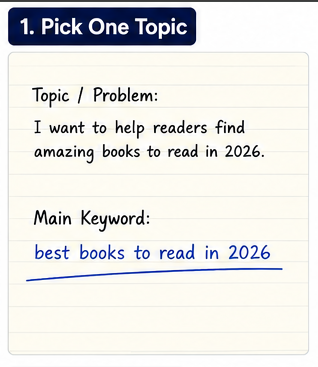
1. Pick One Topic
Start with one problem your reader wants to solve. Then write one main keyword that clearly matches that problem.
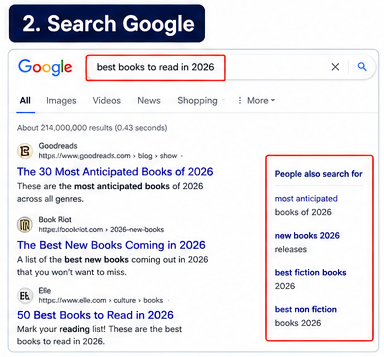
2. Search Google
Search your keyword in Google and study the first page. Next, note the article titles, headings, and common questions because they show what users expect.
3. Check Google Autocomplete
Type your keyword slowly and stop after every word. Then save the keyword ideas that Google suggests because they come from real user searches.

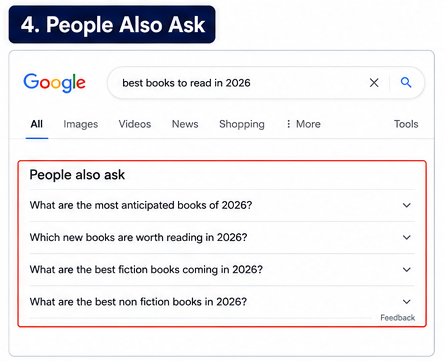
4. Read People Also Ask
Open the People Also Ask box and expand several questions. After that, keep the questions that match your article because they improve search intent coverage.
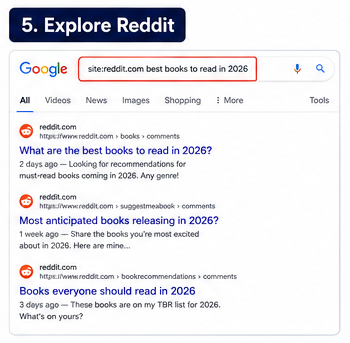
5. Explore Reddit
Search site:reddit.com your keyword in Google and read recent discussions. Then collect repeated questions because they often reveal problems that keyword tools miss.
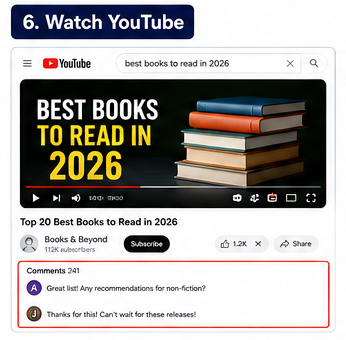
6. Watch YouTube
Open the top videos and read the comments section. Next, note the questions viewers ask because they can become useful blog headings.
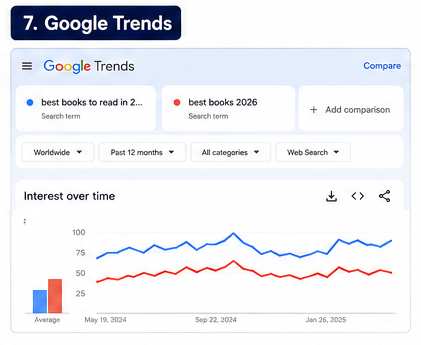
7. Check Google Trends
Compare your keyword in Google Trends before writing. Then choose topics with steady or growing interest because fresh demand can bring more traffic.
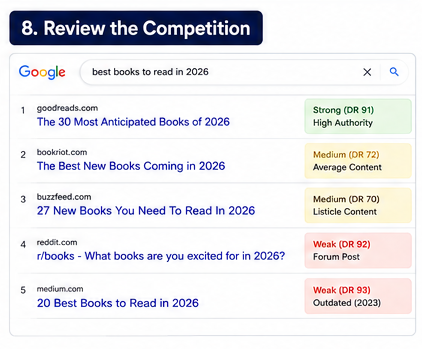
8. Review the Competition
Open the first ten results and study them carefully. However, target the keyword if you see weak content, old articles, forums, or missing answers.
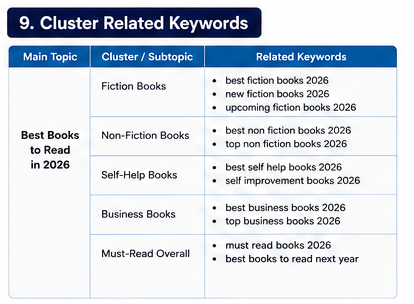
9. Cluster Related Keywords
Group similar keywords into one article instead of creating many small posts. As a result, your content covers the topic better and builds stronger topical authority.
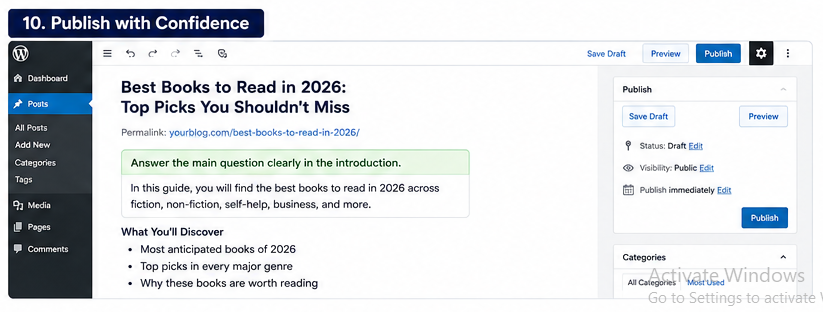
10. Publish with Confidence
Finally, write helpful content that answers every important question. This simple keyword research workflow helps you create content for both Google Search and modern AI search instead of guessing what people want.
Frequently Asked Questions
How many keywords should a blog post target?
Target one primary keyword research for blogging keyword and 3 to 8 related keywords. Then add natural long-tail keywords and related phrases where they fit, instead of forcing them into every paragraph.
Are long-tail keywords better?
Yes: long-tail keywords usually have lower competition and clearer search intent. They also help new blogs rank faster because they answer specific questions that people actually search for.
Is keyword research still important?
Yes, keyword research is still important in 2026 because Google and AI search engines match content with user intent, not just exact words. Good keyword research helps you write useful pages that answer real questions and reach the right readers.
Can ChatGPT do keyword research?
Yes, ChatGPT can help you find blog ideas, long-tail keywords, topic clusters, and common reader questions. However, you should also check search demand and trends with tools like Google Trends, Google Search Console, or a keyword research tool before publishing.
How often should keyword research be updated?
Update your keyword research every 3 to 6 months. Also review it whenever Google changes search features, your traffic drops, or new trends appear in your niche.
Read=> How to select Niche for your blog.
Can a new blog rank for competitive keywords?
Usually, no. Instead, start with low-competition long-tail keywords and build topical authority one article at a time.
After your website gains trust and backlinks, you can target more competitive keywords. This step-by-step approach gives you a much better chance of ranking.
What is keyword clustering?
Keyword clustering means grouping similar search queries into one useful topic. Then you create one main article and support it with related blog posts that link to each other.
| Keyword Cluster | Example |
|---|---|
| Main keyword | keyword research for blogging |
| Supporting keyword | keyword research for beginners |
| Related keyword | long-tail keyword research |
| Supporting article | best free keyword research tools |
| Supporting article | search intent explained |
How do AI search engines use keywords?
AI search engines read keywords together with context, search intent, and topic depth instead of counting exact words. They prefer clear answers, natural language, trusted sources, and complete topic coverage, so writing for people always works better than keyword stuffing.
Conclusion
Start every blog with keyword research for blogging: it saves your time and helps you write content people already want. Then, write for real readers because helpful content still wins in 2026.
Next, build topical authority instead of publishing random posts. Create related articles and connect them with clear internal links.
Also, update your content often because search trends change every year. Refresh facts, examples, and screenshots so your blog stays useful and trustworthy.
Finally, solve your reader’s problem instead of chasing high search volume alone. When you consistently help people, keyword research for blogging becomes the strong base for long-term Google and AI search traffic.
Real User Questions to Naturally Answer
How do bloggers actually find keywords?
Good bloggers start with real questions people ask. Then they check Google Search, Google Autocomplete, People Also Ask, Reddit, YouTube, and Google Trends before writing.
Can I rank without paid SEO tools?
Yes, you can rank with free tools if you choose the right topics. Google Search, Google Trends, Google Search Console, and Reddit are enough for many new blogs.
How do I know if a keyword is too competitive?
Search your keyword and study the first page. If trusted websites dominate every result, choose a longer and more specific keyword instead.
Should I target zero-volume keywords?
Yes, when they match real user problems. Many low-volume questions still bring steady traffic and often appear in AI search results.
How many keywords belong in one article?
Use one focus keyword and 5–10 related keywords. Add them naturally instead of repeating the same phrase.
Is search volume still important?
Yes, but search intent matters more in 2026. A small keyword with strong intent can bring better results than a popular keyword.
Can AI replace keyword research?
No, AI helps you find ideas faster. However, you should still check Google results and real user questions yourself.
What is the fastest keyword research method?
Start with Google Autocomplete and People Also Ask. Then check Reddit, YouTube, and Google Trends to confirm the topic.
How do I build topical authority?
Publish several helpful articles on one topic. Connect them with internal links and update them regularly.
How do I find blog ideas before everyone else?
Watch Google Trends, Reddit, YouTube comments, and industry news every week. New questions usually appear there before keyword tools report them.
How do I optimize for Google AI Overviews?
Answer the question first with clear facts and simple language. Add examples, lists, tables, and trustworthy sources because AI prefers complete and easy-to-read content.
How do I validate a keyword before spending hours writing?
Search the keyword and check the first page carefully. If weak pages, forums, or outdated articles rank, you have a better chance to compete.




Leave a Reply