One day, I was sitting at my desk and trying to find my next blog topic. Then I saw one search: “best camera for blogging.”
It made me stop and think: what does a blogger really need a camera for? Do you need an expensive camera just to run a good blog?
The truth is, blogging does not always happen at a desk. You may travel, walk outside, visit cafés, attend events, shoot products, or capture a great view on the way home.
Those photos can become:
- Blog images
- Featured images
- Pinterest pins
- Instagram posts
- Short videos
So, I started looking at cameras through a blogger’s daily life, not through a long list of camera specs. Weight, ease of use, image quality, lens choice, and how fast you can grab a shot matter more.
The best camera for a blogger is not always the biggest or most costly one: it is the camera you will carry, understand, and actually use.
That is how I judge the best camera for blogging.
Best Cameras for Blogging: My Quick Picks
The best camera for blogging depends on what you publish, how often you travel, and how much gear you want to carry. For most bloggers, I would start with a light mirrorless camera, not a big pro setup.
| Blogger Need | Recommended Camera |
|---|---|
| Best overall | Canon EOS R10 |
| Best beginner/value | Canon EOS R50 |
| Best lens choice/value | Sony a6400 |
| Best photo + video hybrid | Fujifilm X-S20 |
| Best compact/travel choice | Small mirrorless or premium compact |
| Best action/adventure blogger | GoPro HERO13 Black or Insta360 X5 |
| Best zero-budget option | Your current smartphone |
RTINGS names the Canon EOS R10 its best tested camera for bloggers because it works well for both photos and video. It also praises its easy controls, good grip, autofocus, and beginner-friendly design.
The R10 has a 24.2MP APS-C sensor, shoots 4K video, and weighs about 429g with its battery and card. That balance matters when you shoot food, travel, products, events, or blog photos all day.
Don’t buy based on this table alone—your niche changes which camera is best.
A travel blogger needs low weight; a food blogger needs good lenses, while an adventure blogger may need waterproof gear first. So, choose your blogging camera around what you shoot each week, not the longest spec sheet.
Do You Actually Need a Camera for Blogging?
You do not always need a camera for blogging; your phone may already do the job well. Buy a camera only when it fixes a real limit in your work.
Stay With Your Phone When…
Keep your phone when blogging is new, simple, or still growing. Good light and a clean photo often matter more than expensive gear.
- You are a new blogger.
- Your images appear small on web pages.
- You mainly shoot in daylight.
- You value speed and ease.
- You already like your phone photos.
This choice can also save a lot of money. In one Reddit discussion, a beginner looked at spending $500–$1,000 on a camera, lenses, and related gear for photography and blogging; that full cost made using a phone a serious option instead.
Upgrade to a Camera When…
A camera makes sense when your phone starts holding your work back. At that point, better control can improve both your photos and your brand.
- You need different lenses.
- You want soft, natural background blur.
- You edit RAW files often.
- You shoot a lot in low light.
- You create paid travel, food, product, or interior content.
- You need the same visual style across every post.
- Your photography now earns or supports income.
So, is a phone camera enough for blogging? Yes: stay with it until a real need makes a dedicated camera for blogging worth the cost.
How I Compared the Best Cameras for Bloggers
To compare the best cameras for bloggers, I looked at the things that shape your real daily workflow. I did not rank a camera higher just because it has better video specs.
I compared each model using these key points:
- Photo quality and color
- Fast, reliable autofocus
- Size and travel weight
- Simple controls and menus
- Lens choice and lens cost
- Low-light photo quality
- Image stabilization
- Easy phone or computer transfer
- Good video for occasional clips
- Total kit price: camera, lens, battery, and basic extras
I gave more weight to still photography than vlogging features. That matters because a great blogging camera should help you shoot sharp food, travel, fashion, product, or lifestyle photos without making your workflow harder.
In the end, the best camera for bloggers is not the one with the longest spec sheet; it is the one you can carry, use, and afford as a complete kit.
Best Cameras for Blogging Compared
The best cameras for blogging should help you make better content without making your work harder. Your right choice depends on what you shoot, how much gear you carry, and how fast you need to publish.
Here is my rule: buy a camera for the problem you have, not for the camera you dream about. A travel blogger, food blogger, and new blogger may need three very different tools.
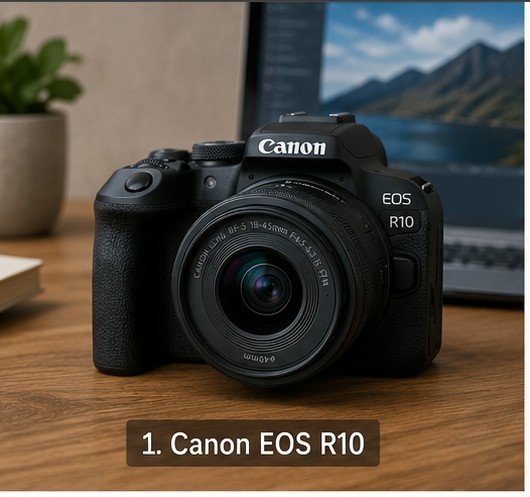
1. Canon EOS R10 — Best Camera for Blogging Overall
Why it works
The Canon EOS R10 gives you a strong mix of photo quality, speed, simple controls, and useful video tools. Its 24.2MP APS-C sensor gives you plenty of detail for blog posts, food photos, travel shots, portraits, and social media.
The body is also light for a mirrorless camera, so you can carry it for long walks without feeling like you packed a studio. Canon pairs that small body with fast autofocus, 4K video, and interchangeable RF and RF-S lenses.
RTINGS names the EOS R10 its best camera for bloggers, mainly because it offers good value, easy controls, strong autofocus, and solid photo performance. It also works well when your blog slowly grows from still photos into short videos.
Best for
- Travel bloggers
- Lifestyle bloggers
- Food bloggers
- Beginner and intermediate users
- Bloggers shooting photos plus some video
Trade-offs
The R10 has no in-body image stabilization, so lens choice matters more when you shoot handheld in low light. RF and RF-S lenses also raise your total cost, and the full kit will never feel pocket-sized.
Real-world use case
You walk through Jaipur at sunrise with one small zoom lens: you shoot Hawa Mahal, a chai stall, street portraits, food, and short B-roll without changing cameras. That is where the R10 makes sense: one body can handle many kinds of blog content well.
Common search questions
Is Canon R10 good for blogging? Canon R10 for photography? Canon R10 vs R50? Best Canon camera for bloggers?
2. Canon EOS R50 — Best for Beginner Bloggers
Why it works
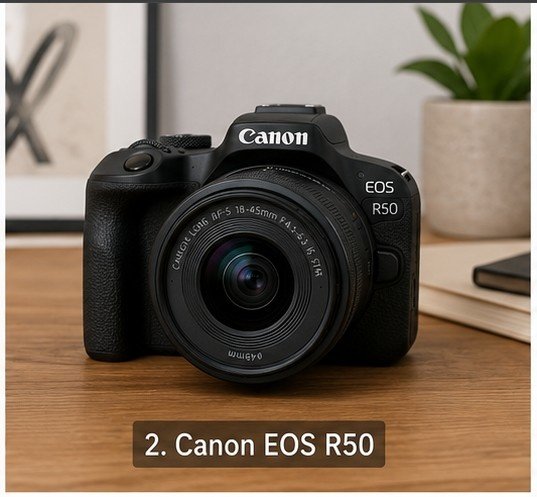
The Canon EOS R50 is a smart first step when your phone starts limiting your photos, but you do not want a hard camera to learn. It has a 24.2MP APS-C sensor, Dual Pixel CMOS AF II, a flip screen, and strong automatic shooting tools.
Canon also gives it 4K 30p video created from 6K-oversampled data in supported shooting modes, which can produce detailed video. The small body and simple controls make it easier for a new blogger to move from phone photography into a real lens system.
Best for
- First-camera buyers
- Lifestyle bloggers
- Food and home bloggers
- New travel creators
- People moving beyond smartphones
Trade-offs
Do not compare only camera body prices: compare the R50 plus the lens you actually need. A cheap body with two new lenses may cost more than a better camera sold with the right kit lens.
Real-world use case
You run a food blog and your phone makes indoor dinner photos look flat or noisy. An R50 with the right bright lens gives you more control over light, focus, background blur, and the final look.
Common search questions
Is Canon EOS R50 good for blogging? Best Canon camera for beginner bloggers? Canon R50 vs smartphone? Canon R50 vs R10?
3. Sony a6400 — Best for Lens Choice and Proven Portability
Why it works
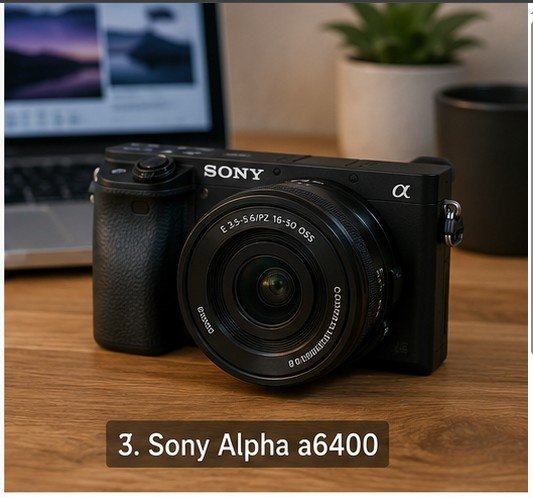
The Sony a6400 is not a new camera, and that is exactly how you should view it. It is a proven older option that can still make sense at the right price, especially on the used market.
Sony gives you a 24.2MP APS-C sensor, Real-time Tracking, Eye AF, and detailed 4K recording. Its biggest long-term strength is the mature Sony E-mount system, where you can choose from many Sony and third-party lenses for travel, portraits, street work, food, and video.
Best for
- Travel bloggers
- Street photographers
- Bloggers who want many lens choices
- Used-camera buyers
- Value-focused enthusiasts
Trade-offs
The a6400 has no in-body stabilization, while its menus and handling feel older beside newer cameras. At a high new-camera price, I would compare newer models first rather than buying it only because an old review calls it “the best.”
Real-world use case
You buy a used a6400, a small wide zoom, and one bright prime lens: that kit can cover city walks during the day and portraits or café shots at night. You also have many lens upgrade paths without changing your whole camera system.
Common search questions
Sony a6400 for blogging? Best Sony camera for travel blogging? Sony a6400 lens options? Sony a6400 vs newer mirrorless cameras?
4. Fujifilm X-S20 — Best for Great Photos + Serious Video
Why it works
The Fujifilm X-S20 suits you when photos matter, but video is no longer an “extra.” It has a 26.1MP APS-C sensor, in-body stabilization, strong hybrid tools, Fujifilm X-mount lenses, and video recording up to 6.2K in supported modes.
Its special strength is workflow: Fujifilm gives you built-in Film Simulation looks that can help create attractive JPEG files straight from the camera. This matters when you travel for six hours, return to a hotel at 9 p.m., and would rather publish than spend another two hours color-grading 80 photos.
Real users often discuss this same benefit: getting pleasing straight-out-of-camera images can reduce how much editing they need for travel work. That does not make editing useless, but it can make a fast publishing workflow much easier.
Best for
- Lifestyle creators
- Travel bloggers
- YouTube and Reels creators
- Photo-and-video hybrid users
- Bloggers who dislike heavy editing
Trade-offs
The X-S20 costs more than a basic beginner camera, especially after you add a good lens. You should pay that extra money only when you will use its stabilization, video tools, color options, or hybrid features.
Real-world use case
You shoot a Goa travel story in the morning, record a hotel video in the afternoon, and post JPEG photos to social media that evening. One small camera handles all three jobs with less need to move every file through a long editing process.
Common search questions
Fujifilm camera for bloggers? Best Fujifilm for blogging? Best camera for photos and videos? Camera with good JPEG colors?
5. Compact Camera or Small Mirrorless — Best for Bloggers Who Hate Carrying Gear
Why it works
Here is one camera truth that spec charts rarely show: the camera you leave at home produces zero content. A smaller camera that stays in your bag can beat a better camera that sits on your shelf.
A fixed-lens compact gives you one built-in lens, quick access, and less gear to think about. A small mirrorless camera takes more room, but you can change lenses as your blog grows.
Compact cameras also saw a real market comeback in 2025: global compact-camera shipments rose about 29.6% year over year to 2.44 million units. Mirrorless shipments still reached a much larger 6.31 million units, showing that both portability and lens flexibility have strong demand.
Best for
- One-bag travel
- Street and café bloggers
- Bloggers who hate heavy kits
- Daily carry
- Fast, discreet shooting
Trade-offs
Choose a compact when portability matters more than changing lenses. Choose small mirrorless when future lens choice matters more than pocketability.
Real-world use case
You stop at a Hyderabad café on the way to a meeting and notice perfect window light on your table. A small camera in your daily bag gets the shot; a large camera sitting at home does not.
Common search questions
Best compact camera for bloggers? Lightweight camera for travel blogging? Compact camera vs mirrorless? Best pocket camera for travel photos?
6. Smartphone — Best Camera for a New Blogger on a Zero Budget
Why it works
A smartphone may be your smartest first blogging camera when you are still testing whether blogging will become a real business. In good light, a modern phone can create useful photos for blog pages, Pinterest, Instagram, and other web content without adding another cost.
It is also fast: shoot, edit, upload, and publish from one device. That speed can matter more than sensor size when your real problem is creating content every week.
Best for
- Brand-new bloggers
- Zero-budget creators
- Social-first content
- People testing a niche
- Fast daily publishing
Trade-offs
Phones give you less optical freedom and can struggle more when light gets poor or when you need true long lenses, deep RAW editing, or strong natural background separation. So do not upgrade because a YouTuber says “professionals need a camera.”
Real-world use case
Upgrade only when you can name the exact problem: “I need a real telephoto lens,” “my indoor food photos are too noisy,” or “I need more RAW editing room.” You may also need better subject separation or higher-quality files for paid client work.
Common search questions
Can I start a blog with a smartphone camera? Phone vs camera for blogging? When should I buy a camera for blogging? Do bloggers need professional cameras?
The key point is simple: do not buy more camera than your blog needs. Among the best cameras for blogging, choose the Canon EOS R10 for the strongest all-round balance, the R50 for an easy start, the a6400 for proven lens choice, the X-S20 for hybrid work, a compact for daily carry, or your smartphone until you find a real reason to upgrade.
Which Camera Is Best for Your Type of Blog?
The best camera for blogging is the one that fits what you shoot most. A travel blogger and a food blogger need very different things, so start with your daily work before you compare camera specs.
Quick Camera Decision Matrix
| Your Blog Type | What Matters Most | What Matters Less |
|---|---|---|
| Travel | Low weight, battery life, zoom, stabilization, easy file transfer | Huge lenses, extreme resolution |
| Food | Close focus, good color, RAW, lens choice, low-light skill | 8K video |
| Fashion/Lifestyle | Eye autofocus, portrait lenses, flip screen, remote control | Long zoom range |
| Travel + Adventure | Small size, tough build, stabilization, weather resistance | Heavy studio features |
| Product/Affiliate | Sharp lens, lighting, tripod, exact focus, smooth workflow | Expensive flagship body |
Travel Blogger
Pick a light camera that you will carry all day, not one that stays in your hotel room. A useful zoom, good battery, stabilization, weather protection, and quick phone transfer can make travel far easier.
In real travel use, lens size matters as much as camera size because you carry both for hours. A small one-camera setup also means fewer lens swaps when you move through streets, trains, beaches, or trails.
Food Blogger
Choose a camera that gives you good close focus, natural color, RAW files, and access to useful lenses. A tripod also helps when you shoot food indoors or near a window with less light; Canon likewise notes that tripods can help with food close-ups and other still-life shots.
Do not buy a food photography camera just because it records 8K video. Good light, the right lens, clean styling, and careful focus will often change your food photos far more.
Fashion and Lifestyle Blogger
Look for fast eye autofocus, a flip or moving screen, remote phone control, and good portrait lens choices. These tools help when you shoot yourself, work alone, or move between full-body outfits and close portraits.
Travel and Adventure Blogger
Choose portability, stabilization, a strong build, and weather resistance where your trips need it. For hikes, bikes, water, or rough action, pair your main camera with a small action camera instead of forcing one camera to do every job.
Product and Affiliate Blogger
Put your money into a sharp lens, stable tripod, controlled light, and accurate focus first. For product photography, better lighting and lens choice may improve your results more than buying a more expensive camera body.
Here is the simple rule: buy for the shots you make every week, not the rare feature you may use once a year. That is usually the smartest way to choose the best camera for blogging without wasting money.
What Actually Makes a Camera Good for Blogging?
A good camera for blogging should help you shoot faster, carry less, and publish with less work. Great specs mean little if the camera stays at home or slows down your blog workflow.
Sensor Size
Sensor size affects image quality, low-light shots, lens size, and cost. But a bigger sensor does not always mean a better camera for your blog.
A phone has a very small sensor, while a 1-inch-type sensor gives you more control in a still-small camera. Micro Four Thirds and APS-C sit in the middle, while full frame gives you a larger sensor for more low-light and background-blur control.
Most bloggers do not automatically need full frame. For travel, food, lifestyle, and daily blogging, APS-C or Micro Four Thirds may give you the better mix of image quality, size, price, and weight.
That is not a niche choice either: 2025 CIPA shipment data reported by Digital Camera World showed more than 4.45 million APS-C and Micro Four Thirds bodies shipped, versus about 2.54 million full-frame and larger-sensor bodies. This does not make smaller sensors better; it simply shows they remain mainstream and practical camera systems.
Lens Matters More Than Beginners Expect
Your camera body takes the photo, but your lens decides much of what that photo can look like. So, before you buy a camera, check the lenses you may need later.
- Kit zoom: good for learning and daily use.
- Wide-angle lens: useful for travel, rooms, architecture, and self-video.
- 35mm-equivalent lens: great for natural everyday photos.
- Portrait prime: useful for people, food, and soft backgrounds.
- Macro or product lens: better for close-ups, crafts, beauty, and product blogging.
Here is the rule I would use: buy into a lens system—not just a camera body. A cheap body can become an expensive mistake when the lenses you need are costly, heavy, or missing.
For example, current lens guides for Sony APS-C cameras show choices that cover compact everyday zooms, wide vlogging lenses, travel zooms, and telephoto lenses. That wider system choice can matter more over time than one small camera-spec advantage.
Autofocus
Good autofocus helps when you shoot people, pets, street scenes, travel, or moving subjects. It matters even more when you film yourself and cannot stand behind the camera.
Do not get lost in autofocus terms and charts. Ask one simple question: Can this camera keep my subject sharp while I shoot the way I normally shoot?
Image Stabilization
IBIS moves the camera sensor to reduce shake, while lens stabilization does the same job inside a supported lens. Electronic stabilization uses software and may crop part of your video frame.
Stabilization matters more if you shoot handheld at slower shutter speeds or record video while moving. If you mostly use daylight, a tripod, or still subjects, you may not need to pay extra for the best stabilization system.
Portability
Portability should rank near the top when choosing the best camera for blogging. A camera cannot improve your blog when it sits in a hotel room because the body and lens feel too heavy.
Think about a real day: walking through Hyderabad in the afternoon, grabbing food photos, shooting a market, and carrying the camera for six hours. I would rather choose the camera you happily keep on your shoulder than the “better” camera you keep putting back in your bag.
Wi-Fi, Bluetooth, and Workflow
For blogging, workflow can matter more than another five or ten megapixels. Check how easily you can send photos to your phone, edit them, back them up, and upload them to WordPress.
Ask yourself: “How quickly can I go from shutter button → edited photo → WordPress?” The best blogging camera is often the one that makes that whole path simple, fast, and repeatable.
Key takeaway: choose your sensor for your real needs, check the lens system first, demand reliable autofocus, value stabilization when you need it, and never ignore size or workflow. A good camera for blogging should make you want to carry it, use it, and publish more often.
Mirrorless vs DSLR vs Smartphone: Which Is Best for Bloggers?
Choosing between a mirrorless vs DSLR vs smartphone for blogging depends on what you shoot, how often you travel, and how much control you need. Your phone may be enough at first, but a dedicated camera gives you more room to grow.
| Type | Best For | Main Advantage | Main Drawback |
|---|---|---|---|
| Smartphone | Beginners | Always with you | Less lens flexibility |
| Compact | Travel and simple shooting | Small and easy to carry | Fixed-lens limits |
| Mirrorless | Most serious bloggers | Great quality, lenses, and portability | Higher cost |
| DSLR | Used-camera buyers | Cheap used bodies and lenses | Bigger and older system |
Which Camera Should You Choose?
For most new buyers, mirrorless is the best camera choice for bloggers who want better photos, video, and lens options. You get strong image quality without carrying the extra size of many DSLR setups.
The camera market also shows where things are going: CIPA-based 2025 data shows about 6.31 million mirrorless cameras shipped worldwide, compared with just 690,911 DSLRs. That does not make DSLRs bad; it shows that buyers and camera makers have moved strongly toward mirrorless systems.
Still, do not buy more camera than you need. A smartphone works well for quick food shots, travel updates, social posts, and simple blog images.
A good used DSLR can still take excellent blog photos. The real question is whether buying into that system today makes sense for your future needs.
Key point: start with your phone if it does the job, choose a compact camera for easy travel, and buy mirrorless when you need more creative control. For most people choosing a camera for blogging, mirrorless gives the best long-term balance of quality, size, and flexibility.
How to Take Better Photos for Your Blog—Whatever Camera You Own
You do not need the newest camera to take better photos for your blog. Good light, a clear frame, and a simple shooting plan often matter more than buying more gear.
1. Look for Good Light Before Buying More Gear
Start near a bright window, shoot during golden hour, or move into open shade. For portraits and product photos, avoid hard midday light when you can because it can make deep shadows hard to control.
Golden hour comes just after sunrise and before sunset, when the light often looks softer and warmer. Canon also suggests using the time of day and available light to improve your photos.
2. Keep Your Composition Simple
Remove cups, wires, bags, and other things that pull the eye away from your subject. Then use the rule of thirds, leading lines, or some space in front and behind your subject to add depth.
3. Turn One Scene Into Many Content Assets
Do not take one photo and leave. Shoot the same scene in landscape, portrait, square-friendly, wide, and close-up views.
At a café, for example, capture:
- The café exterior.
- A wide interior shot.
- A close-up of the food.
- A person or small detail.
- A vertical Pinterest image.
Now one café visit gives you a blog header, story images, social posts, and Pinterest pins. Think of each shoot as a visual content package, not one photo.
4. Learn Just Three Camera Settings First
Learn aperture, shutter speed, and ISO before you worry about every camera setting. Nikon describes these three controls as the base of photographic exposure.
For landscapes, keep ISO low when light allows and use enough depth to keep the scene clear. For portraits, try a wider aperture and focus on the nearest eye; for movement, use a faster shutter speed.
5. Use RAW When You Need More Editing Room
Shoot RAW when the light is hard or when you plan to edit the photo in detail. JPEG is still a good choice when you need speed, have steady light, or want little editing.
6. Prepare Every Photo for Your Blog
Crop the image for its real use, resize it, and compress it before upload. Use WebP or AVIF when your site workflow supports them because these formats can reduce file size compared with older formats.
Give files clear names and write alt text that explains what the image shows in context. Google warns against stuffing alt text with keywords, so write for people first.
The key is simple: plan the light, frame with care, shoot several useful versions, and prepare each file for the web. That is how you take better photos for your blog, whatever camera you own.
7 Camera-Buying Mistakes Bloggers Make
Choosing the best camera for blogging is not about buying the most costly model. You need a camera that fits your photos, budget, travel style, and daily work.
- Mistake 1: Buying based only on megapixels
More megapixels do not always mean better blog photos. Lens quality, sensor size, light, and your shooting skill matter more. - Mistake 2: Spending all your money on the camera body
Keep part of your budget for a lens, SD card, spare battery, camera bag, and tripod. These small items often decide how easy your camera is to use. - Mistake 3: Ignoring camera weight
A great camera is useless if you hate carrying it. Pick a size you can take on trips, events, cafes, or daily shoots. - Mistake 4: Buying a video-first camera for mainly photos
Do not pay extra for video tools you may never use. Choose features that match your real blogging work. - Mistake 5: Ignoring lenses
Think beyond the camera body: check lens price, choice, size, and future needs. - Mistake 6: Assuming you need full frame
APS-C cameras can give great image quality at lower cost and weight. For many bloggers, that balance makes more sense. - Mistake 7: Upgrading without knowing the real problem
Do not upgrade just because a new camera looks better. Buy a new camera for blogging only when you know exactly what your current camera cannot do.
The Camera I’d Choose at Each Budget
The best camera for blogging is not always the newest camera you can afford. I would first look at what you shoot, then spend more on the lens, light, and sound that improve your work.
Minimal Budget: Keep Your Phone
Keep your phone, and improve your lighting and composition first. A window, clean background, and steady tripod can improve a blog photo more than a cheap camera upgrade.
Entry Budget: Buy Used
Choose a used, previous-generation mirrorless camera with a good lens. I would rather buy an older body with the right lens than a new body with a weak kit lens.
Beginner Serious Blogger: Canon EOS R50-Class
For a serious beginner, I like a Canon EOS R50-class setup because it keeps shooting simple. A light APS-C camera with strong autofocus suits blog photos, talking videos, travel, and social content.
Best Balance: Canon EOS R10-Class
Move to a Canon EOS R10-class setup when you need more control, speed, and room to grow. Canon lists the R10 with a 24.2MP APS-C sensor and up to 15 fps mechanical shooting.
Advanced Hybrid Creator: Fujifilm X-S20-Class
Choose a Fujifilm X-S20-class camera when photo and video matter almost equally. Its in-body stabilization and advanced video tools make handheld hybrid work easier.
My rule: compare the total price with the lens you actually need, because camera-body prices alone are misleading. That one check often helps you find the best camera for blogging within your real budget.
My Final Recommendation
For most bloggers, my pick for the best camera for blogging is the Canon EOS R10. You get a 24.2MP APS-C sensor, fast autofocus, interchangeable lenses, and strong photo and 4K video tools in one small body.
Pick Based on Your Real Need
Choose the Canon EOS R50 when you are a beginner and want a simpler, lighter camera. It still gives you a 24.2MP APS-C sensor and Dual Pixel CMOS AF II, so you can grow without buying too much camera too soon.
Already getting good blog photos from your phone? Keep it until poor low-light shots, slow control, weak zoom, or limited lens choices truly hold you back.
My rule: buy the Canon EOS R10 when you know why your phone is no longer the best camera for blogging for you.
19. FAQ Section
What is the best camera for blogging?
The best camera for blogging depends on what you create: food, travel, fashion, products, or video. Choose a camera that gives you sharp photos, easy autofocus, the right lens options, and a size you will actually carry.
Do I need a DSLR for blogging?
No, you do not need a DSLR to start a blog. A smartphone works well for simple photos, while a mirrorless camera gives you better lens choices, image quality, and portability; a DSLR still works if you already own one.
Is Canon or Sony better for bloggers?
Canon often feels simple to use, with friendly controls, good ergonomics, and strong autofocus. Sony also offers strong autofocus, many compact camera choices, and a large E-mount lens range; therefore, choose based on your budget, lens needs, and shooting style.
Is a phone camera enough for blogging?
Yes, a modern phone camera is enough for many new bloggers, especially when you have good natural light. Upgrade when low-light photos look poor, you need real background blur, faster autofocus, better zoom, or more control over your images.
How many megapixels do I need for blog photography?
For normal website images, you rarely need a very high megapixel count; around 20–26 megapixels gives you plenty of room for sharp photos and cropping. Focus more on your lens, light, composition, focus, and editing because these often change the final photo far more.
Which camera is best for travel bloggers?
For travel blogging, pick a light camera that you can carry all day without thinking twice. Look for a useful travel lens, good stabilization, reliable battery life, fast autofocus, and weather protection if you often shoot near beaches, rain, dust, or mountains.
What lens should a blogger buy first?
Buy your first lens for your niche, not because another blogger uses it. Food and product bloggers may prefer a close-focusing lens, travel bloggers often need a flexible zoom, while portrait and fashion bloggers may prefer a bright prime lens for soft backgrounds.
Should I buy a used camera for blogging?
Yes, a used camera can help you get the best camera for blogging without spending too much. Check the body, sensor, autofocus, battery, lens mount, and shutter wear where relevant; also buy from a seller that gives you a return period or warranty.



Leave a Reply