The google search algorithm is not one magic formula. Google uses many ranking systems to crawl, index, and rank pages in less than a second.
First, Google finds your page. Then, it stores the page, checks the meaning, and ranks it for the right search.
In 2026, you must think beyond old SEO tricks. Google Search now works with AI Search, AI Mode, core updates, and spam systems.
Here is the simple idea:
- Crawl: Google discovers your page.
- Index: Google understands and stores it.
- Rank: Google chooses where to show it.
So, your job is clear: help Google trust your page fast. This guide will show you practical SEO steps, not confusing theory.
If you want to rank in 2026, write for real people first. That is still the safest way to work with the google search algorithm.
What Is the Google Search Algorithm?
The google search algorithm is not one magic button. It is a group of smart ranking systems that choose the best pages for your search.
Google checks many things: relevance, usefulness, quality, freshness, trust, and search intent. In 2026, this matters more because Google Search also uses AI Mode, which passed 1 billion monthly users.
Think about this: when you search “best budget laptop,” Google does not show random pages. It tries to show fresh reviews, price guides, comparison pages, and trusted tech sites.
So, the simple google algorithm explained answer is this: Google wants to match your question with the most useful answer. It checks hundreds of billions of pages in a fraction of a second.
You should not write only for keywords. Instead, write for the real person who is searching, comparing, learning, or buying.
Key points:
- Google uses many automated ranking systems.
- It studies meaning, not only words.
- Fresh and trusted content gets more value.
- Helpful pages beat empty SEO tricks.
So, if you want to rank, make your page clear, useful, and honest. That is how the google search algorithm understands your content.
How Google Search Algorithm Works Step by Step
To understand how google search algorithm works, think of Google like a very strict librarian. It first finds your page, then reads it, then decides where it should sit in search.
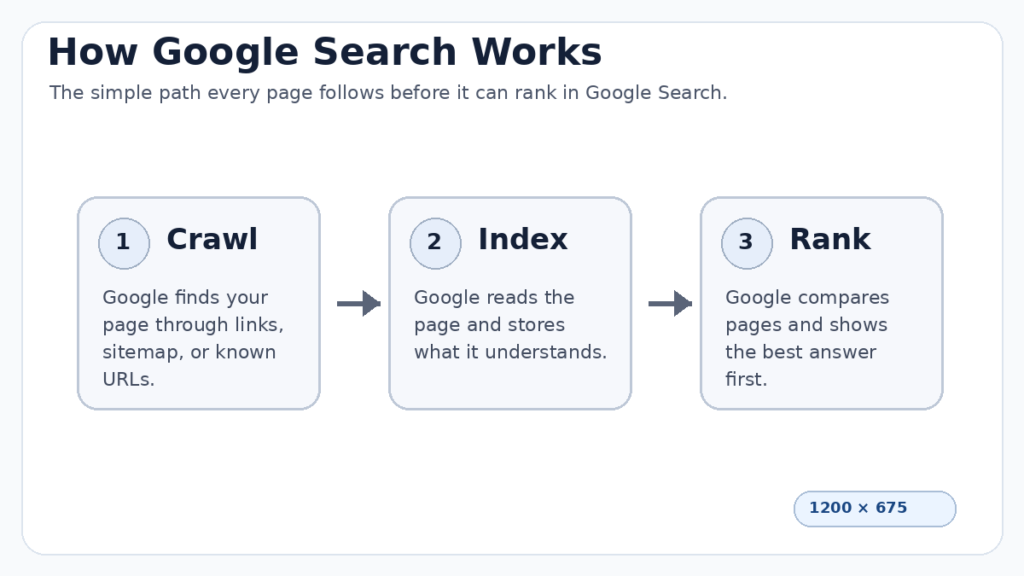
Google explains this process in three simple stages: crawling, indexing, and ranking. A page cannot rank well if Google cannot find it, understand it, and trust it.
Crawling
Crawling starts when Googlebot visits a page. It finds pages through links, sitemaps, and old URLs already known to Google.
So, your job is simple: make every important page easy to reach. Use clean internal links, submit your sitemap, and avoid blocking useful pages in robots.txt.
Indexing
Indexing means Google tries to understand your page. It reads your text, headings, images, links, structure, and main topic.
For example, if your page title says “Google algorithm,” but the content talks about hosting, Google gets confused. So, keep your page focused, clear, and helpful.
Ranking
Ranking starts after someone searches a query. Google compares many pages and picks the one that gives the best answer.
Google’s ranking systems check many signals across hundreds of billions of pages. So, your page needs strong intent match, real value, trust, and clean user experience.
Quick Practical Checklist
- Link your page from related posts.
- Add your page to your XML sitemap.
- Use clear H2 and H3 headings.
- Answer the main question early.
- Add examples, not empty theory.
- Keep mobile pages fast and clean.
- Update old facts when Google changes.
Practical Takeaway
The simple formula is: crawl, index, rank. If you want to improve how google search algorithm works for your site, help Google discover your page, understand your topic, and trust your answer.
Main Google Ranking Factors That Still Matter in 2026
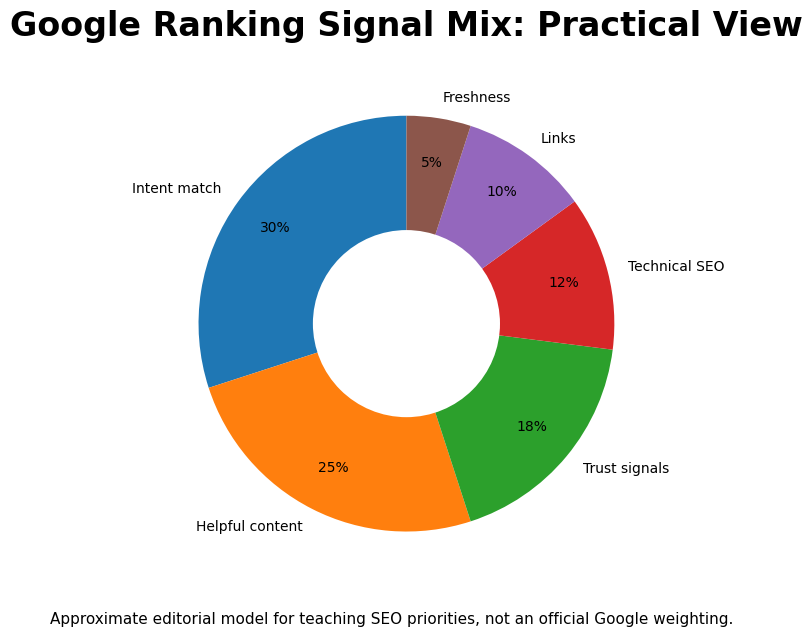
Google ranking factors still start with one simple thing: does your page really help the person who searched? Google says its ranking systems check many signals across hundreds of billions of pages to show useful results fast.
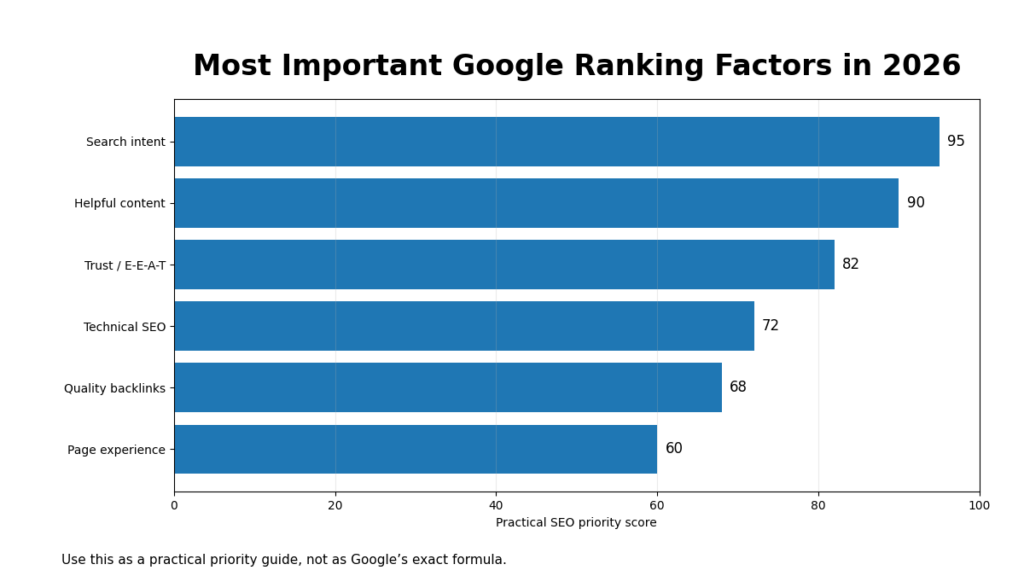
So, do not chase every small Google algorithm ranking factor. Follow this order: intent first, content depth second, trust third, technical SEO fourth, and links fifth.
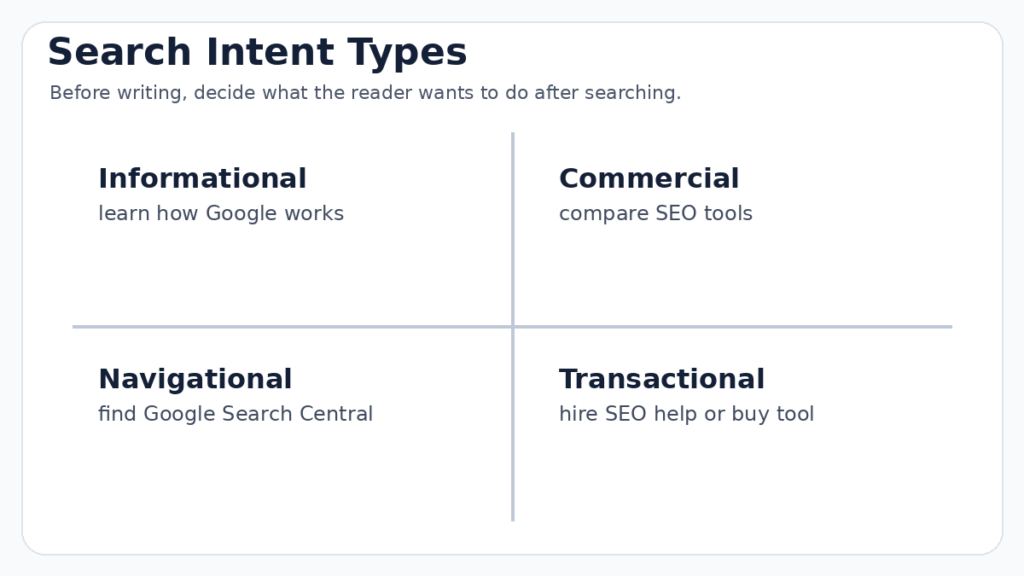
1. Search Intent Comes First
Search intent means the real reason behind the search. If someone searches “best SEO tool,” they want options, prices, pros, cons, and a clear choice.
So, match the page type first: guide, list, review, tutorial, or comparison. This one step can beat a longer article that answers the wrong need.
2. Helpful and Original Content Comes Second
Google wants helpful, reliable, people-first content, not pages made only to push rankings.
Add your own examples, small tests, screenshots, mistakes, and clear steps. In 2026, copied tips feel weak because every AI tool can repeat them.
3. Trust Signals Still Matter
E-E-A-T means experience, expertise, authority, and trust. You show it through author details, real examples, sources, honest limits, and updated facts.
For money, health, legal, and safety topics, trust matters even more. One wrong claim can hurt the reader and your ranking.
4. Technical SEO Helps Google Read Your Page
Your page should load fast, work well on mobile, and feel easy to use. Google says Core Web Vitals measure real user experience: loading, interaction, and visual stability.
Use structured data only where it fits: FAQ, article, product, review, or how-to. Do not add fake schema for clicks.
5. Links and Authority Come Last
Internal links help Google understand your topic map. Backlinks help more when they come from real, relevant, trusted pages.
Here is the simple priority:
| Priority | Ranking Factor | What You Should Do |
|---|---|---|
| 1 | Intent | Answer the exact search need |
| 2 | Depth | Add examples, steps, and proof |
| 3 | Trust | Show sources and real experience |
| 4 | Technical SEO | Improve speed, mobile, and structure |
| 5 | Links | Build useful internal and external trust |
In short, Google ranking factors in 2026 reward the page that feels useful, clear, trusted, and easy to use. Start with the reader, then polish the SEO.
Google Core Updates vs Spam Updates
A Google core update changes how Google checks helpful content. So, your page may rise or drop, even when you did nothing wrong.
What Is a Google Core Update?
A core update is a wide algorithm update. Google uses it to reward pages that answer people better.
Think of it like a fresh exam paper check. Your old answer may look weak when better answers enter Google.
What Is a Google Spam Update?
A Google spam update is different. It targets sites that try to trick Google.
This can include copied content, fake value, doorway pages, hidden tricks, or scaled low-quality pages. Google says spam can lead to lower rankings or removal from Search.
What Should You Do After an Update?
Do not panic on day one. Google says you should wait at least one full week after a core update ends before checking Search Console data.
Check your top pages first: clicks, queries, ranking drops, and lost keywords. Then improve weak pages with clearer answers, real examples, better structure, and updated facts.
Quick Difference
| Update Type | Main Target | Your Best Action |
|---|---|---|
| Google core update | Helpful content quality | Improve usefulness |
| Google spam update | Manipulative practices | Remove risky tactics |
A Google core update asks one simple question: does your page help the reader better than others?
How AI Search Changed Google Algorithm in 2026
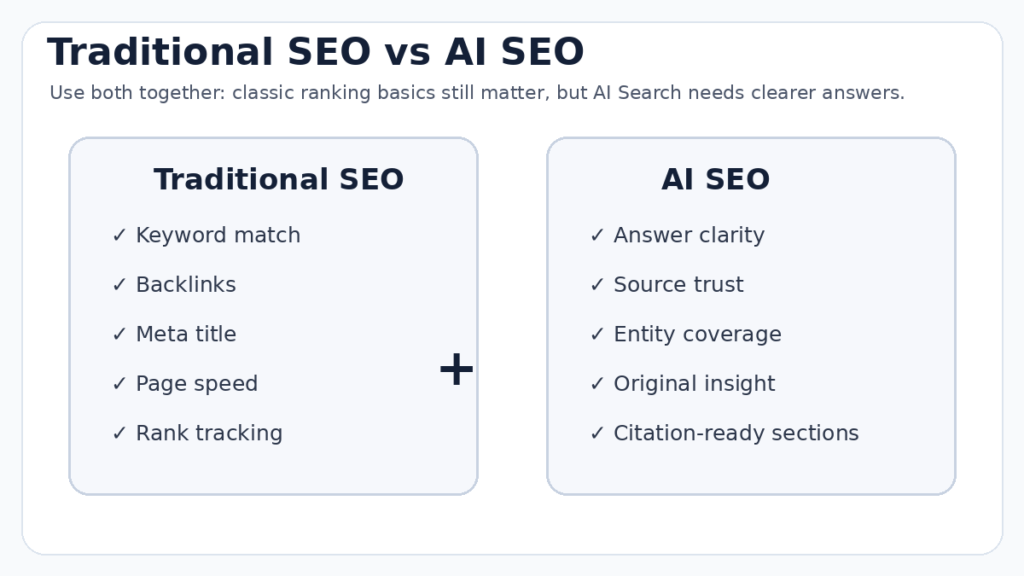
Google AI Search changed the Google algorithm 2026 in a big way. Now Google does not only match words; it also tries to understand your full question.
In May 2026, Google announced a major AI Search upgrade at Google I/O. Google also said AI Mode passed 1 billion monthly users, and searches in AI Mode keep growing fast.
So, you must write for real questions now. You cannot only add keywords and wait for traffic.
AI Overviews and AI Mode read content like a smart helper. They look for clear answers, useful steps, real examples, and trusted sources.
Here is the simple change:
| Old Google Search | Google AI Search |
|---|---|
| Short keywords mattered more | Full questions matter more |
| One answer page could rank | Many useful sources can appear |
| Basic SEO helped | Helpful, trusted content helps more |
| Users clicked many links | Users may read AI answers first |
This means your content must answer deeper questions. For example: do not write only “best SEO tools”; explain who needs each tool, when to use it, and what mistake to avoid.
Google says AI-assisted content can rank when it is useful, original, and made for people. But AI content gets no special ranking boost just because AI helped write it.
Also, avoid fake reviews, fake expert claims, and “AI answer manipulation.” That type of content may look smart today, but it can damage trust later.
Your best move is simple: write like you solved the problem yourself. Google AI Search rewards pages that give clear answers, real use cases, and honest guidance.
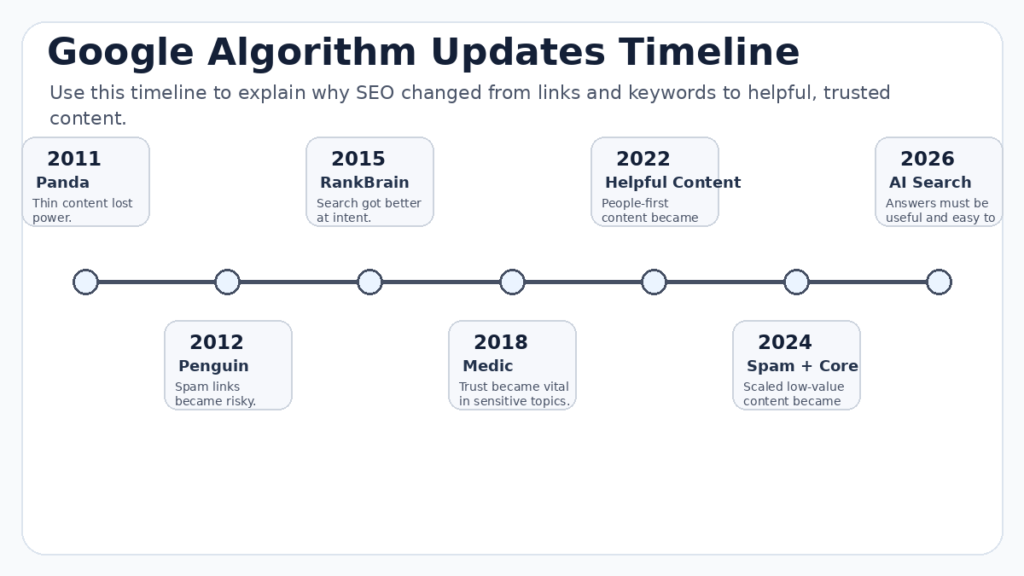
Why Websites Lose Rankings After Google Algorithm Updates
A ranking drop after Google update feels scary at first. But it does not always mean a Google algorithm penalty.
Most times, Google has not punished you. It has only found pages that answer the search better than yours.
Common Reasons Your Ranking Drops
Your page may lose rank when the content feels thin. This means the reader gets basic words, but not real help.
Your page may also look too close to competitors. If ten pages say the same thing, Google may pick the one with stronger trust.
Many sites fall because they show no real experience. For example: a review page without photos, tests, screenshots, or personal notes feels weak.
Weak topical coverage also hurts you. One good post cannot carry your site if the full topic is not covered well.
Too many affiliate links can also send a bad signal. So, place links only where they truly help the reader.
Poor page structure makes Google and readers work harder. Use clear H2s, short H3s, bullets, tables, and simple steps.
A slow site can push users away fast. In India, even a 3-second delay feels long on weak mobile data.
Misleading titles also cause ranking loss. If your title promises “best tools,” but the post gives a shallow list, readers leave.
Scaled AI content without human editing is risky. Google says mass-made pages with little value can break its spam rules.
Backlink tricks and parasite SEO are also dangerous. Google has directly targeted site reputation abuse and low-value third-party content.
Quick Check Before You Panic
| What You See | What It May Mean | What You Should Do |
|---|---|---|
| Drop after core update | Google rechecked quality | Wait, compare pages, improve depth |
| Sudden manual action | Real policy issue | Check Search Console |
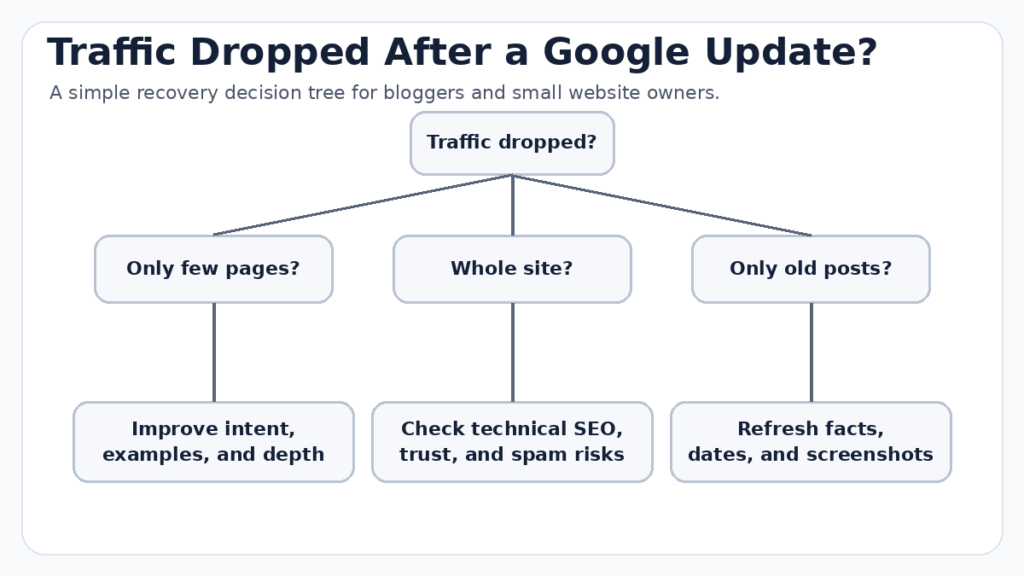
| One page dropped | Better rival page won | Update that page |
| Whole site dropped | Trust or quality issue | Audit content, links, speed |
How to Recover from Google Update
First, check Google Search Console. Compare traffic after the update finishes, not during the noisy rollout.
So, read Google updates guide to learn how to recover your website from Google core Updates frequently.
Next, study the pages that replaced you. Look for better examples, fresher facts, clearer layout, stronger author trust, and deeper answers.
Then improve your page, not just your keywords. Add proof, local examples, real screenshots, tested steps, and honest warnings.
Finally, remember this: a ranking drop after Google update is often feedback. Fix the page for humans first, and the algorithm becomes easier to please.
How to Optimize Content for Google Search Algorithm
To optimize for Google algorithm, start with one simple rule: help the reader first, then help Google understand the page.
Google says its ranking systems look for helpful, reliable, people-first content across billions of pages. So your SEO content writing should feel useful, clear, and honest.
Start With Search Intent
Before you write, ask this: “What does my reader want after searching this?”
For example, if someone searches “how to rank blog post on Google,” they do not want theory. They want steps they can use today.
Answer Fast in the First 100 Words
Give the main answer early: no long intro, no story, no slow warm-up.
A good first answer tells the reader what to do, why it matters, and what result they can expect.
Add Proof, Not Just Words
Google can see many copied ideas online. So add things only a real writer can add:
- Your own test result
- A screenshot
- A mistake you fixed
- A before-and-after example
- A small comparison table
- A warning from real experience
Use Keywords Like a Human
Use natural headings like “How to Write Content for Google Algorithm” or “How to Rank Blog Post on Google.”
Do not repeat the same keyword again and again. Google understands meaning, not only exact words.
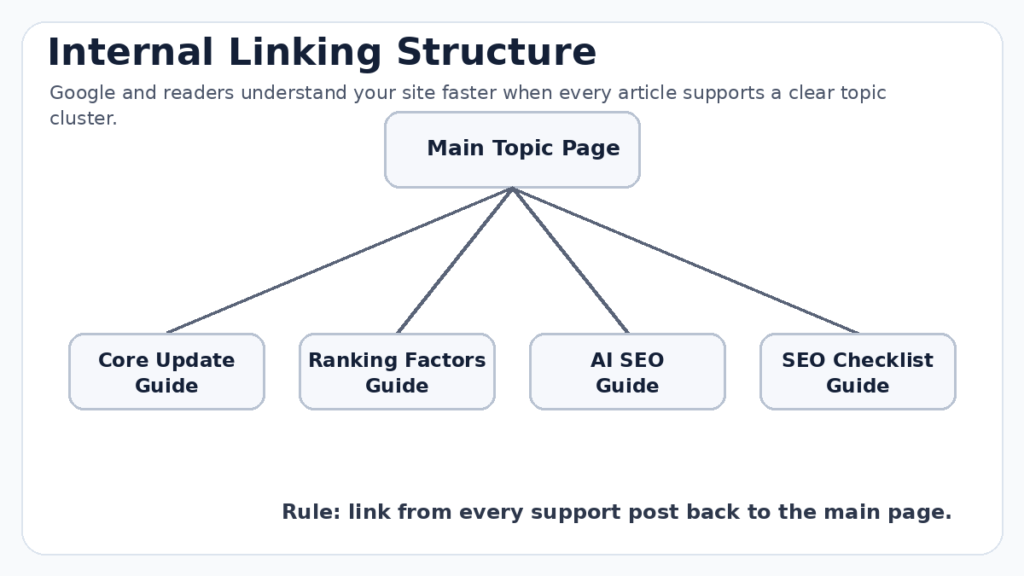
Build Internal Links
Link your article to related posts: keyword research, SEO checklist, Google core update, and content writing guide.
Internal links help readers move deeper into your site. They also help Google understand your topic cluster.
Use FAQ Schema Carefully
Add FAQ schema only when the same questions and answers are visible on the page.
Google uses structured data to understand page content better, but fake or hidden markup can create trust issues.
Update Old Content After Big Changes
Do not leave old SEO posts untouched for years.
After a major Google update, check your title, examples, screenshots, dates, tools, links, and weak paragraphs.
Add Trust Signals
Show who wrote the article and why readers should trust it.
Add author bio, sources, real experience, country-specific notes, and clear dates where needed.
Quick SEO Content Checklist
| Task | Why It Helps |
|---|---|
| Match search intent | Reader gets the right answer |
| Answer in 100 words | Better user experience |
| Add examples | Builds trust |
| Use natural keywords | Helps Google understand |
| Add internal links | Builds topic depth |
| Update old posts | Keeps content fresh |
To optimize for Google algorithm, write like a helpful person, not like a keyword machine. That is the safest way to build content Google and real readers can trust.
Google Algorithm Myths Beginners Should Avoid
Many Google algorithm myths waste your time, money, and energy. So, avoid these SEO mistakes before you write your next blog post.
Myth 1: More Keywords Mean Better Ranking
Keyword stuffing does not work now. Google calls it spam when you add keywords again and again to push ranking.
Use your main keyword in the title, intro, headings, and useful places. Then write like you talk to one real person.
Myth 2: AI Content Is Always Bad
AI content can rank when you add real value, facts, edits, and human experience. But mass AI pages with no value can break Google’s spam rules.
So, use AI like a helper. Do not use it like a lazy writer.
Myth 3: Backlinks Alone Can Rank Weak Content
Backlinks still help trust. But they cannot save a weak page that gives a poor answer.
One strong page with clear steps can beat a page with links and no depth. So, fix content before you chase backlinks.
Myth 4: Core Web Vitals Can Save Poor Content
Core Web Vitals check speed, response, and page stability. Google says they help user experience, but they are not magic.
A fast bad page is still a bad page. First improve the answer, then improve speed.
Myth 5: Exact-Match Domains Guarantee Ranking
A domain like bestseotips.com does not guarantee ranking. Google ranks useful pages, not just nice names.
A good domain may help memory. But trust comes from content, links, and real value.
Myth 6: Longer Content Always Ranks Better
Long content does not mean good content. A 900-word guide can beat a 3,000-word post if it solves the query faster.
Write until the reader gets the answer. Then stop.
Quick Truth Table
| Myth | Real Truth |
|---|---|
| More keywords rank better | Natural keywords work better |
| AI content is bad | Low-value AI content is bad |
| Backlinks rank anything | Good content needs trust |
| Speed fixes all SEO | Speed helps good content |
| Exact domains win | Useful pages win |
| Longer is better | Complete is better |
The safest way to beat Google algorithm myths is simple: answer the query, show real value, avoid tricks, and make the page easy to use. This is boring SEO, but it works.
Best SEO Strategy for Google Algorithm in 2026
Your best SEO strategy 2026 is simple: write for the reader first, then clean the page for Google.
Google still rewards helpful, people-first content, not pages made only to chase rankings. Its AI Search features also use core Search ranking and quality systems, so normal SEO still matters.
Here is the smart choice for each level:
| Your situation | Best action |
|---|---|
| Beginner | Write simple tutorials and FAQs. |
| Need safety | Follow Google spam rules. |
| Need quick growth | Update weak old pages. |
| Want long-term traffic | Build topical authority. |
| Advanced SEO | Add brand proof, data, and AI-search answers. |
Start with weak pages first: open Google Search Console, find pages with impressions but low clicks, then rewrite the intro, headings, examples, and FAQs.
Next, build topic clusters. For example, if you write about “Google algorithm SEO,” connect articles on ranking factors, core updates, AI Overviews, backlinks, and content quality.
Do not use shortcuts. Google warns that scaled low-value AI content, spam tactics, and tricks can hurt visibility.
In 2026, AI Search is too big to ignore. Google says AI Overviews has over 2.5 billion monthly users, and AI Mode has passed 1 billion monthly users.
So write answers that sound like a real expert spoke them: clear steps, honest limits, fresh examples, local context, and real proof.
The safest SEO strategy 2026 is this: help the reader faster than your competitor, and give Google clean signs that your page deserves trust.
Real-World Example: How a Blog Post Can Rank Better
Think about this simple SEO ranking example: you write “best website themes,” but you only list 10 theme names.
That page feels thin because the reader still cannot choose the right theme.
So, make the post useful: show which theme fits a blog, shop, portfolio, news site, or local business.
Google also says people-first content works better than content made only to rank.
What You Should Add
Add details that help your reader decide fast: not just read and leave.
Use your own test notes, even if you tested only 3 themes on one WordPress site.
| Add this | Why it helps |
|---|---|
| Use cases | Helps beginners choose |
| Pros and cons | Builds trust |
| Speed notes | Shows real testing |
| Screenshots | Makes steps clear |
| Buyer FAQs | Matches search intent |
For example, say this clearly: “Astra is good for speed, Kadence is good for layout control, and GeneratePress is good for clean blogs.”
That one line helps more than a long generic paragraph.
What Happens After This
Now your post becomes a real guide, not a copied theme list.
It answers the Google algorithm example better because it solves the reader’s choice problem.
Also, add internal links to your CMS guide, hosting guide, speed guide, and website design article.
This helps Google understand your topic depth, and it helps readers move to the next useful page.
In short, this SEO ranking example shows one rule: useful pages beat lazy list posts.
Give proof, choices, warnings, and next steps; then your blog post has a better chance to rank.
Final Checklist to Please Google Search Algorithm
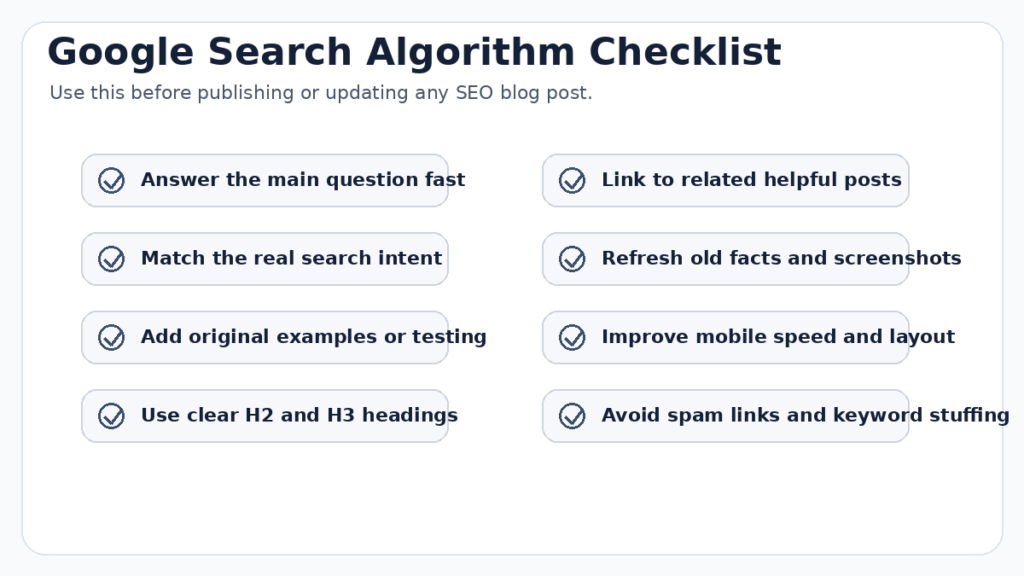
Use this Google algorithm checklist before you publish any blog post.
It helps you fix the small things that stop a good page from ranking.
First, check search intent: your page must answer what the reader wants now.
Then give a helpful first answer within the first few lines.
Now clean the page like this:
- Match one clear search intent.
- Give a short answer first.
- Add your own examples.
- Use updated facts from 2026.
- Write clean H2 and H3 headings.
- Add useful internal links.
- Link to trusted sources.
- Keep the mobile page fast.
- Avoid keyword stuffing and fake claims.
- Add a short FAQ section.
- Show author trust: name, skill, or experience.
- Update the post when facts change.
Here is my simple rule: never publish a page that only “sounds good.”
Publish a page that helps one real person finish one real task.
Also, do not chase every Google update.
Instead, follow this Google ranking checklist often, and keep improving the page with fresh proof, better examples, and clearer answers.
FAQs About Google Search Algorithm
What is Google Search algorithm?
The google search algorithm is Google’s ranking system. It checks billions of web pages and shows the most useful results fast.
So, your job is simple: write the page that best helps the reader.
How often does Google update its algorithm?
Google improves Search all the time. Also, it shares big updates like core updates and spam updates when they matter.
So, do not chase every small change. Instead, keep your content useful, clear, and fresh.
What is the most important Google ranking factor?
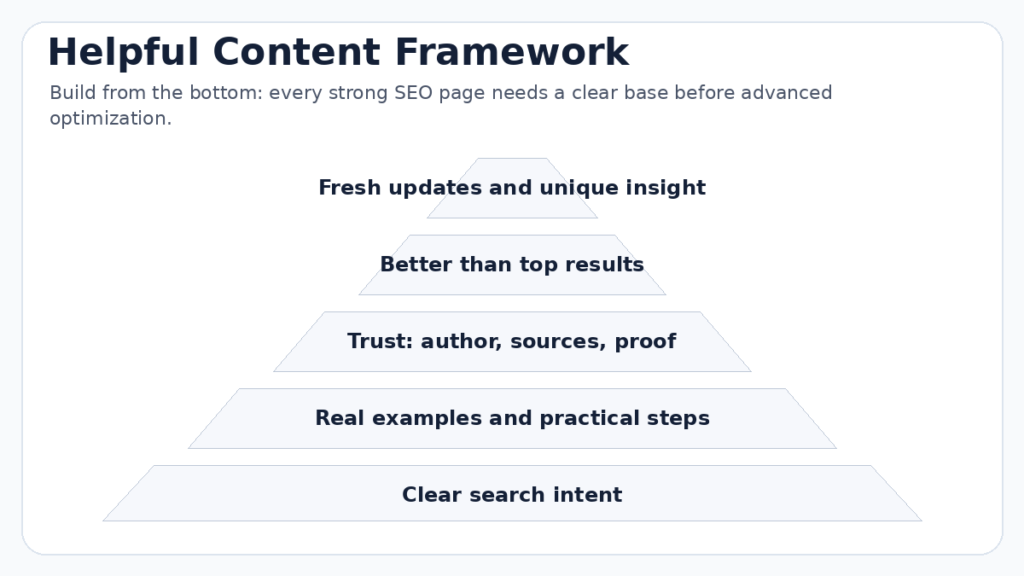
Search intent is the first thing. If your page answers the wrong need, other SEO work cannot save it.
After that, focus on helpful content, trust, links, speed, and clean structure. Google says its systems reward helpful, reliable, people-first content.
Can AI content rank on Google?
Yes, AI content can rank. But it must help people, not trick Google.
So, use AI like a helper. Then add your own examples, testing, screenshots, edits, and real advice.
Are backlinks still important?
Yes, backlinks still help. But weak links from spam sites can hurt your trust.
Think of backlinks like votes. One real link from a trusted site beats many fake links.
How do I recover from a Google update?
First, do not panic. Check which pages dropped, then improve the real weak spots.
Fix these first:
- poor search intent
- thin answers
- old facts
- fake expert tone
- too many ads
- weak internal links
Is SEO still worth it in 2026?
Yes, SEO is still worth it in 2026. Google says AI Overviews has over 2.5 billion monthly active users, and AI Mode has passed 1 billion monthly users.
So, keep learning the google search algorithm. But write for real people first.



Leave a Reply