You can make money writing articles for blogs even when you have no degree, paid client, or costly writing course. Strong English helps, but clear ideas, sound research, and useful advice matter more than fancy words.
You can also write in Telugu, Hindi, Tamil, or another regional language. Local shops, news sites, learning firms, apps, and YouTube channels need writers who know how local people speak and search.
This guide is about writing blog posts for clients, not waiting for ads on your own blog. A client may pay you to research a topic, use basic SEO, write a clear article, check facts, and meet a deadline.
AI has not removed the need for skilled writers. Google says AI may help with research and structure, but mass content with little value may break its spam rules.
The wider writing field still has paid demand: the U.S. Bureau of Labor Statistics expects about 13,400 writer and author openings each year from 2024 to 2034.
Your first job may come fast, but steady income takes strong samples, regular pitches, fair rates, and repeat clients. This seven-step plan shows you how to make money writing articles for blogs without fake promises.
What Does a Paid Blog Writer Actually Do?
A paid blog writer turns a topic into a useful article for a business or website. You do more than fill a page with words: you help the client answer reader questions, gain search traffic, and build trust.
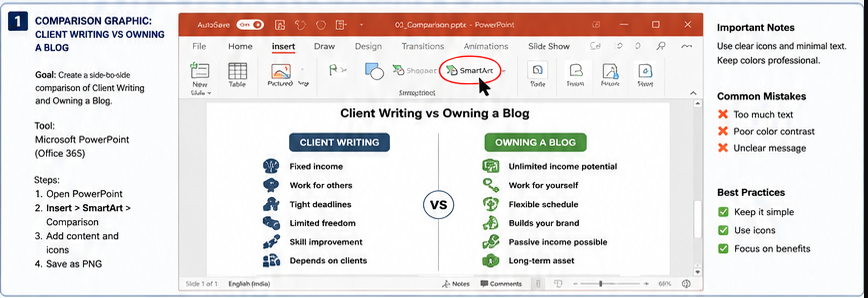
Client Writing Versus Owning a Blog
Writing for clients can bring income sooner because the client pays for agreed work. Your own blog may take longer because you must first gain traffic, readers, and sales.
| Model | How you earn | Time to possible income | Main risk |
|---|---|---|---|
| Writing for clients | Payment for each article or project | A few weeks | Poor or late-paying clients |
| Your own blog | Ads, affiliate links, or products | Often months or longer | Traffic may not earn money |
| Paid publications | Payment for an accepted pitch | Varies | Editors may reject your idea |
| Medium-style platforms | Payment based on member activity | Hard to predict | Rules and earnings may change |
Medium, for example, pays eligible writers based on member activity on their stories. This means your income depends on the platform and its current rules.
Blog writing is also different from copywriting: a blog post often teaches, while copywriting mainly asks the reader to buy or act.
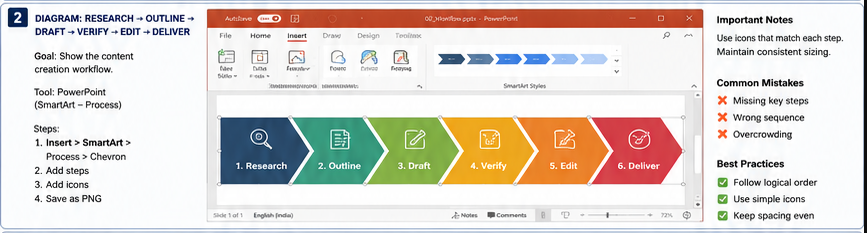
Standard Blog-Writing Deliverables Checklist
Before you accept a job, check what the client expects:
- Search intent and keyword research
- A clear article outline
- Trusted sources and fact checks
- An SEO-friendly draft
- Headings and clean formatting
- Meta title and description
- Internal and external link ideas
- Image or screenshot notes
- WordPress upload, when requested
- One or two revision rounds
Some clients give you the keyword and outline; others expect you to find them. A skilled paid blog writer confirms every task before giving a price or deadline.
Can You Still Make Money Writing Blog Posts in the AI Era?
The Realistic Answer
Yes, you can still make money writing blog posts, but basic writing now faces more price pressure. AI can draft fast, so clients will not pay well for copied facts, long filler, or plain rewrites.
Businesses still need people who can check facts, interview experts, find fresh angles, and fix weak drafts. They also need a writer who knows the reader, follows the brand voice, and takes full care of the final work.
Do not sell “1,000 words” as your main service; sell a clear business result. For example, offer a product guide that brings search traffic, answers buyer doubts, and helps the client gain leads.
The U.S. Bureau of Labor Statistics expects about 13,400 writer and author openings each year from 2024 to 2034. This figure covers many writing roles, so it does not promise the same number of freelance blog jobs.
What Current Writers Are Saying
Many freelance writers say that general blog work has slowed, while cheap content mills still offer very low rates. They also say that winning the first few clients is hard, so you need strong samples and a steady pitch system.
Yet, live job pages still show demand for content writers, editors, SEO writers, and technical writers in India and abroad. The safer path is to pair writing with SEO, product knowledge, strategy, or a hard skill such as finance, law, health, or DevOps.
Your Human Edge
Your best edge is not fancy English; it is proof that you understand the topic. Use first-hand tests, expert interviews, local details, original images, regional-language skill, checked facts, and firm views.
AI can make content faster, but speed does not always improve quality; 12% of marketers in one 2026 study said AI reduced content quality. You can still make money writing blog posts when you give clients trust, clear judgment, fewer edits, and work they can safely publish.
Who Is Freelance Blog Writing Best For?
Freelance blog writing suits you if you enjoy reading, learning, and explaining ideas in simple words. You do not need perfect English, but your writing must be clear, correct, and useful.
This Work May Suit You If:
- You read often and enjoy finding new facts.
- You like checking sources before you make a claim.
- You can explain hard topics in easy words.
- You know a field such as teaching, finance, health, software, farming, travel, or food.
- You can write in English or a regional language.
- You accept edits without taking them as a personal attack.
- You can meet deadlines and reply to clients on time.
- You want a part-time income while keeping your main job or studies.
Introverts can also become good freelance writers: most client talks happen through email, chat, or video calls. Students can start too, but they should write about topics they know or can research well.
You Should Wait or Choose Other Work If:
Avoid this work if you hate research, copy text, or trust every result from an AI tool. Raw AI content often contains weak ideas, false facts, and made-up sources.
You should also wait if you need a fixed salary from the first month. Freelance blog writing needs patience, client outreach, revisions, steady practice, and honest work.
Seven Skills You Need to Become a Paid Blog Writer
The skills you need to become a paid blog writer go far beyond good grammar. You must understand the reader, find sound facts, write with care, and make the client’s job easier.
1. Clear Writing—not “Perfect” Writing
You do not need rare words or long sentences to sound skilled. You need to explain hard ideas in a way that feels easy to read.
Use correct grammar, but do not let fear slow you down. Match the client’s tone, remove extra words, and choose clarity over clever language.
For example, do not write, “Businesses must implement effective measures.” Write, “Businesses should use clear steps that solve the problem.”
2. Search Intent and Basic SEO Skills
SEO helps you learn what the reader wants from the page. Start with one primary keyword, then collect related questions that the same reader may ask.
Place useful terms in the title, opening lines, headings, image text, and links when they fit. Google advises writers to use the words people search for in clear places, but it also puts helpful, people-first content first.
Use short headings that guide the reader through the answer. Add internal links to helpful pages, then write a clear SEO title and meta description.
Do not count how many times you use a keyword. Instead, ask one hard question: “Has the reader received the full answer?”
3. Research and Information-Gathering Skills
Good blog writing starts before you type the first line. You must find facts, compare sources, and spot what other articles have missed.
Check government sites and official rules first. Then use original studies, company documents, trusted news reports, and expert interviews.
Use Reddit, Quora, YouTube comments, and local forums to find real pain points. However, treat user posts as personal experience, not proof of a broad claim.
4. Fact-Checking
Never copy a number just because three websites repeat it. Open the first study, report, survey, or public record that produced the number.
Check the data year, country, sample size, and update date. Save every source link beside the related claim, so you can check it again before delivery.
Also separate one person’s result from a common result. A writer earning ₹1 lakh a month proves that it can happen; it does not prove that every beginner will earn it.
5. Reading Habit and Subject Awareness
Read in one niche each day, even for 20 minutes. Save useful terms, customer questions, expert views, examples, and changes in the field.
Listen to how real buyers describe their problems. Their words often give you stronger headings than a keyword tool can provide.
Build a simple research library in Google Drive, Notion, or a spreadsheet. Sort it by topic, source, date, and possible article idea.
6. Fast Drafting and Voice Typing
First, prepare the outline; then dictate one heading at a time. Say “check this fact” when you reach a claim that needs more research.
A Stanford-led study found that speech input was about three times faster than phone typing for short English messages under lab conditions. Yet the study also found small errors in final text, so voice typing still needs careful editing.
Finish the rough draft before fixing every line. Then remove repeated words, repair long sentences, and check names, figures, regional terms, and technical words.
7. Client Communication
Before you begin, ask about the audience, goal, keyword, format, sources, deadline, and brand tone. Also confirm the fee, payment date, word range, and number of free revisions.
Send a short update when the work takes several days or when a source changes the planned angle. Deliver the file in the requested format, with links, notes, and missing details marked clearly.
These are the core skills you need to become a paid blog writer who gets repeat work. Clear writing may win the first project, but sound research, SEO sense, fast delivery, and honest communication help you keep the client.
Step 1: Choose a Writing Niche That Clients Pay For
To choose a profitable writing niche, start with work you already know. Your niche should also solve a problem that a business will pay to explain.
Use the Three-Circle Test
Pick a niche where these three areas meet:
- You know the topic or use it in real life.
- You can check facts through trusted sources.
- Companies spend money on related products or services.
For example, a DevOps engineer can write about AWS, Docker, Jenkins, Kubernetes, or cloud security. This path is faster than learning fashion, law, or health from zero.
Compare Popular Writing Niches
| Niche | Easy to Start | Income Scope | Main Risk |
|---|---|---|---|
| Lifestyle | High | Low to medium | Too many writers |
| SaaS software | Medium | Medium to high | You must test the tool |
| Personal finance | Low | High | Wrong advice can harm readers |
| Health | Low | High | Claims need trusted medical sources |
| Legal | Low | High | Never give legal advice |
| Ecommerce | High | Medium | Work may feel repeated |
| Education | High | Medium | Rules and courses can change |
| Regional content | Medium | Medium | Fewer clients, but less competition |
| Technical or DevOps | Low for new writers | High | Real skill is a must |
Google gives more weight to trust signals when content affects health, money, or safety. Choose these niches only when you have sound knowledge and can support each claim.
Pick the Best Niche for Your Goal
- Best for beginners: education, ecommerce, productivity, and local business.
- Fastest choice: a topic linked to your job, course, or daily work.
- Higher-paying choice: software, DevOps, finance, health, legal, and B2B.
- Regional choice: Telugu, Hindi, Tamil, local news, education, and local trade.
- Safest choice: a topic where you can check every fact.
Regional writing is not a small idea. India had 958 million active internet users in 2025, with Indic-language use helping drive growth.
Do not pick a niche only because someone calls it profitable. Choose a profitable writing niche where your skill, proof, and client demand meet.
Step 2: Learn the Structure of an SEO Blog Post
An SEO-friendly blog post gives the reader a clear answer without making them search through long introductions. It also helps Google understand the page’s topic, purpose, and value.
Use a Simple Seven-Part Structure
You do not need a complex writing formula. Use these seven parts for most client blog posts:
- Search-aligned title: Use the main words that your reader types into Google.
- Direct opening answer: Answer the main question within the first few lines.
- Definition or context: Explain the topic when the reader needs basic details.
- Step-by-step solution: Show the reader what to do and in which order.
- Examples or comparisons: Turn broad advice into something the reader can understand.
- Risks and mistakes: Warn the reader about actions that waste time or cause poor results.
- Practical next action: Tell the reader what to do after finishing the article.
For example, a person searching “how to find blog-writing clients” wants clear steps, not a long history of freelance writing. Start with the answer; then explain where to find clients, how to contact them, and which mistakes to avoid.
Apply the Information-Density Test
Check every paragraph before you submit the article. Each paragraph should offer at least one useful item:
- A fact or clear explanation.
- A practical example.
- A direct recommendation.
- A warning or common mistake.
- A comparison or choice.
- An action the reader can take.
Delete a paragraph when it only repeats an earlier point. Short content becomes more useful when each line helps the reader understand, choose, or act.
Write for People First
Google advises creators to publish helpful, reliable, people-first content instead of pages made mainly to gain rankings. Google also recommends using the words people search for in clear places, such as the title, main heading, link text, and image alt text.
This means you should use keywords naturally, not a fixed number of times. Google’s newer AI-search guidance also favors unique, expert-led content that adds value beyond common facts already found across the web.
Weak: “SEO is very important for writers because SEO helps articles rank.”
Stronger: “Before writing, check whether the reader wants steps, a comparison, or a product. Even good writing may fail when it answers the wrong search intent.”
An SEO-friendly blog post works because it solves the reader’s real problem. Give a fast answer, useful proof, clear steps, honest warnings, and one simple next action.
Step 3: Build a Portfolio Without Previous Clients
You can create a writing portfolio with no experience because clients want proof of skill, not only past job titles. Your samples must show that you can research a topic, understand the reader, and write a useful blog post.
Create Three Strategic Writing Samples
Start with three samples in one clear niche, such as health, finance, travel, software, education, or local business. Three strong articles are more useful than ten weak posts on random topics.
Create these samples:
- A how-to article: Teach the reader how to solve one clear problem.
- A comparison article: Compare two tools, services, or methods with fair pros and cons.
- A commercial article: Help the reader choose a product, service, or business solution.
For example, a Telugu technology writer could create guides on UPI safety, budget phones, and useful government apps. This focused set shows language skill, local knowledge, and topic expertise.
Each blog-writing sample should include:
- A clear target reader.
- One main search query.
- Useful facts from trusted sources.
- Clear H2 and H3 headings.
- Real examples or simple steps.
- A short and helpful conclusion.
- An SEO title and meta description.
Do not write long samples just to look skilled; a clear 800-word guide can beat a dull 2,000-word post. Upwork also says freelancers with a published portfolio are hired more often than those without one.
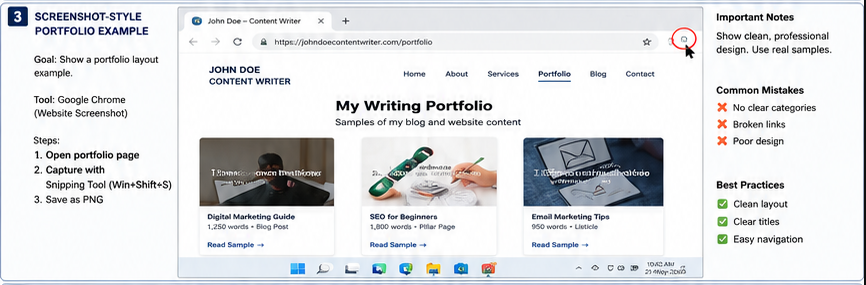
Where Should You Publish Your Samples?
Use a WordPress site when you want full control and a strong personal brand. Use LinkedIn when your target clients are founders, managers, recruiters, or agencies; LinkedIn articles also stay linked to your professional profile.
Medium gives each published story a shareable link and keeps your work on one profile page. Notion is faster for beginners because you can turn a page into a public site without coding.
A Google Drive PDF works for direct pitches, but it is harder to find through search. A guest post adds trust, yet you must follow the site’s rules and wait for approval.
Label Mock Work Honestly
Mark self-made work as “Portfolio sample,” “Spec article,” or “Independent editorial sample.” Never claim that a mock article came from a paying client.
Your first portfolio does not need awards, traffic, or famous brand names. To create a writing portfolio with no experience, show three relevant samples that make a client think: “This writer can handle my article.”
Step 4: Decide What to Charge for a Blog Post
Knowing how much to charge for a blog post can feel hard when you are new. Start with your time, work, skill, and monthly income goal.
Compare Blog-Writing Pricing Models
You can charge in five common ways. Each pricing model fits a different type of writing job.
| Pricing model | Best for | Main benefit | Main drawback |
|---|---|---|---|
| Per word | Simple articles with a fixed length | Easy to calculate | Rewards more words, not better work |
| Per hour | Research, editing, and update work | You get paid for your time | The client may fear a high final bill |
| Per project | Most blog-writing jobs | Both sides know the total price | You must set a clear work scope |
| Monthly retainer | Regular client work | Gives you steady monthly income | You must deliver work on time each month |
| Value-based | Sales and lead-focused content | Can support higher rates | Hard for a new writer to price |
For most beginners, per-project pricing is the best choice. It lets you price the full task, not just the number of words.
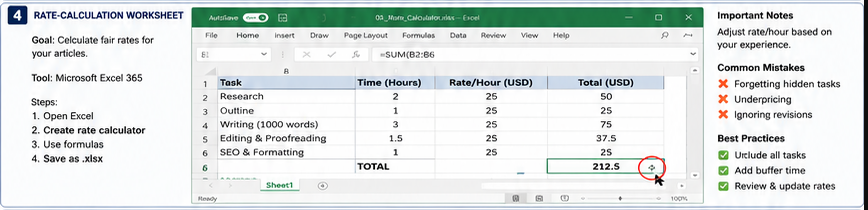
Find Your Minimum Blog-Writing Rate
Use this simple formula:
Monthly writing income goal ÷ number of billable articles = minimum rate per article
Suppose you want to earn ₹30,000 each month. If you can complete eight paid articles, your base rate is ₹3,750 per article.
Do not stop at this number. Add more money when the job needs extra work:
- Deep research or fact-checking
- Expert or customer interviews
- Keyword research and an SEO brief
- WordPress upload and formatting
- Copyright-safe image sourcing
- Technical or industry knowledge
- More than one revision
- Urgent delivery
Published rates show how wide the market can be. Upwork lists beginner, intermediate, and expert blog-writer rates at about $20, $41, and $85 per hour, while its broader 2026 guide lists many blog writers at $15–$35 per hour.
Peak Freelance’s survey of 213 writers found that $250–$399 was the most common price for a 1,500-word blog post; 27% chose this range. These figures are useful market checks, but they do not promise that every beginner will earn the same amount.
Set Your Rate for Indian and International Clients
There is no single fair content-writing rate in India. Your price will change with the client’s country, niche, language, research needs, experience level, and final deliverables.
A local shop may have a smaller budget than a global software firm. Still, do not lower your fee only because you live in India; price the work by its effort, risk, skill, and business use.
Before you quote, list what the client will receive and how many revisions you include. That is the safest way to decide how much to charge for a blog post without underpricing your work.
Step 5: Find Blogs and Businesses That Need Writers
You do not need to wait for clients to find you. You can find blog-writing clients through direct outreach, agencies, job sites, personal contacts, and regional markets.
Method 1: Contact Businesses Directly
Search for businesses in a field you know well. Check their website, blog, LinkedIn page, and main competitors.
Look for clear content gaps:
- The blog has had no new post for six months.
- Old posts contain dead links or old data.
- Product pages do not answer buyer questions.
- The blog lacks guides, use cases, or comparison posts.
- A competitor publishes better and more useful content.
Do not send a plain message that says, “I am a writer.” Show one real gap, suggest one useful title, and explain how it may help the business.
For example, a Hyderabad software firm may sell a good cloud tool but have no setup guide. You can suggest a post such as, “How to Set Up Cloud Backups for a Small Business.”
Method 2: Work With Marketing Agencies
SEO and content agencies often need writers each month. One good agency may give you work for many brands.
Agencies also give you briefs, keywords, deadlines, and editor notes. This helps you learn a clear writing process.
However, agency rates may be lower than direct-client rates. You may also face strict style rules, short deadlines, and a high work load.
Method 3: Use Job Boards and Freelance Sites
Use Upwork, Fiverr, LinkedIn Jobs, ProBlogger, BloggingPro, and niche writer groups. You can also pitch magazines and websites that pay for accepted stories.
The choice depends on your goal:
| Source | Best use | Main risk |
|---|---|---|
| Upwork | Global freelance projects | High bid pressure |
| Fiverr | Fixed writing packages | Low starting prices |
| Jobs and direct contacts | Many broad listings | |
| ProBlogger | Blog and niche writing | Strong competition |
| BloggingPro | Paid writing leads | Rates vary widely |
| Publications | Paid expert articles | Pitches may be rejected |
In July 2026, LinkedIn showed more than 1,000 freelance content-writer listings in India. Upwork also displayed thousands of content-writing jobs, but listing counts change each day.
BloggingPro says its paid-publication database includes rates from $15 to more than $500 per article. This wide range shows why you must check the work, rate, rights, deadline, and payment terms before you apply.
Method 4: Ask People You Already Know
Your first client may be closer than you think. Speak with former employers, startup founders, web designers, SEO firms, local shops, and marketing friends.
Do not ask, “Do you have any writing work?” Ask whether they need product guides, blog posts, case studies, email copy, or old-content updates.
Method 5: Explore Regional-Language Work
English is not your only path. Telugu, Hindi, Tamil, Bengali, Marathi, and other language skills can help you reach less crowded markets.
Contact local news sites, coaching firms, YouTube channels, travel portals, apps, online shops, and translation agencies. Offer local content, video scripts, explainers, or true localization—not word-for-word translation.
Start with ten well-matched prospects and send five personal pitches. This focused method can help you find blog-writing clients faster than sending one generic message to hundreds of businesses.
Step 6: Send a Pitch That Shows Business Value
To pitch yourself as a freelance writer, do not start with your passion. Start with a problem you can help the client solve.
Use a Five-Part Freelance-Writing Pitch
First, read the client’s blog and learn who it serves. Then find a useful question that the blog has not answered well.
Your pitch should include:
- A personal opening with the editor’s name.
- A real observation about the blog.
- One clear article title and angle.
- Two relevant writing samples.
- One easy question that invites a reply.
Editors want ideas that fit their readers. Pitch advice shared by working writers also stresses a short introduction, a clear title and proof that the idea suits the publication.
Sample Pitch to a Blog Owner
Hi [Name],
I enjoyed your guide about [topic], mainly the section on [specific point]. However, your blog does not yet answer [customer question].
I would like to write “[proposed title]” for [target reader]. The post would explain [point one], [point two] and [point three], helping you gain search traffic and build reader trust.
Here are two related samples: [link] and [link]. Would this idea fit your content plan?
Keep the email short enough to read on one phone screen. For example, an Indian SaaS writer could pitch “How GST Billing Software Helps Small Retail Shops Avoid Invoice Errors” instead of asking, “Do you need a writer?”
Why Generic Pitches Fail
A client cannot act on “I am a passionate writer.” It says nothing about the audience, topic or business result.
Avoid these common mistakes:
- Saying you can write about every topic.
- Sending the same email to many blogs.
- Adding ten unrelated portfolio links.
- Asking for work without sharing an idea.
- Claiming skills that you cannot prove.
- Asking for a long meeting in the first email.
One Reddit writer reported receiving only one reply after 73 pitches, which shows that outreach has no fixed success rate. Treat each pitch as a focused offer, not as a request for a favour.
Send one polite follow-up after seven to fourteen days. If there is still no reply, move on and pitch yourself as a freelance writer to a better-fit client.
Step 7: Deliver an Article Clients Will Rehire You For
To deliver content writing work professionally, treat each article like a clear promise. Give the client the right content, in the right format, by the agreed date.
Before You Start Writing
Ask for a clear content brief before you type the first line. Confirm these points:
- Target reader and their main problem
- Primary keyword and search intent
- Client’s business goal
- Word count and tone
- Approved research sources
- Internal links to add
- Delivery date and file format
- Number of free revisions
- Rules for using AI tools
Agree on the revision limit in writing; one or two revision rounds work well for most blog posts. Clear rules stop endless edits and protect both you and the client.
While You Write the Article
Create the outline first, then answer the main search query near the top. Use the client’s words for products, services, customers, and key features.
Add facts, useful examples, clear steps, and honest trade-offs. Link each key claim to its first or most trusted source.
Do not repeat the same tip to make the article longer. Mark any fact you cannot prove with a note such as “check price” or “verify date.”
Google advises writers to create useful, reliable content for people first. It also warns that mass AI content with no added value may break its spam rules.
Check the Draft Before Delivery
Use this short content writing quality checklist:
- Does the opening answer the search query?
- Does each section give a new fact or action?
- Are names, dates, prices, and statistics correct?
- Do links lead to trusted and original sources?
- Are headings in a clear order?
- Are paragraphs easy to read on a phone?
- Does the keyword sound natural?
- Did you remove copied lines and weak AI phrases?
- Does the ending give the reader a next step?
Read the draft aloud once. Your ears often catch long lines, missing words, and odd phrases that your eyes skip.
After You Send the Article
Ask for focused feedback: “Which part should I improve for your next article?” Save repeated edits in a small client style guide.
Then suggest two related blog topics that support the same business goal. After the client accepts your work, ask for a short testimonial and the next assignment.
That final step matters: good writers submit files, but trusted writers reduce the client’s work. This is how you deliver content writing work professionally and turn one blog post into steady work.
How to Use AI Without Losing Your Human Voice or Client Trust
You can use AI for freelance writing without losing your human voice. Let it help with small tasks, but make every final choice yourself.
Use AI as an Assistant, Not as the Author
Start with your own topic, reader, view, and goal. Ask AI to list research questions, sort notes, find reader doubts, or suggest a better article flow.
You can also use it to shorten a hard sentence, compare tones, or build an edit list. After the draft, ask: “Does this article fully answer its title?”
For example, give AI five messy notes from a client call. Let it group them, but write the section yourself with the client’s facts and real case.
Check Every Important Claim
Never trust AI for a fresh number, quote, law, health claim, price, or product feature. Open the source, check the date, and confirm the claim before using it.
Take extra care with local facts and regional language. A Telugu phrase may look right but still sound odd to a reader in Hyderabad.
Use this simple rule:
- AI may suggest a fact; you must prove it.
- AI may suggest a source; you must open it.
- AI may suggest advice; you must judge it.
- AI may draft; you must own the result.
Add Human Value, Not Fake Errors
Do not add spelling mistakes to fool an AI detector. Weak writing does not become human writing.
Add what the tool does not know: your view, a client lesson, a local example, a limit, or a hard choice. For instance, explain how a tool saved one hour but added three wrong product claims.
Google asks creators to publish useful, unique, people-first content instead of pages made only for rankings. Its May 2026 AI Search guidance also supports expert-led content that adds value beyond common facts.
AI may improve speed, but speed does not prove quality. In Content Marketing Institute’s 2026 B2B study, 87% reported better productivity, while only 58% reported better content quality.
Be Open With Your Client
Follow your client’s AI policy, and never hide banned AI use. Keep your notes, source links, prompts, and fact checks in one file.
You remain responsible for each line you submit. When you use AI for freelance writing, your proof, judgment, and human voice must stay in control.
Can Voice Typing Help You Write Blog Posts Faster?
Voice typing for blog writing can help you finish your first draft faster. It works best when you plan your ideas before you start to speak.
A Stanford-led study found that speech input was three times faster than mobile typing in English. Still, fast speech does not always create a clean blog post.
How to Use Voice Typing
Follow this simple workflow:
- Research the topic and save trusted facts.
- Make an outline with clear headings.
- Speak about one heading at a time.
- Say placeholders such as “add price here” or “check this name.”
- Let the speech-to-text tool create your rough draft.
- Cut repeated words and long sentences.
- Check names, dates, numbers and technical terms.
- Read the final post aloud before you publish it.
Google Docs lets you open Tools, choose Voice typing, and speak at a normal pace. You can also use Gboard on an Android phone to turn speech into text.
Benefits and Drawbacks
Voice typing helps you catch ideas before you forget them. It also reduces hand strain and suits people who think better while speaking.
However, spoken drafts often contain filler words, weak punctuation and repeated points. Your natural speech may also sound too casual for a bank, law firm or software brand.
Use dictation to create the clay, not the final pot. Voice typing for blog writing saves time only when you research first and edit every line.
English Versus Regional-Language Blog Writing
English versus regional-language blog writing gives you two good ways to earn. Your best choice depends on your language skill, topic, client, and target reader.
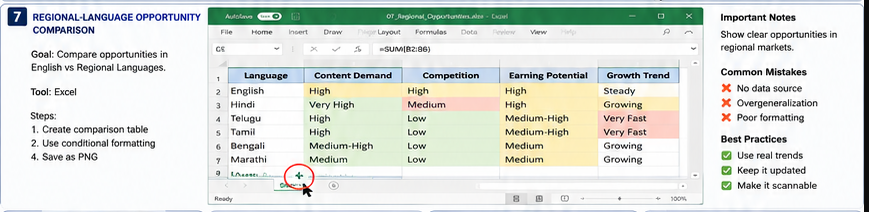
| Factor | English writing | Regional-language writing |
|---|---|---|
| Client pool | Large and global | Smaller but growing |
| Competition | High | Often lower |
| Rates | Low to premium | Based on language and market |
| Research | More sources are available | Bilingual research may be needed |
| Main strength | Global reach | Strong local trust |
| Main risk | Low-cost competition | Low budgets and poor translation |
English writing can connect you with global blogs, software firms, agencies, and online stores. However, you may compete with thousands of writers who offer the same basic service.
Regional-language writing can help brands reach people in Telugu, Hindi, Tamil, Bengali, Marathi, and other languages. India was expected to cross 900 million internet users in 2025, while 57% of urban users preferred regional-language content.
Do Not Just Translate: Localize
Translation changes the words, but localization changes the full message for local readers. Google also treats language and region as separate signals for multilingual websites.
You should localize:
- Currency, prices, and units.
- Search words used by local people.
- Laws, schemes, and government offices.
- Festivals, food, places, and daily examples.
- Products available in that region.
- Reading level and spoken language.
For example, a Telugu reader may search for “రైతు బీమా ఎలా పొందాలి,” not a direct English keyword translation. A useful writer checks Telugu search terms, state rules, local names, and the reader’s real problem.
Choose a Clear Position
You can work as a bilingual SEO writer, Telugu content adapter, regional YouTube scriptwriter, or local-business writer. You can also write education guides, government-service explainers, and regional product reviews.
English versus regional-language blog writing is not an either-or choice. Learn both, then sell your ability to carry one useful idea across two languages without losing its meaning.
Common Freelance Writing Mistakes That Keep You Underpaid
Most freelance writing mistakes start before you write the first line. You lose money when you sell “words” but fail to set rules, show proof, or solve a clear client need.
You Try to Write About Everything
Saying “I write about everything” makes you look like a general helper, not a skilled writer. Pick one or two fields where you can offer useful facts, sound views, and clear examples.
You also need a small portfolio with two or three strong samples. Without proof, even a good pitch feels like a promise from a stranger.
You Let the Client Control the Whole Deal
Never start work without a written scope: list the topic, length, fee, due date, payment date, and number of edits. Freelancers Union also advises you to define the work, rate, and payment terms before you begin.
Offer one or two edit rounds, not endless changes. Charge for research, SEO work, calls, expert input, images, and uploads—not just the final word count.
You Work for Free or Trust the Wrong Client
A short skill test may be fair, but a full unpaid blog post is free labour. One Reddit writer was asked to submit two unpaid, 1,000-word SEO articles within one day: that is a clear warning sign.
Watch for vague briefs, fake cheques, rushed offers, advance fees, and clients who avoid contracts. Use milestones or ask for part payment before large jobs.
You Submit Weak or Misleading Work
Do not copy a rival’s headings, use old data, or send raw AI text. Check every date, link, quote, name, claim, and number before you submit the post.
Good English alone does not make content useful. First learn the search intent: find the reader’s real problem, answer it fast, and add facts or steps they can use.
You Build a Risky Writing Business
Do not depend on one marketplace or one client. Upwork lists typical blog-writer rates of $15–$35 per hour, yet real offers can fall far below that range.
Pitch direct clients, agencies, past contacts, and local firms; then follow up once or twice. Keep your main job until writing income stays steady, since one lost client can cut your pay in a single day.
Avoiding these freelance writing mistakes will not make you rich at once. It will help you protect your time, earn fair pay, and build work that lasts.
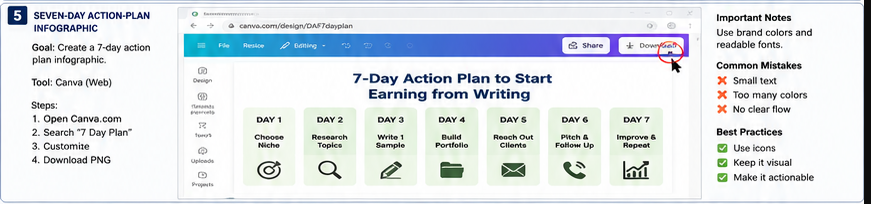
A Realistic Seven-Day Plan to Start Earning
You can start content writing in seven days, but you may not earn at once. Your goal is to build a simple system that can bring your first writing client.
Day 1: Pick One Niche and One Reader
Choose a topic you know well: DevOps, food, travel, education, finance, or Telugu business content. Then write one clear line: “I write simple DevOps guides for SaaS firms that sell to engineering teams.”
Day 2: Find 20 Real Reader Questions
Check Google suggestions, People Also Ask, Reddit, YouTube comments, reviews, forums, and product help pages. Save questions that show a clear problem, cost, risk, choice, or task.
Day 3: Plan One Useful Sample
Pick one question that a business may want to rank for or share with buyers. Build a short outline with the answer, steps, example, common mistake, and next action.
Day 4: Write and Edit the Sample
Use your own knowledge where it fits, and use trusted sources for facts. Add a clear opinion or local example; Google advises writers to create useful, original, people-first content.
Day 5: Publish a Simple Portfolio
Use WordPress, Medium, LinkedIn, Notion, or a clean Google Drive file. Add these details:
- Short bio
- Writing niche
- Two useful samples
- Services
- Contact link
Day 6: List 20 Good Prospects
Record the business, contact name, weak blog page, article idea, pitch date, and follow-up date. Target firms that already publish blog content because they understand its value.
Day 7: Send Five Personal Pitches
Mention one real content gap and suggest one useful blog title for each client. Do not send 100 copied emails; Upwork also advises freelancers to match each proposal to the client’s needs.
What Should You Expect?
You now have one clear service, one writing sample, 20 prospects, and five live pitches. That is how you start content writing in seven days: you build proof and a repeatable path, not a false income promise.
Realistic Earnings: From Your First Article to Regular Work
You can make money writing articles for blogs, even when you have no paid work to show. But you need useful samples, clear rates, and steady client outreach.
Start With a Simple Writing Portfolio
Say you know a lot about technology, health, travel, education, or local business. You write two strong sample articles and send them to small firms in that niche.
Your first client may pay ₹2,500 for one blog post. This small project gives you paid work, client feedback, and a real portfolio sample.
Build Monthly Writing Income
The same client may later order four articles each month for ₹10,000. A second client may order two detailed articles at ₹5,000 each.
Your monthly revenue may then look like this:
- Four regular articles: ₹10,000
- Two research-heavy articles: ₹10,000
- Illustrative monthly revenue: ₹20,000
This is revenue, not pure profit. You must still count tax, software costs, research time, edits, calls, and unpaid client outreach.
Grow Through Better Work, Not More Words
You can raise your income through niche knowledge, better clients, larger projects, repeat orders, and faster work. Clients also pay more when your content helps them gain traffic, leads, or sales.
Indian writer Tanveer Singh told Business Insider that he began at one cent per word and reached about $5,000 a month by the end of 2024 after moving into technical writing. His result is one personal success story, not a normal or guaranteed income.
So, use ₹20,000 only as an example. To make money writing articles for blogs, first aim for one paid article, then turn good work into regular monthly orders.
Is Writing for Blogs the Best Choice for You?
Writing for blogs may suit you when you enjoy research, clear writing, and steady client work. Yet, the best path depends on your income goal, skills, time, and need for freedom.
| Your goal | Best option |
|---|---|
| Get paid sooner | Direct clients or paid writing jobs |
| Start with little money | Make samples and contact clients |
| Practise as a beginner | LinkedIn, Medium, or your own samples |
| Build steady income | Monthly client retainers |
| Earn from expert knowledge | Technical, legal, finance, or health writing |
| Control every topic | Start your own blog |
| Use a regional language | Local media, scripts, education, or localization |
| Build passive income | Your own blog, products, or affiliate content |
Freelance Writing or Your Own Blog?
Client writing can bring money sooner because a client pays you for each approved article. Your own blog gives you more control, but traffic and income may take months or years.
Writing for clients is active income: you research, write, edit, and deliver the work. A blog may later earn passive income, but it still needs fresh content, SEO, links, and updates.
Should You Leave Your Job?
Start freelance blog writing as a side project first. Do not leave your job after one good month or one large client.
Move into full-time work only when you have:
- Two or more regular clients.
- Three to six months of living costs saved.
- Clear rates, contracts, and payment dates.
- A steady way to find new clients.
- Stable income for at least six months.
The safest path is simple: build samples, test direct outreach, and track each payment. Writing for blogs becomes a sound career choice when your income comes from several clients—not one promise or platform.
The wider writing market still has demand: the U.S. Bureau of Labor Statistics projects about 13,400 writer and author openings each year from 2024 to 2034. Upwork lists typical blog-writer rates from $20 per hour for beginners to $85 for experts, but these figures do not guarantee your earnings.
Choose writing for blogs when you want a low-cost way to sell a real skill. Choose your own blog when you value freedom and can wait longer for income.
Final Takeaway
You can make money writing articles for blogs when your work helps real people. Clear facts, useful tips, good research, and honest writing matter more than fancy words.
Your English does not need to sound perfect. Strong Telugu, Hindi, Tamil, Bengali, or other regional-language skills can help you serve local brands and readers better.
Basic SEO helps you learn what people search for and why. Voice typing can help you draft faster, but you must still edit each line with care.
AI tools can help you plan, sort ideas, and fix weak parts. Still, you must check every fact, add your own view, and keep the final work original.
Do not chase full-time income on day one. First, build one strong writing sample, find one right client, and win one paid blog post.
Choose one niche today; write one useful sample this week. Then send five personal pitches and start making money writing articles for blogs.
Frequently Asked Questions About Making Money Writing Blog Posts
Can I get paid to write blog posts without experience?
Yes, you can get paid to write blog posts without experience, but clients will still need proof that you can write well. Pick one topic you know, create two useful sample posts, and publish them on LinkedIn, Medium, Notion, or your own simple website.
Apply for beginner blog-writing jobs and also contact small firms, bloggers, and marketing agencies. Your samples can replace past client work when you start freelance writing without clients.
How much can a beginner earn per article?
Beginner content-writing rates depend on the topic, research time, article length, client budget, and extra work such as SEO or WordPress upload. On Upwork, blog writers commonly list rates from $15 to $35 per hour, but this range does not promise the same pay for every writer.
The cost of a 1,000-word blog post may also rise when you need expert research, interviews, images, or fast delivery. Set a project rate that covers research, writing, editing, calls, and revisions.
Do I need perfect English to become a blog writer?
No, you do not need perfect English, but your article must be clear, correct, and easy to trust. Tools can find spelling and grammar errors, yet you must still check the meaning, facts, tone, and flow yourself.
Read good blogs each day, write often, and note the edits clients ask you to make. Useful ideas may win attention, but weak grammar can still confuse readers and make a client reject your work.
Can I make money writing articles in Telugu, Hindi, or another regional language?
Yes, you can earn from Telugu, Hindi, Tamil, Bengali, Marathi, and other regional-language writing. India crossed 950 million active internet users in 2025, while rural users made up about 57% of that base, which shows the large need for clear local content.
You can write local SEO pages, lessons, app content, product guides, news explainers, and YouTube scripts. Do not just translate English text; use local words, examples, prices, places, and search habits.
Do blog writers need SEO knowledge?
You need basic SEO knowledge because clients want people to find and read their posts. Learn search intent, useful titles, clear headings, natural keyword use, internal links, source links, image text, and simple meta descriptions.
You do not need to become a full SEO expert before taking your first job. Google says basic SEO can have a clear effect, but it still gives first place to helpful and reliable content made for people.
Can I use ChatGPT or another AI tool for client articles?
You can use ChatGPT for ideas, questions, outlines, and editing only when the client allows it. Ask about the client’s AI rules first, then check every fact, number, quote, link, product detail, and claim before you send the article.
Google says AI may help with research and structure, but mass-made pages with no added value may break its spam rules. You remain responsible for the article’s truth, value, voice, and originality.
Where can I find my first writing client?
Start with people who already know your work, such as past coworkers, local shop owners, teachers, startup founders, or friends in business. Then contact small firms with weak blogs, SEO agencies that need writers, and websites that publish content in your chosen niche.
You can also check LinkedIn, Upwork, writing job boards, Facebook groups, and trusted niche communities. Send a short personal pitch with one useful article idea and two strong samples instead of asking, “Do you have any work?”
How long does it take to make money writing articles?
There is no fixed time because your niche, samples, rates, outreach, and professional network shape the result. A skilled person with strong contacts may find work fast, while a new writer may need weeks of samples, pitches, follow-ups, and small paid projects.
Do not trust any course or platform that promises income within a set number of days. To get paid to write blog posts sooner, choose one clear niche, publish two useful samples, and contact suitable clients every week.




Leave a Reply