When people search for the best diet for long living life, they often expect some secret food, miracle supplement, or strict eating plan. Honestly, long-term health usually doesn’t work that way.
A healthy diet plan for everyday life is often much simpler than most people think. It’s not about starving yourself, skipping meals, or following a trendy diet for a few weeks. The real goal is to build eating habits that you can stick with for years, not days.
A good daily diet starts with plenty of vegetables, fruits, pulses, whole grains, and quality protein. Many Indian families are also bringing back traditional foods like millets, which can be a great alternative to heavily processed grains. Add some healthy fats, drink enough water, and try to keep packaged and ultra-processed foods to a minimum.
I’ve noticed that the healthiest older people rarely follow extreme diets. They simply eat balanced meals, stay active, and stay consistent. If you’re wondering how to plan a daily diet for long life, that’s really where it begins—small choices repeated every day.
What Is a Balanced Diet?
A lot of people ask, “What is a balanced diet?” The answer is actually much simpler than most diet plans make it sound.
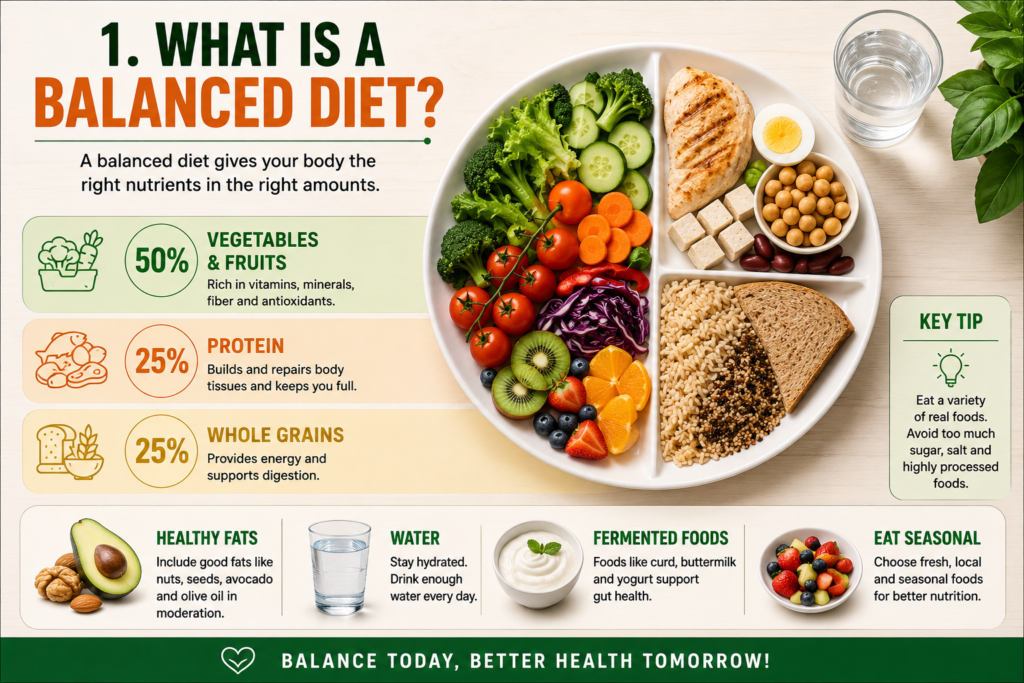
A balanced diet means giving your body the nutrients it needs every day to stay healthy, active, and strong. It isn’t about eating fancy foods or following strict rules. It’s about eating a good mix of foods in the right amounts.
The easiest way to think about it is this: fill half of your plate with vegetables and fruits, one-quarter with grains or millets, and one-quarter with protein-rich foods such as dal, beans, eggs, fish, paneer, or lean meat. Add a small amount of healthy fats from nuts, seeds, or good-quality oils. Drink enough water during the day, and if it suits your body, include curd or other fermented foods for better digestion.
Many people think eating healthy means eating less. Honestly, that’s where a lot of confusion starts. A balanced diet is not eating less; it is eating enough of the right foods. If you’re always hungry, tired, or craving snacks every hour, your meals may not be balanced even if you’re eating very little.
So, what do you mean by balanced diet? Simply put, it’s a way of eating that gives your body energy, supports growth and repair, and helps protect you from illness. Whether you’re a student, working professional, parent, or senior citizen, the basic idea stays the same: eat a variety of real foods and keep your meals balanced most of the time, not just occasionally.
Why Diet Matters for Long Life
A lot of people think living longer comes down to good genes. Genetics definitely play a role, but what you eat every day has a much bigger impact than most people realize. The food on your plate can either help your body stay strong as you age or slowly make things harder for it over time.
When people ask which foods increase lifespan, the answer usually isn’t a single “superfood.” It’s the daily habits that matter. A healthy diet plan built around vegetables, fruits, pulses, whole grains, nuts, seeds, and quality protein gives your body the nutrients it needs to repair itself and stay healthy.
Fiber is one of those things many people don’t pay attention to until they start having digestive problems. Foods rich in fiber help support gut health, keep blood sugar more stable, and may lower the risk of several long-term health conditions. Protein is just as important because it helps maintain muscle strength, especially as we get older.
Healthy fats from foods like nuts, seeds, and cold-pressed oils also deserve a place in your diet. They support heart health and help your body absorb important vitamins. Antioxidants found in colorful fruits and vegetables help protect your cells from everyday damage caused by stress, pollution, and aging.
One thing I’ve noticed is that people who eat mostly home-cooked meals with less processed food often feel better overall. They usually have more energy and fewer health complaints.
Research continues to show that plant-rich eating patterns are linked with healthier aging and a lower risk of chronic diseases. So if you’re wondering what foods should I eat every day for healthy aging, the answer is surprisingly simple: eat real food, keep it balanced, and stay consistent. Small choices made every day add up in a big way over the years.
Daily Diet Formula for Long Living Life
Many people search for how to make a daily diet plan, but the truth is that a good diet doesn’t need to be complicated. You don’t need expensive superfoods or strict rules. What matters most is building simple eating habits that you can follow for years, not just a few weeks.
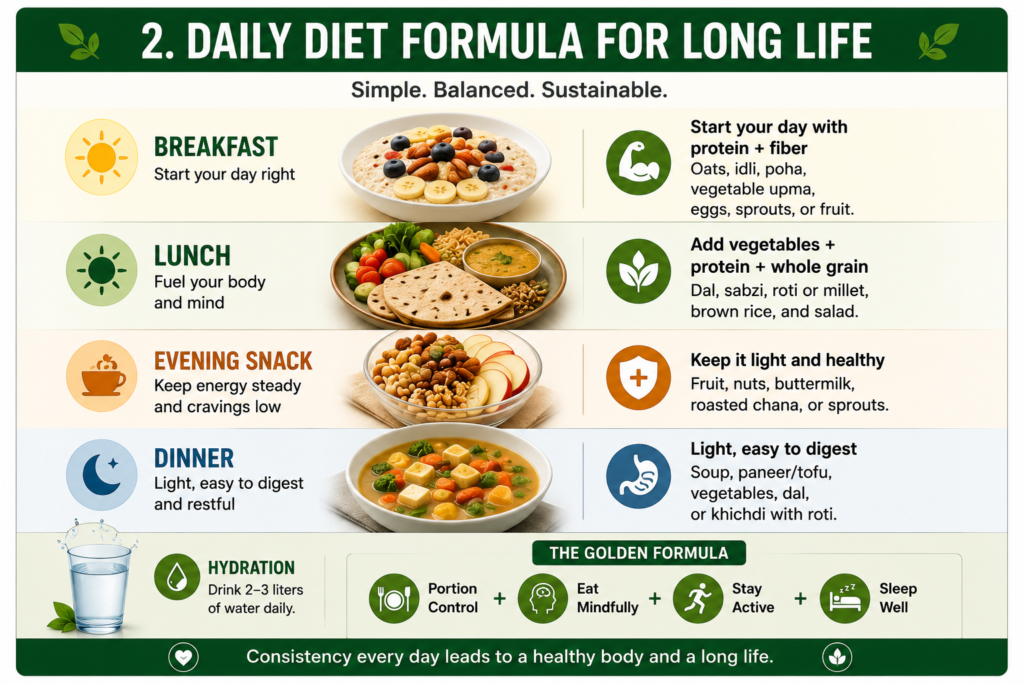
A practical healthy diet plan starts with breakfast. Try to include both protein and fiber because they help you stay full and keep your energy steady. A plate of idli with sambar, a bowl of oats, poha with peanuts, or a millet dosa are all great choices. Personally, I’ve noticed that when breakfast contains enough protein, those random mid-morning cravings become much easier to control.
Lunch should be your most balanced meal of the day. A simple combination of dal, sabzi, roti or millet, and a small bowl of curd works surprisingly well. If you eat non-vegetarian food, you can add eggs, fish, or chicken. Think of your lunch plate as a mini balanced diet chart — vegetables taking up a good portion of the plate, protein in the middle, and grains on the side.
Most people get hungry between meals, and that’s completely normal. Instead of reaching for packaged snacks, keep things simple. A fruit, a handful of nuts, or a glass of buttermilk can keep you satisfied without making you feel heavy.
Dinner doesn’t need to be large. In fact, many people sleep better when they eat a lighter meal. A bowl of vegetable soup with paneer, tofu, eggs, or some cooked vegetables is usually enough. The goal is to finish the day with a meal that nourishes your body without overloading it.
Hydration is another part of a good diet plan that people often forget. Drink water throughout the day. Buttermilk during summer can be refreshing, and lemon water without added sugar is a simple option too.
If you’re looking for a daily diet chart for adults or a simple Indian diet chart, remember this: focus on real food, eat enough protein, fill your plate with vegetables, and stay consistent. You don’t have to eat perfectly every day. You just need to eat well most of the time.
Best Foods to Eat Every Day for Longevity
When people search for the top foods for long life, they’re often hoping to find one magical food that does everything. The truth is much simpler. Long-term health usually comes from eating a variety of real, everyday foods consistently rather than chasing the latest diet trend.
If I had to pick the most valuable foods to include regularly, I’d start with vegetables. Leafy greens like spinach, amaranth, and moringa leaves are packed with nutrients and are surprisingly easy to add to daily meals. Carrots, beans, bottle gourd, ridge gourd, and other seasonal vegetables deserve a place on your plate too. They’re filling, affordable, and work well in almost any Indian kitchen.
Fruits are another big piece of the puzzle. Guava, papaya, apples, and berries are excellent choices. Even bananas can be part of a healthy diet when eaten in moderation. A simple fruit bowl in the evening often beats reaching for packaged snacks.
For protein, don’t overcomplicate things. Dal, chana, rajma, eggs, fish, paneer, and tofu are all great options. Many people focus only on calories and forget that protein helps you stay full longer and supports healthy aging. A meal with some protein usually leaves you feeling more satisfied.
When it comes to grains, whole foods win. Jowar, ragi, bajra, foxtail millet, little millet, and brown rice provide more fiber and nutrients than heavily refined grains. They’re also a natural fit for an anti inflammatory diet, a Mediterranean diet, or even a DASH diet approach for heart health and blood pressure management.
Don’t forget healthy fats. A handful of nuts, seeds, groundnuts, sesame seeds, or cooking with mustard oil can go a long way. And for gut health, simple traditional foods like curd, fermented idli or dosa batter, and homemade kanji are hard to beat.
The best diet for a long life isn’t usually exotic. It’s often the food our grandparents ate regularly—fresh, seasonal, balanced, and made at home.
Millets for Long Life: Should You Replace Rice?
If you’ve been paying attention to healthy eating trends lately, you’ve probably noticed that millets are everywhere. What many people don’t realize, though, is that millets aren’t some new superfood. Our grandparents and great-grandparents were eating them long before polished rice became the center of most Indian meals.
So, should you completely replace rice with millets?
Honestly, for most people, the answer doesn’t have to be all or nothing.
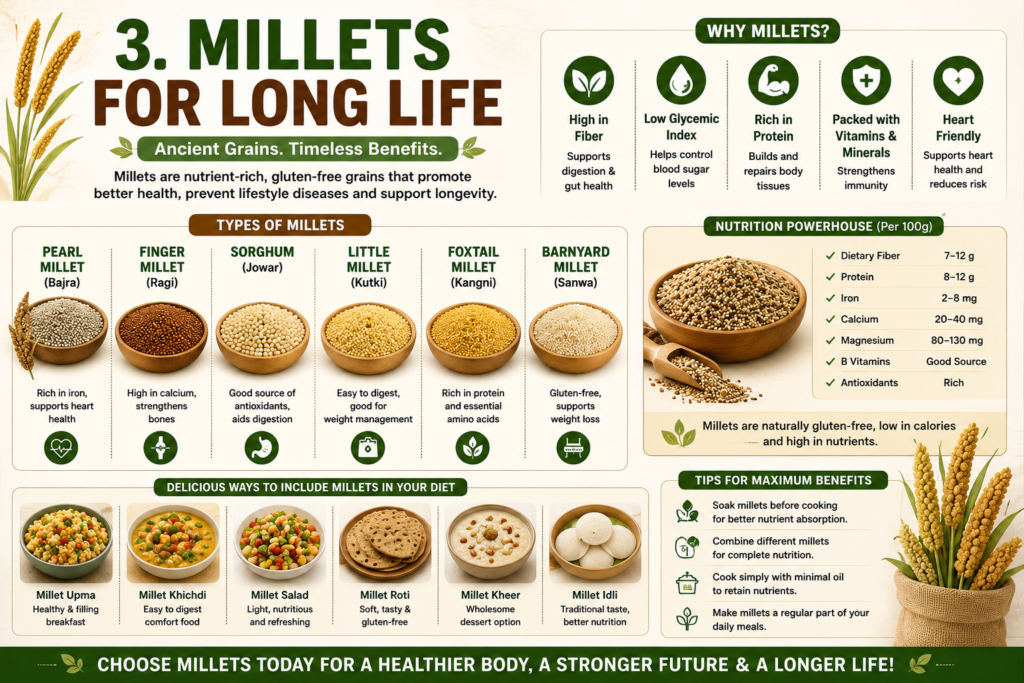
Millets are traditional grains packed with fiber, minerals, and plant compounds that support overall health. They also tend to keep you full for longer than white rice, which is one reason many people include them in a millet diet plan for weight management and better blood sugar control.
The growing popularity of the Siridhanya diet and the Dr Khadar Vali millet diet has encouraged many families to bring these forgotten grains back to their kitchens. While millets aren’t a magic cure for health problems, they can be a smart addition to a balanced diet chart.
One thing I’ve noticed is that people often try to switch overnight. That usually doesn’t last. A better approach is to replace rice with millet a few times a week and see how your body responds.
Before cooking, soak millets for 4–6 hours whenever possible. It improves texture, helps digestion, and makes them easier to cook.
| Millet | Why People Like It |
|---|---|
| Foxtail Millet | Closest to rice, easy for beginners |
| Barnyard Millet | Low glycemic index, often preferred for diabetes-friendly meals |
| Little Millet | Light on the stomach and works well in daily meals |
| Kodo Millet | Naturally high in fiber |
| Ragi (Finger Millet) | Rich in calcium and popular in South Indian diets |
| Jowar & Bajra | Excellent alternatives for rotis and flatbreads |
If you’re wondering which millet is best for diabetes, barnyard millet and foxtail millet are often popular choices because of their lower glycemic impact. For everyday use, though, rotating different millets may be more practical than sticking to just one.
At the end of the day, healthy eating isn’t about finding the “perfect” grain. It’s about building habits you can follow for years. If replacing a few rice meals each week with millets helps you eat more fiber and less processed food, that’s already a step in the right direction.
7-Day Simple Indian Diet Plan
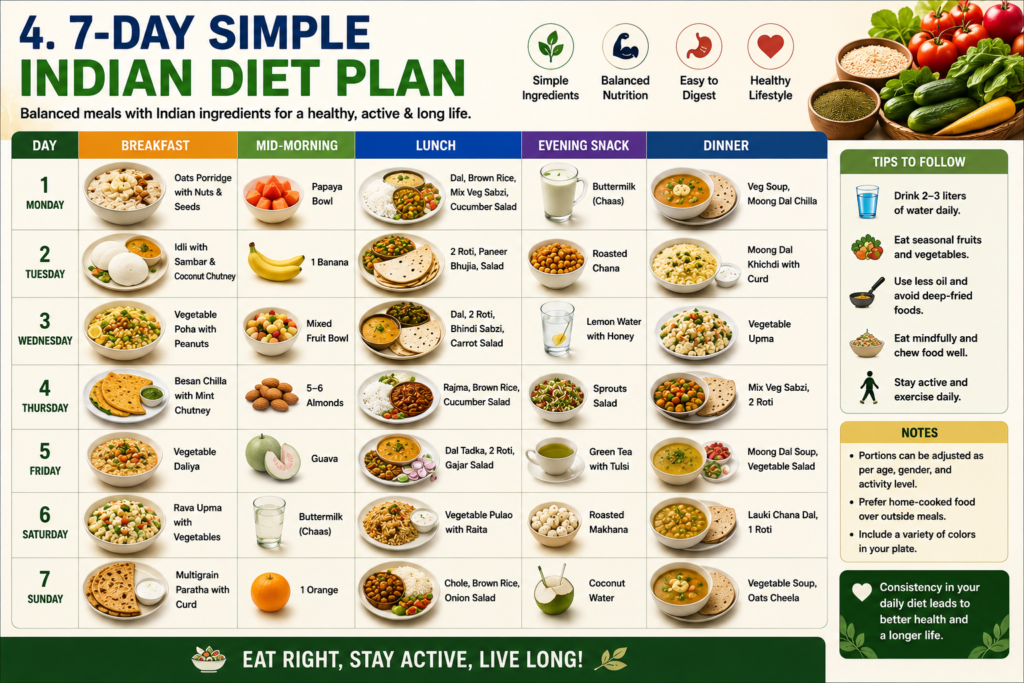
If you’re searching for a 7 day Indian diet plan for weight loss, don’t make the mistake many people make. You don’t need fancy foods, expensive supplements, or a complicated diet chart. Most of the time, simple home-cooked meals work surprisingly well when you stay consistent.
The meal plan below focuses on balance rather than restriction. You can adjust portions based on your age, activity level, and goals. Some people may need a little more food, while others may feel satisfied with smaller servings. Listen to your body.
Day 1
Breakfast: Oats cooked with milk or water, topped with fruit
Lunch: Moong dal khichdi with a cucumber salad
Dinner: Mixed vegetable curry with a roti or small millet portion
Day 2
Breakfast: Idli with sambar
Lunch: Brown rice or roti with vegetable curry
Dinner: Paneer salad loaded with fresh vegetables
Day 3
Breakfast: Vegetable upma
Lunch: Dal with spinach and a roti
Dinner: Light vegetable soup with a small side salad
Day 4
Breakfast: Boiled eggs or tofu scramble
Lunch: Chana dal with vegetables
Dinner: Baked fish or grilled paneer with steamed vegetables
Day 5
Breakfast: Vegetable poha with peanuts
Lunch: Vegetable pulao with curd
Dinner: Quinoa stir-fry packed with colorful vegetables
Day 6
Breakfast: Millet dosa with chutney
Lunch: Whole wheat or millet wrap filled with vegetables and protein
Dinner: Roasted tofu or fish with a side of sautéed vegetables
Day 7
Breakfast: Fruit and protein smoothie
Lunch: Millet rice with dal and vegetables
Dinner: Keep it light—vegetable soup, salad, or a simple stir-fry
One thing I’ve noticed is that people often overcomplicate healthy eating. They spend hours looking for the “perfect” diet plan and end up following nothing at all. A simple balanced diet chart that you can actually stick with will usually give better results than the latest trending diet.
Try to include vegetables in at least two meals a day, add some protein to every meal, and drink enough water throughout the day. It sounds basic because it is. Sometimes the habits that look boring on paper are the ones that quietly deliver the best results over time.
This healthy diet chart for family isn’t just for weight loss. It can also help create better eating habits that are easier to maintain for months and years, not just for a single week.
Diet Plans by Goal: One Diet Doesn’t Fit Everyone
A lot of people search for the “perfect” diet, but the truth is that your diet should match your goal. Someone trying to lose weight needs a different approach from someone who wants to gain healthy weight or manage blood sugar levels.
Weight Loss Diet: Focus on Consistency, Not Quick Fixes
One of the most common questions people ask is, “What diet is best for weight loss female?” The answer isn’t some secret drink or a fast weight loss diet plan that promises impossible results.
A good weight loss diet starts with a small calorie deficit. That simply means eating slightly fewer calories than your body uses each day. At the same time, don’t cut out protein. Foods like eggs, dal, paneer, fish, chicken, and Greek yogurt help you stay full longer. Add plenty of vegetables, fruits, and fiber-rich foods because they help control hunger naturally.
Honestly, most people don’t gain weight overnight, and they won’t lose it overnight either. Be careful with plans that promise “10 kg weight loss in 7 days.” They usually lead to frustration more than lasting results. A realistic 1 month diet plan for weight loss focuses on steady progress, not dramatic promises.
Weight Gain Diet: Eat More, But Eat Smart
If your goal is healthy weight gain, simply eating junk food isn’t the answer. A proper diet plan for weight gain should increase calories while still giving your body quality nutrition.
Try adding calorie-dense foods like nuts, seeds, peanut butter, milk, paneer, eggs, bananas, and dal to your meals. Strength training is just as important. Without exercise, extra calories may turn into body fat instead of muscle.
A simple habit that works well is adding one extra nutritious snack between meals. It sounds small, but over time it can make a noticeable difference.
Blood Pressure: The DASH Diet Approach
If you’re dealing with high blood pressure, you’ve probably heard about the DASH diet. It’s one of the most recommended eating patterns for heart health.
The idea is pretty straightforward. Eat more vegetables, fruits, whole grains, beans, and low-fat dairy foods. At the same time, reduce excess salt, packaged snacks, processed foods, and sugary drinks.
Foods rich in potassium, such as bananas, spinach, sweet potatoes, coconut water, and beans, may also help support healthy blood pressure levels when included as part of a balanced diet.
Diabetes: Keep Blood Sugar Steady
People with diabetes often think they must stop eating carbohydrates completely. That’s usually not necessary.
The goal is choosing better carbs and managing portions. Millets, oats, brown rice, vegetables, pulses, and other low-GI foods can help keep blood sugar more stable compared to highly refined foods.
A simple trick many dietitians recommend is pairing carbohydrates with protein. For example, instead of eating fruit alone, have it with nuts. Instead of plain rice, include dal, paneer, fish, or eggs with the meal. Small changes like these can make a surprisingly big difference.
Pregnancy: Get Personal Guidance
Many women search for a 1 to 3 month pregnancy diet chart, especially after finding out they’re expecting.
The early months of pregnancy are a time when nutrition matters a lot, but every pregnancy is different. Nutrient needs can vary based on health history, weight, medical conditions, and even symptoms like nausea.
That’s why it’s always best to follow guidance from your doctor or a qualified dietitian instead of copying a generic diet chart from the internet. A personalized plan will always be safer and more useful for both mother and baby.
Read More: Daily walking benefits for Human Life?
Popular Diet Questions Answered
What Is Keto Diet?
A keto diet is a low-carb, high-fat eating plan. The idea is simple: when you eat very few carbohydrates, your body starts using fat as its main source of energy instead of glucose.
People often try keto for weight loss, blood sugar management, or appetite control. Foods like eggs, fish, meat, cheese, nuts, and healthy oils are common on a keto diet, while bread, rice, sugary foods, and many fruits are limited.
What Is Detox Diet?
A detox diet is usually a short-term eating plan that claims to help the body remove toxins. These diets often focus on fruits, vegetables, juices, water, and avoiding processed foods.
The truth is, your liver and kidneys already do a good job of removing waste from your body. Still, many people feel better during a detox because they temporarily cut back on junk food, alcohol, and excess sugar.
Is Diet Coke Healthy?
This is one of those questions that doesn’t have a simple yes-or-no answer.
Diet Coke contains very few calories and no sugar, which is why some people choose it instead of regular soft drinks. At the same time, it is still a highly processed beverage and doesn’t provide any real nutritional value. Drinking it occasionally is different from relying on it every day.
Does Diet Coke Have Sugar?
No. Diet Coke does not contain sugar. Instead, it uses artificial sweeteners to create a sweet taste without adding calories.
What Is Calorie Counting Diet?
A calorie counting diet focuses on tracking how many calories you eat and drink each day. The goal is usually weight loss, weight gain, or weight maintenance.
Many people find it useful because it creates awareness of portion sizes and eating habits.
What Is Macro Counting Diet?
Macro counting means tracking macronutrients: protein, carbohydrates, and fats. Instead of looking only at calories, you pay attention to where those calories come from.
For example, two meals may have the same calories, but one may contain much more protein, which can help keep you full longer.
What Is Intuitive Eating Diet?
Intuitive eating is less about rules and more about listening to your body. Rather than following a strict meal plan, you learn to recognize hunger, fullness, and cravings.
Many people like this approach because it helps build a healthier relationship with food and removes the feeling that every meal has to be perfectly controlled.
What Is an Egg-Free, Nut-Free, or Soy-Free Diet?
These diets simply avoid specific foods.
An egg-free diet excludes eggs and foods made with eggs. A nut-free diet avoids peanuts and tree nuts. A soy-free diet removes soy products such as soy milk, tofu, and soy sauce.
People usually follow these diets because of allergies, intolerances, medical advice, or personal preferences. With proper planning, it’s still possible to eat a balanced and nutritious diet while avoiding these ingredients.
Common Diet Mistakes That Reduce Results
If you’ve ever thought, “Why is my diet plan not working?”, you’re definitely not alone. Most people don’t fail because they’re lazy or lack motivation. In many cases, they’re making a few small mistakes without even realizing it.
One of the biggest mistakes is skipping protein. A breakfast that’s only tea and biscuits or a lunch that’s mostly rice can leave you hungry again within a couple of hours. Then the cravings start. Adding eggs, dal, paneer, curd, fish, or other protein-rich foods can make a surprising difference in how full and satisfied you feel.
Another common problem is eating healthy food but using too much oil. I’ve seen people switch to salads and vegetables but still pour large amounts of oil into every meal. Those extra calories add up quickly. The same thing happens with drinks. Sugary tea, coffee, soft drinks, packaged juices, and even some “healthy” beverages can quietly increase your daily calorie intake.
Crash diets are another reason many diets for weight loss fail. They may show quick results for a week or two, but most people find them hard to follow. Eventually, the weight often comes back. A healthy diet plan should feel realistic enough to continue for months, not just days.
Sleep matters more than many people think. When you’re tired, you’re more likely to overeat, snack late at night, and make poor food choices. Consistency is just as important. Following a diet perfectly for three days and then giving up for the next four won’t get you very far.
It’s also worth being careful about copying celebrity diets from social media. What works for an actor, athlete, or influencer may not work for your body, lifestyle, or health needs. And if you have conditions like diabetes, thyroid problems, high blood pressure, or digestive issues, ignoring them while following a generic diet plan can create bigger problems.
The truth is, good results usually come from simple habits repeated every day. Not perfection. Just consistency.
Final Daily Diet Checklist
A good daily diet plan doesn’t have to feel strict. Keep it simple. Every day, try to eat at least 5 servings of vegetables and fruits. It can be something easy like cucumber, carrot, spinach dal, papaya, banana, or guava. Nothing fancy.
Add 1 or 2 protein foods in each meal. Dal, eggs, curd, paneer, fish, chicken, chana, rajma, or tofu all work well. Protein keeps you full and stops those random evening cravings.
For your grain portion, choose one millet or whole grain. It may be jowar roti, ragi dosa, brown rice, oats, or foxtail millet khichdi. This makes your balanced diet more filling.
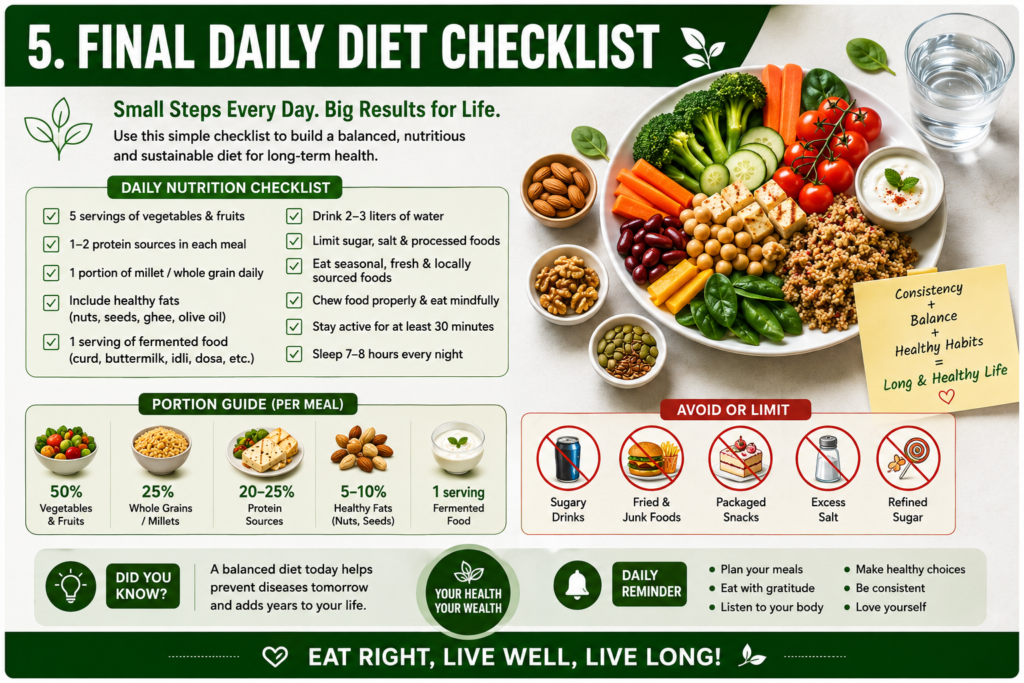
Also, include one fermented food if it suits you. Curd, buttermilk, idli, or dosa batter is enough.
Drink 2–3 liters of water if your body allows it. Cut down on sugar, fried snacks, and packaged foods. Walk daily, even for 20 minutes. And please don’t ignore sleep. A healthy diet plan works much better when you sleep 7–8 hours.
Disclaimer
The information provided in this article is for educational and informational purposes only and should not be considered medical advice, diagnosis, or treatment. While every effort has been made to ensure the accuracy of the information, nutrition and health recommendations may vary from person to person based on age, gender, medical history, lifestyle, and individual health conditions.
The diet plans, meal suggestions, millet recommendations, and healthy eating tips shared in this article are intended as general guidance. They are not a substitute for professional medical advice from a qualified doctor, registered dietitian, or healthcare provider.




Leave a Reply