The best blog structure for generative engine optimization is simple: answer the main question first, then explain it with clear headings, short proof, useful examples, and trusted sources.
This helps AI tools find your content, understand it fast, and cite it with confidence.
What This Means
Generative engine optimization, or GEO, means you shape your blog so AI search tools can read it clearly.
But here is the honest point: GEO does not replace SEO.
Google says its AI search features still use its core Search ranking and quality systems. So, good GEO is still good SEO with clearer answers.
The Simple Structure
Use this clean order:
| Blog part | What it should do |
|---|---|
| First answer | Give the direct answer fast |
| Clear headings | Help people and AI scan |
| Short proof | Add facts, dates, or sources |
| Real example | Show how to use it |
| Final takeaway | Tell the reader what to do next |
Key Point
Do not write for bots only.
Write for a busy person who wants one clear answer, then use SEO basics so Google and AI systems can trust the page.
In short, the right blog structure for generative engine optimization makes your post easy to read, easy to verify, and easy to quote.
What Is a GEO-Friendly Blog Structure?
A GEO-friendly blog structure helps AI search tools read your page fast and trust your answer. It also helps real people find the point without digging.
GEO means generative engine optimization. In simple words: you write and arrange your blog so Google AI Overviews, ChatGPT, Gemini, and other AI tools can understand, quote, and explain it.
Google said in June 2026 that AI Search still uses normal SEO basics: crawlable pages, useful content, and clear answers. So, GEO is not magic; it is clean SEO with better answer structure.
A strong GEO blog structure uses:
- Clear H2 and H3 headings
- A direct answer near the top
- Simple examples
- Trusted proof or data
- FAQs based on real questions
- Short paragraphs
- Easy crawlable formatting
Here is the real difference:
| Weak blog intro | GEO-friendly intro |
|---|---|
| “In today’s digital world, content is changing fast.” | “A GEO-friendly blog structure helps AI tools understand your page, pick the best answer, and cite your content.” |
The second one wins because it answers first. Then, it explains.
I use one small rule when I write: answer like a helpful shop owner. First, give the buyer the clear answer; then show proof, options, and next steps.
So, a good AI search content structure is not robotic. It is clear, honest, and useful.
In short: a GEO-friendly blog structure makes your content easy for humans to read and easy for AI engines to understand. That is the real goal.
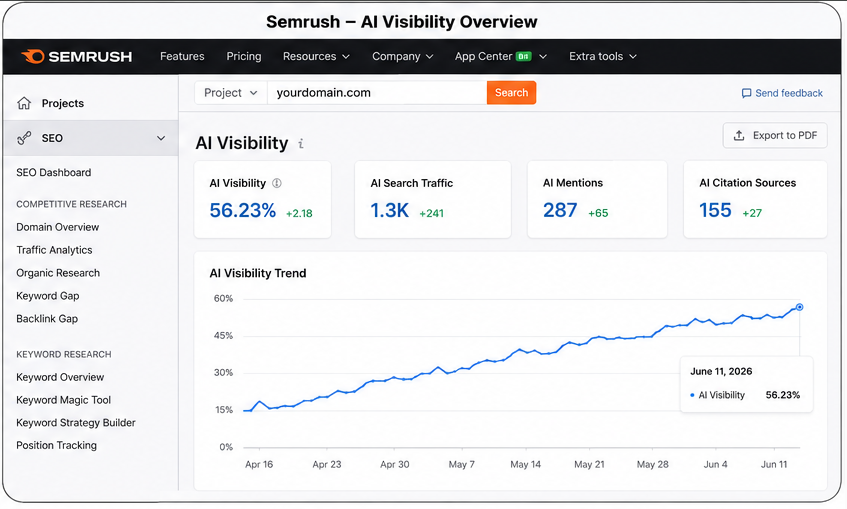
Why Blog Structure Matters for AI Search in 2026
Your AI Overview SEO starts with blog structure. If your page feels messy, AI search may skip the best parts.
In 2026, Google AI Overviews show up in about 25.11% of searches, based on Conductor’s Q1 benchmark of 21.9 million queries. That means one in four searches may now show an AI answer before normal blue links.
AI search does not read your blog like a tired human. It scans for clear answers, trusted proof, and related ideas.
Google says AI Mode uses query fan-out: it breaks one question into many smaller questions at the same time. So, your blog must answer the main query and the next questions too.
Think of it like this:
| Weak blog structure | Strong GEO blog structure |
|---|---|
| Long intro first | Direct answer first |
| Random headings | Clear question-based headings |
| One keyword only | Main topic plus related questions |
| No proof | Fresh stats and trusted sources |
| Thin summary | Useful steps and examples |
This matters because AI tools often choose pages that are easy to quote. So, short sections, clean headings, and simple answers help the engine understand your point fast.
For example, do not only write: “GEO is important.” Instead, write: “GEO helps AI search find, understand, and cite your content.”
The key point is simple: structure is not decoration. It is the path AI follows to reach your answer.
So, build each section with one job: define, explain, prove, compare, or guide. That is how generative engine optimization statistics turn into real content action.
In short, AI Overview SEO works better when your blog answers like a helpful person. Clear structure helps both readers and AI engines trust your page.
The Best Blog Structure for Generative Engine Optimization
The best blog format for GEO is simple: answer first, explain next, prove after that. This helps people, Google, and AI tools understand your page fast.
In 2026, AI Overviews show up in many searches. One study of 21.9 million searches found AI Overviews on 25.11% of queries, so your blog must be easy to read, quote, and trust.
Start With a Quick Answer
Open with a short answer in 40 to 80 words. Do not warm up slowly.
Say the main point first: what the topic means, who it helps, and what the reader should do next. This gives AI engines a clean answer to pull.
Show the Reader’s Problem
Next, name the pain clearly. Tell the reader why normal blog writing may not work well in AI search.
For example: “Your blog may rank, but AI may still ignore it if the answer is buried.” That line feels real because many writers now face this issue.
Define the Topic Simply
Now give a plain definition. Keep it short.
A GEO blog template is a blog layout made for both people and AI engines. It uses clear answers, useful headings, proof, examples, and FAQs.
Explain How It Works
After the definition, explain the process. AI tools scan pages for clear meaning, strong sources, and useful answers.
Google also says you do not need to break content into tiny chunks only for generative AI. So write short, natural parts, but do not make the page feel robotic.
Use This GEO Blog Template
| Blog part | What it does |
|---|---|
| Quick answer | Gives the direct answer fast |
| Reader problem | Shows you understand the pain |
| Definition | Makes the topic clear |
| How it works | Explains the process |
| Step-by-step framework | Helps the reader act |
| Comparison table | Helps the reader decide |
| Real example | Shows real use |
| Common mistakes | Helps avoid failure |
| FAQ | Covers long-tail searches |
| Final checklist | Gives a clear next step |
Add One Real-World Example
Do not only explain. Show.
For example, if you write about “AI friendly blog post structure,” compare a weak post and a strong post. The strong one starts with the answer, adds a table, uses expert sources, and ends with a checklist.
Close With a Checklist
End the section with action. A good checklist helps the reader apply the idea in five minutes.
Use this final check: answer first, use clear H2s, add proof, show examples, compare options, warn about mistakes, and answer real questions. That is the best blog format for GEO because it helps humans first, and AI engines second.
Section-by-Section GEO Blog Template
To learn how to structure blog posts for GEO, start with one simple rule: help the reader first, then help AI understand the page. Google also says there is no need to break content into tiny pieces only for AI, so use clear sections for people, not tricks.
| Section | Purpose | Ideal length |
|---|---|---|
| Quick answer | Direct extraction | 40–80 words |
| Intro | Confirm reader pain | 100–150 words |
| Definition | Establish clarity | 120–180 words |
| How it works | Explain process | 180–250 words |
| Framework | Action steps | 300–400 words |
| Example | Show real application | 150–220 words |
| Mistakes | Reduce risk | 150–220 words |
| FAQ | Capture long-tail queries | 250–350 words |
| Checklist | Actionable close | 100–150 words |
Quick Answer
Start with the answer in plain words. This helps readers, Google AI Overviews, and answer engines catch the main point fast.
Keep it under 80 words. Say what the topic is, why it matters, and what the reader should do next.
Intro
Use the intro to show the reader you understand their pain. For example: “You wrote a good blog, but AI tools still do not mention it.”
Then tell them what they will get. Keep it direct: a clear GEO content outline example, not a long story.
Definition
Next, define the main idea in simple words. Say that GEO means writing and structuring content so search engines and AI tools can understand, trust, and use it.
Do not make this section heavy. Add one short example, so the reader sees the meaning in real life.
How It Works
Now explain the process. AI search tools look for clear answers, trusted context, useful examples, and pages that are easy to crawl.
So, your job is simple: answer the main query, support it with facts, and cover follow-up questions before the reader asks them.
Framework
This is the main working part of the post. Give the reader steps they can follow today.
Use short action points like these:
- Pick one main search intent.
- Add a quick answer near the top.
- Use H2s for real user questions.
- Add one table for easy comparison.
- Add examples from real work.
- End with a checklist.
Example
Show one real use case. For example, if you write about “best CRM for small business,” compare tools by price, setup time, team size, and support.
This makes the post useful for both readers and AI search. It also shows real judgment, not copied advice.
Mistakes
Warn the reader about common errors. The biggest mistake is writing for AI only and forgetting the person who needs help.
Also avoid fake expert claims, keyword stuffing, old stats, and long intros. Google updated its spam rules in 2026 to target tricks that try to manipulate AI search.
FAQ
Use FAQs to answer long-tail searches. These are questions like “how to optimize blog sections for AI search” or “what is the best GEO content outline example?”
Keep each answer short. Give one clear answer, one reason, and one action step.
Checklist
End with a short checklist. This helps the reader review the post before publishing.
Use this final test: can a reader understand the answer in 30 seconds and apply it in 10 minutes? If yes, you now know how to structure blog posts for GEO in a clean and human way.
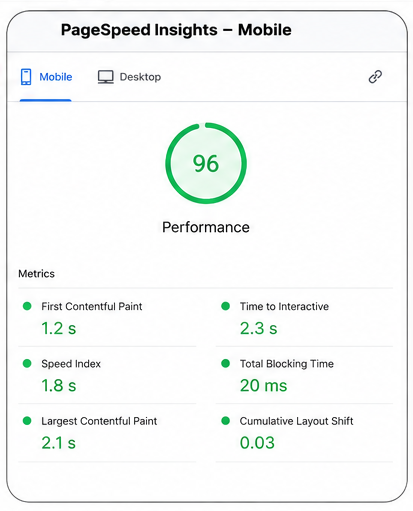
On-Page SEO Elements to Add
Your GEO on-page SEO starts with clear page signals. So, write one title tag, one meta description, and one H1 that match the real search need.
Use your H2s like road signs. Each H2 should answer one clear question, such as “What is GEO?” or “How do I structure a blog for AI search?”
Add a table of contents near the top. It helps readers jump fast, and it also helps search engines see your page flow.
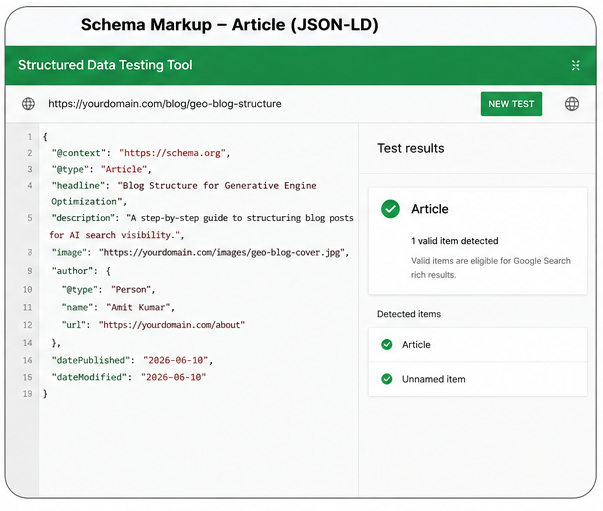
Use Article schema for blog posts. Google says Article structured data can help it understand the page and show better title, image, and date details in Search.
Use FAQ schema only where it truly fits. Do not add fake questions just to fill space.
Also, do not treat schema like a magic GEO button. Google says structured data is not required for generative AI search, and there is no special schema for AI features.
Add your author name, short bio, and updated date. This builds trust because readers can see who wrote it and when you last checked it.
Use internal links to your related posts. For example, link from this page to your “GEO checklist,” “AI SEO tools,” and “SEO content structure” guides.
Use external citations when you mention facts, stats, or Google rules. This makes your AI search optimization checklist stronger and safer.
Add image alt text in plain words. For example: “GEO blog structure checklist with title tag, headings, schema, and FAQs.”
Quick checklist:
| Element | What to do |
|---|---|
| Title tag | Add main keyphrase once |
| Meta description | Give a clear reason to click |
| H1 and H2s | Match search questions |
| Schema | Use Article and useful FAQ |
| Trust signals | Add author, date, sources |
| Links | Add internal and external links |
In short, GEO on-page SEO is not about tricks. It is about making your page clear, useful, trusted, and easy to read.
Community Questions to Answer Inside the Blog
Focus keyphrase: GEO questions.
Your blog must answer real GEO questions, not only tool tips. People ask these questions on Reddit, YouTube, Quora, and search because AI search still feels new.
Google says GEO is still part of SEO, because AI results use Google’s core search systems. So, answer these AI search questions in plain words.
Real Questions Your Readers Ask
| Question | Short answer to include |
|---|---|
| Is GEO just SEO rebranded? | Partly yes, but GEO adds AI answer visibility. |
| Do I need llms.txt? | Not for Google, but it may help some AI tools read your site. |
| Can AI cite my blog if I am not #1? | Yes, if your answer is clear, useful, and trusted. |
| Should I optimize for ChatGPT or Google AI Overviews first? | Start with Google, then reuse the same clean answers for AI tools. |
| Does Reddit visibility help AI discovery? | It can help, but only when real users discuss your content. |
Practical Way to Use Community Signals
Use Reddit, Quora, YouTube comments, and X posts as question mines. Do not fake mentions or spam links.
Reddit has over 100,000 active communities and 450M+ weekly active users, so it shows real pain points fast. But, fake praise can hurt trust and brand safety.
Add one short FAQ block after each main section. Also, use the same words people use: “is GEO real,” “does Reddit help GEO,” and “how to rank in ChatGPT search.”
This makes your post feel human, useful, and easy to cite. In the end, strong GEO questions make your blog sharper than a normal SEO guide.
Common GEO Blog Structure Mistakes
Many GEO mistakes start with a weak first line. So, give a clear answer first; then explain it step by step.
Do not open with soft lines like “In today’s digital world.” AI tools skip vague content because it gives no fast value.
Mistakes to Avoid
- No direct answer: Say the main point in the first 50 words.
- No sources: Add trusted links, dates, names, and proof.
- Keyword stuffing: Use terms like AI content mistakes only where they fit.
- Fake expert claims: Do not say “experts agree” without naming the expert.
- Old data: Check stats before you publish or update the post.
- No comparison: Show what works, what fails, and why.
- No author trust: Add real work, tests, examples, or field notes.
- Generic AI text: Remove lines that sound safe, flat, and copied.
- Manipulation tricks: Avoid fake mentions, forced brand praise, and “recommendation poisoning.”
Google says using automation mainly to manipulate search rankings can break its spam rules. This matters more now because AI Overviews and AI search tools need clear, trusted, and source-backed content.
Quick Fix Table
| Bad GEO Structure | Better Structure |
|---|---|
| Long intro | Direct answer first |
| Claims without proof | Add source, date, and example |
| Only tips | Add mistakes and trade-offs |
| Generic wording | Add real testing notes |
| Forced keywords | Use natural keyphrases |
In my view, the worst mistake is not AI writing. The worst mistake is publishing content with no human judgment, no proof, and no clear stand.
So, before you publish, read your section like a busy reader. If it does not answer “why AI engines do not cite my content,” cut it, fix it, or prove it.
GEO Blog Structure Checklist
Use this GEO checklist before you publish your post. It helps your blog answer people first, and it also helps AI search tools read your page with less guesswork.
Start with the answer: say the main point in the first 40 to 80 words. Then, use question headings because real users search with full questions.
- Add fresh sources: cite trusted pages from 2025 or 2026 when facts change fast.
- Add real examples: show how a reader can use the tip today.
- Add FAQs: answer small doubts before the reader leaves.
- Show trade-offs: say what works, what fails, and when.
- Update stats: check numbers every 3 to 6 months.
- Add author proof: share your test, result, or work story.
- Keep the page open: make it fast, crawlable, and mobile-friendly.
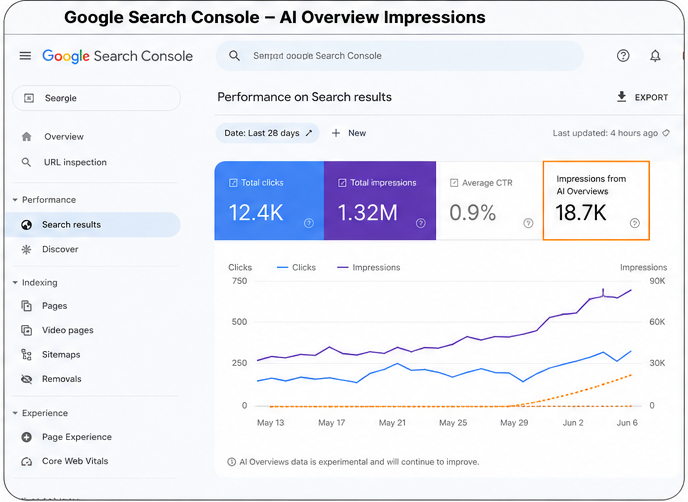
- Track results: check AI referrals, brand mentions, and Search Console data.
Google said in June 2026 that its AI Search reports show impressions from AI Overviews and AI Mode. So, your AI search content checklist should not stop at writing; you must also measure what happens after publishing.
Use this GEO checklist as your last quality test. If your blog gives a clear answer, proof, examples, and next steps, both readers and AI tools can trust it.

Leave a Reply