On-page SEO is the practice of optimizing individual web pages so search engines understand their content and users quickly find the answers they need. It combines high-quality content, HTML optimization, page experience, internal linking, and search intent to improve rankings, visibility, and organic traffic. If you want higher Google rankings without relying only on backlinks, mastering on-page SEO is essential.
Do you have Website/Blog? Then it needs On-Page SEO. It is part of SEO. Search Engines need some SEO metrics to rank. For that you have to follow their guidelines. Here learn some most important part.
Quick Overview
| Aspect | Details |
|---|---|
| Purpose | Improve search visibility and user experience |
| Focus | Individual webpages |
| Helps | Google, AI search engines, and website visitors |
| Main Goal | Rank relevant pages for targeted search queries |
| Started | Late 1990s with early search engines |
| Still Important in 2026? | Yes. AI-powered search increasingly rewards well-structured, helpful pages. |
A Brief Evolution of On-Page SEO
| Period | Major Change |
|---|---|
| Late 1990s | Rankings relied heavily on keywords and meta tags. |
| 2000–2010 | Content quality and link relevance gained importance. |
| 2011–2019 | Major algorithm updates targeted low-quality and duplicate content. |
| 2021 | Core Web Vitals became part of Google’s page experience signals. |
| 2024–2026 | AI-powered search emphasizes search intent, topical authority, structured content, and helpful information over keyword repetition. |
How On-Page SEO Works
When a page is published, search engines discover, analyze, and evaluate it before deciding where it should appear in search results.
| Step | What Happens |
|---|---|
| 1 | Crawlers discover and scan the page. |
| 2 | HTML, content, images, and links are indexed. |
| 3 | Search intent and topical relevance are evaluated. |
| 4 | Content quality, page experience, and authority signals are assessed. |
| 5 | The page competes with similar pages for rankings. |
Modern ranking systems consider hundreds of signals, but helpful content, relevance, usability, and user satisfaction remain among the strongest.
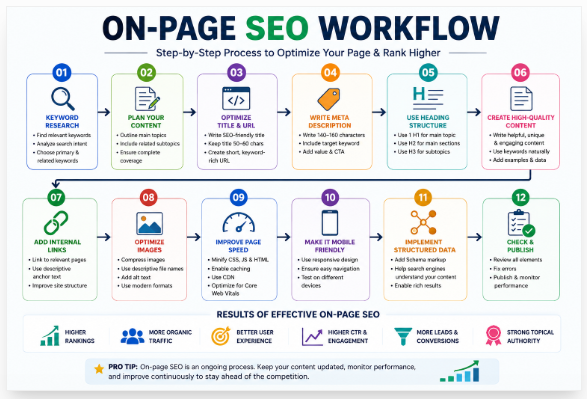
Why On-Page SEO Matters
Strong on-page SEO helps both search engines and readers.
Benefits include:
- Higher organic rankings
- More qualified traffic
- Better click-through rate (CTR)
- Improved user experience
- Increased engagement
- Stronger internal navigation
- Greater visibility in AI-generated search experiences
- Better conversion opportunities
Unlike paid advertising, a well-optimized page can continue attracting visitors for months or years.
The Most Important On-Page SEO Factors
1. Helpful, Original Content
Content is the foundation of on-page SEO.
Your page should:
- Fully answer the search query.
- Demonstrate expertise.
- Stay accurate and current.
- Cover related questions.
- Be easy to scan with headings and lists.
Helpful, people-first content aligns with guidance from Google Search Central.
2. Keyword Optimization
Use your primary keyword naturally in:
- Title tag
- URL
- Introduction
- Relevant headings
- Meta description
- Image alt text
- Body content
Include related and semantic keywords instead of repeating the same phrase.
3. Optimized Title Tag & Meta Description
These elements shape how your page appears in search results.
| Element | Best Practice |
|---|---|
| Title | 50–60 characters, unique, keyword near the beginning |
| Meta description | 140–160 characters, summarizes the page and encourages clicks |
Although meta descriptions are not direct ranking factors, compelling descriptions often improve CTR.
4. Clear Heading Structure
Use headings to organize information logically.
- H1 — page topic
- H2 — main sections
- H3 — supporting details
A clear hierarchy improves readability for both users and search engines.
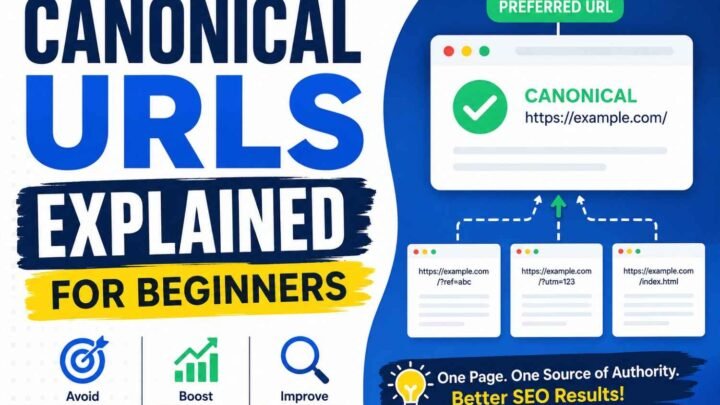
5. SEO-Friendly URLs
Good URLs are:
- Short
- Descriptive
- Readable
- Keyword-focused
Example:
example.com/on-page-seo
Avoid unnecessary numbers, dates, or random parameters.
6. Internal Linking
Internal links connect related pages and strengthen your site’s structure.
They help:
- Search engines discover content
- Distribute page authority
- Increase page views
- Build topical authority
- Improve user navigation
Link naturally where readers benefit.
7. Image Optimization
Optimized images improve speed and accessibility.
Best practices include:
- Compress images
- Use descriptive filenames
- Add meaningful alt text
- Prefer modern formats such as WebP or AVIF where supported
- Enable lazy loading
Large image files remain a common cause of slow websites.
8. Page Experience
Good page experience encourages visitors to stay longer.
Focus on:
- Fast loading pages
- Mobile responsiveness
- Secure HTTPS
- Stable layouts
- Easy navigation
Google also considers metrics such as Core Web Vitals, which measure loading performance, visual stability, and responsiveness.
9. Structured Data
Structured data (Schema.org markup) helps search engines better understand page content and may enable rich results such as FAQs, reviews, recipes, or product information. While it does not guarantee higher rankings, it can improve visibility in search.
On-Page SEO vs. Off-Page SEO
| Feature | On-Page SEO | Off-Page SEO |
|---|---|---|
| Focus | Website content and structure | External authority signals |
| Controlled by | Website owner | Other websites and users |
| Includes | Content, headings, URLs, speed, internal links | Backlinks, mentions, brand authority |
| Primary Goal | Improve relevance | Build trust and authority |
Successful SEO requires both.
Common On-Page SEO Mistakes
Avoid these frequent problems:
- Thin or outdated content
- Keyword stuffing
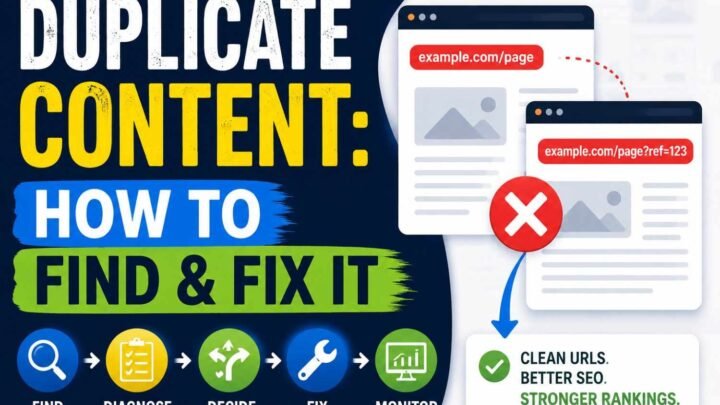
- Duplicate pages
- Missing title tags
- Weak heading structure
- Broken internal links
- Slow loading speed
- Poor mobile usability
- Missing image alt text
- Ignoring search intent
Fixing these issues often delivers noticeable ranking improvements before building new backlinks.
On-Page SEO Checklist
Before publishing, confirm that your page includes:
- ✅ Helpful, original content
- ✅ One H1 heading
- ✅ Logical H2 and H3 structure
- ✅ Optimized title tag
- ✅ Meta description
- ✅ Natural keyword placement
- ✅ Internal links
- ✅ Relevant external references when appropriate
- ✅ Optimized images and alt text
- ✅ Fast loading speed
- ✅ Mobile-friendly design
- ✅ HTTPS security
- ✅ Structured data where applicable
Frequently Asked Questions
Is on-page SEO still important in 2026?
Yes. It remains the foundation of organic search because search engines must understand your page before they can rank it.
How long does on-page SEO take to work?
Improvements can appear within a few weeks, while competitive keywords may require several months depending on your site’s authority, crawl frequency, and competition.
Is content more important than backlinks?
Quality content and strong on-page SEO come first. Backlinks are far more valuable when they point to pages that already provide useful, comprehensive information.
Can beginners do on-page SEO?
Yes. Most improvements—writing better content, organizing headings, optimizing titles, adding internal links, and improving page speed—require little or no coding.
Conclusion
On-page SEO is the foundation of long-term search visibility. By publishing helpful content, organizing it with clear headings, optimizing HTML elements, improving page experience, and matching search intent, you make it easier for both search engines and readers to trust your pages. Combined with technical SEO and quality backlinks, strong on-page SEO gives your website the best chance to earn sustainable rankings in both traditional and AI-powered search results.

Leave a Reply