If you’re asking this question, there’s a good chance you’ve been carrying a lot of doubt around for quite some time.
Maybe you finished your degree years ago but never entered the IT field. Maybe family responsibilities, health issues, a different career path, or life itself pulled you in another direction. And now you’re wondering, “Have I missed my chance?”
I get it. A 15-year career gap sounds huge when you say it out loud. It can feel intimidating. Sometimes even reading job descriptions can make you think everyone else is miles ahead.
But here’s the honest answer.
Yes, you can get a software job after a 15-year career gap.
The catch? It probably won’t happen the same way it happens for a college graduate attending campus placements. Companies won’t focus much on what you studied 15 years ago. They’ll care more about what you can do today.
That’s actually good news.
If you can show current skills, build a few practical projects, create a strong LinkedIn profile, and walk into interviews with confidence, many recruiters are willing to give you a chance. The software industry changes so quickly that even experienced developers have to keep learning. In a way, everyone is constantly starting over with new technologies.
I’ve seen stories of people returning to work after raising children, caring for family members, or taking long personal breaks. Some started with internships. Others joined trainee programs. A few even landed full-time software roles after months of focused learning.
Another encouraging thing is that many companies now actively support career returners. Organizations like Accenture, Tata Consultancy Services, Amazon, Salesforce, Persistent Systems, and Intuit have created returnship and career reboot programs designed for people who are restarting their careers after a long break.
So if you’re worried that a 15-year gap automatically disqualifies you, take a deep breath. The gap is a challenge, yes. But it doesn’t have to be the end of your software career story.

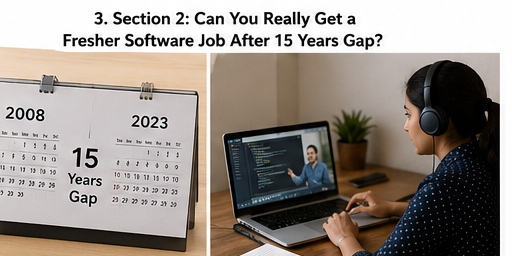
2. Can You Really Get a Fresher Software Job After 15 Years Gap?
If you’re sitting there wondering, “Can I get a fresher software job after 15 years gap?” you’re definitely not the only one. A lot of people ask this question after spending years away from work because of family responsibilities, health issues, business attempts, or simply life taking them in a different direction.
The short answer? Yes, it’s possible.
But I won’t tell you it’s easy.
The software industry has changed a lot in 15 years. New programming languages appeared. Tools changed. Even the way people apply for jobs looks completely different now. So employers naturally want to know whether your skills are current.
One thing that confuses many people is the word “fresher.” It doesn’t always mean the same thing.
An academic fresher is someone who just finished college and is looking for their first job.
A career restart fresher is different. This person may have studied years ago, worked before, and is now trying to come back after a long break.
Then there are skill-based freshers. These are people who learned new technologies recently and built projects, even though they don’t have recent job experience.
You may also see companies hiring interns or trainee candidates who are changing careers or returning to work after a gap.
To be honest, many recruiters care less about the gap itself and more about what you’ve done recently. Imagine two candidates with a 15-year gap. One says, “I want a job.” The other shows a GitHub profile, a few projects, certifications, and active learning. Which one do you think gets the interview call?
That’s usually how it works.
Another thing worth knowing is that some companies run returnship programs. These programs are designed for people who worked before but took a career break. They often ask for previous professional experience and a gap in employment. On the other hand, many entry-level software jobs focus mostly on skills, projects, and interview performance rather than your employment history.
I’ve seen people in their late 30s and even 40s restart their IT careers. Not because someone felt sorry for them. They got opportunities because they showed they could do the work.
So if you’re worried that a long career gap IT job search is impossible, don’t assume the door is closed. A career restart takes effort, patience, and learning. But a fresher software job after career gap is absolutely achievable when you can prove your skills and show that you’re serious about getting back into the industry.
3. Why Companies Hesitate to Hire After a Long Career Gap
If you’ve been away from work for 10 or 15 years, you might sometimes feel that companies reject you just because of the gap. Honestly, that’s not always the real reason.
What many recruiters worry about is what happened during those missing years.
Think about it from their side for a moment. Technology changes fast. A programming language, tool, or framework that was popular 15 years ago may not even be used much today. So when a recruiter sees a long gap, one of the first questions that comes to mind is, “Are this person’s technical skills still up to date?”
Another thing they look for is proof.
Let’s say two people apply for the same junior software testing job. One candidate recently completed a testing project and has examples to show. The other candidate says they learned testing but doesn’t have any projects or practical work. Most employers will naturally feel safer choosing the first person.
Confidence plays a role too.
I’ve seen many talented people struggle in interviews after a long break. Not because they lack ability, but because they haven’t spoken about their skills for years. They become nervous, forget simple answers, or start doubting themselves. Recruiters sometimes mistake that nervousness for a lack of knowledge.
Then there’s the resume problem.
Many companies use ATS (Applicant Tracking Systems) to filter resumes before a human even sees them. A large employment gap can sometimes reduce the chances of getting shortlisted, especially when the resume doesn’t clearly show recent learning, certifications, or projects.
There’s also a question that employers don’t always ask directly.
“Will this person stay with us?”
Some hiring managers worry that a candidate returning after a long break may leave again if family responsibilities or other situations come up. Fair or unfair, that concern exists.
And then comes the toughest part: competition.
You’re often competing against fresh graduates who recently learned the latest technologies in college. They may have internships, recent projects, and current technical knowledge. That doesn’t mean they are better than you. It simply means they can provide more recent evidence of their skills.
The good news? Most of these fears can be reduced.
Companies don’t expect you to erase a 15-year gap. They want to see that you’re serious now. A few strong projects, updated skills, a clear resume, and confidence during interviews can often matter more than the gap itself.
Read More: What Coding Languages Should Freshers Learn in 2026 for Software Jobs?
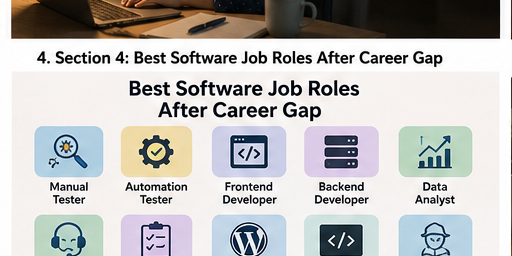
4. Best Software Job Roles After 15 Years Career Gap
One of the biggest mistakes people make after a long career break is thinking they need to apply for every software job they see online. I understand why. After being away from the industry for years, it’s easy to feel pressure to grab any opportunity.
But honestly, that usually creates more confusion.
A better approach is to pick one role that matches your current skills, learning ability, and interests. Then focus on that path for a few months.
The good news? You don’t have to become a senior software engineer overnight. Many companies hire beginners, trainees, and career restart candidates if they can show practical skills.
1. Manual Software Tester
If you’re looking for a software testing job after a career gap, manual testing is often one of the easiest entry points into IT.
You don’t need to spend months learning complex programming. Instead, you’ll learn how software works, how to find bugs, how to write test cases, and how to report issues clearly.
I’ve seen many career restart candidates choose testing because it feels less overwhelming than coding-heavy roles.
2. Automation Tester
Once you understand manual testing, you can move toward automation testing.
This role combines testing knowledge with programming skills. Tools like Selenium, Java, or Python are commonly used.
The learning curve is steeper, but salaries are usually better too. If you enjoy solving problems and don’t mind writing code, this can be a great long-term option.
3. Frontend Developer
A frontend developer after a career break can still find good opportunities, especially in startups and small companies.
Frontend development focuses on what users see on websites and applications.
You’ll need to learn:
- HTML
- CSS
- JavaScript
- React (recommended)
What I like about frontend development is that you can actually see your progress. One day you’re creating a simple webpage. A few weeks later you’re building complete websites. That feeling keeps many learners motivated.
4. Java or Python Backend Trainee
Backend developers work behind the scenes.
They handle databases, business logic, APIs, and server-side operations.
If you’re restarting your career, don’t worry about learning everything at once. Pick either Java or Python and stay with it.
Many people waste months jumping between technologies. I’ve done that myself before, and trust me, it only slows you down.
5. Data Analyst
A data analyst after a career gap is becoming a popular choice because businesses rely heavily on data today.
Most beginners start with:
- Excel
- SQL
- Power BI
- Basic Python
If you enjoy working with numbers, reports, and patterns, this role may suit you better than software development.
6. Technical Support Engineer
Not everyone wants to code all day.
Technical support engineers help customers solve software and technical issues. Communication skills matter just as much as technical knowledge here.
For candidates returning after a long break, this role can provide valuable industry experience while building confidence.
7. QA Analyst
Many people confuse QA Analysts with testers.
Testing is part of the job, but QA Analysts also focus on improving software quality processes and preventing issues before they happen.
This role works well for people who enjoy organization, planning, and attention to detail.
8. WordPress Developer
WordPress is still used by millions of websites around the world.
A WordPress Developer creates and manages websites using WordPress, themes, plugins, and basic coding.
The nice thing about this path is that you can build real projects quickly. You can even create websites for local businesses, friends, or personal projects to gain experience.
9. Junior Full Stack Developer
Full Stack Developers work on both frontend and backend technologies.
Now, I’ll be honest. This isn’t usually the easiest starting point after a 15-year gap.
Still, if you’re highly motivated and willing to spend extra time learning, it can open many doors. Just don’t rush. Build a strong foundation first.
10. Intern or Trainee Software Engineer
Some people avoid internships because they think they’re “too old.”
That’s a mistake.
Employers care more about your skills than your age in many situations. A trainee role can help you gain recent experience, understand modern development practices, and rebuild your confidence.
Sometimes taking one small step forward is better than waiting forever for the perfect job.
At the end of the day, there isn’t one “best” IT role after a career gap. The best role is the one you’ll actually learn, practice, and stick with consistently. Whether it’s manual testing, frontend development, data analytics, or technical support, your success will depend far more on your effort and persistence than on the title written on your offer letter.
Read More: SAP ABAP vs DevOps.
5. Skills You Must Learn Before Applying
If you’ve been away from the software industry for 15 years, one question probably keeps popping up in your mind:
“What exactly should I learn before applying for jobs?”
I get it. The internet can make this feel overwhelming. One person says learn Java. Another says Python. Someone else tells you to become a data analyst. After a few hours of searching, your head starts spinning.
The good news? You don’t need to learn everything.
Actually, trying to learn everything is one of the biggest mistakes people make when restarting their careers.
Think of it this way. If you want to drive a car, you don’t start by learning how every engine part works. First, you learn the basics and get comfortable on the road.
Software jobs work the same way.
Pick one path and focus on the minimum skills employers expect.
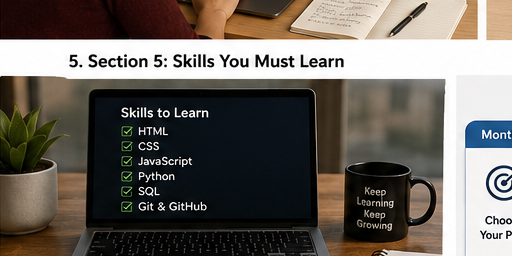
Minimum Skill Set Before Applying
| Career Path | Skills You Should Know |
|---|---|
| Software Testing | SDLC, STLC, Test Cases, Jira, SQL, Selenium Basics |
| Frontend Developer | HTML, CSS, JavaScript, React Basics |
| Backend Developer | Java or Python, SQL, REST API Basics |
| Data Analyst | Excel, SQL, Power BI, Python Basics |
| Common For All Roles | Git, GitHub, LinkedIn, Resume Writing, Interview Practice |
Now let’s break these down in plain English.
If You Want to Start in Software Testing
Testing is often a good entry point for people returning to IT after a long gap.
You should understand how software is built and tested. That’s where SDLC (Software Development Life Cycle) and STLC (Software Testing Life Cycle) come in. Don’t worry about the fancy names. Just learn the steps involved in creating and testing software.
Learn how to write test cases, track bugs using Jira, and run basic SQL queries. Later, spend some time learning Selenium. You don’t need to become an automation expert overnight.
A friend of mine spent about three months learning these basics and built a small testing project on GitHub. That project helped him get interview calls much faster than certificates alone.
If Frontend Development Interests You
Frontend developers create the part of a website that users actually see.
Start with HTML and CSS. These are the building blocks of web pages.
Then move to JavaScript. At first, JavaScript can feel confusing. Honestly, most beginners struggle with it. That’s normal.
Once you’re comfortable, learn React basics. Many companies use React for building modern websites, so having some understanding of components and state management can help.
Try building simple projects like a personal portfolio website or a to-do list app. Small projects teach more than hours of watching tutorials.
If You Prefer Backend Development
Backend developers handle the logic running behind the scenes.
Choose either Java or Python. Don’t learn both at the beginning.
Python is usually easier for beginners. Java is still widely used in large companies.
Along with your programming language, learn SQL and basic REST APIs. Most applications need databases and APIs, so you’ll see these concepts in many interviews.
If Data Analysis Sounds Interesting
Not everyone wants to become a developer.
Data analysis can be a great option if you enjoy working with numbers and reports.
Start with Excel. Yes, Excel still matters.
Then learn SQL, Power BI, and a little Python. Many entry-level data analyst roles focus heavily on these skills.
Skills Every Job Seeker Needs
No matter which path you choose, there are a few things you shouldn’t skip.
Learn Git and GitHub. Recruiters often like seeing project work rather than just course certificates.
Create a LinkedIn profile. Connect with recruiters and professionals in your chosen field.
Practice interviews regularly. I’ve seen people who knew the technology but struggled because they couldn’t explain their projects clearly.
And remember this: companies don’t expect someone returning after a long career gap to know everything. They want proof that you’re learning, building projects, and serious about restarting your career.
That’s what gets attention. Not twenty certificates. Not fancy buzzwords. Real skills and real effort.
6. 6-Month Roadmap to Get Job-Ready
If you’ve been away from the software industry for 15 years, seeing people talk about learning everything in 3 months can feel frustrating. I know that feeling. You open YouTube, watch a few videos, and suddenly someone is telling you to learn Python, Java, Cloud, AI, DevOps, Data Science, and Cybersecurity all at once.
Honestly? That’s one of the fastest ways to get overwhelmed.
A better approach is to slow down and follow a simple plan. You don’t need to know everything. You just need enough skills to convince an employer that you’re ready to work.
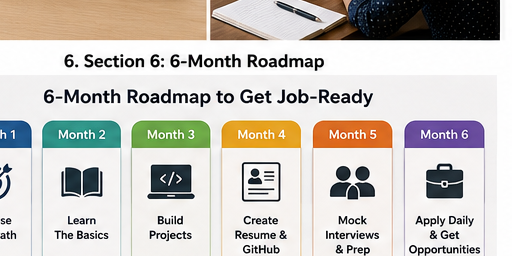
Month 1: Pick One Career Path and Stick With It
This is where many people make mistakes.
Don’t try to become a software developer, tester, data analyst, and cloud engineer at the same time. Choose one path.
For example:
- Interested in finding bugs? Try Software Testing.
- Like building websites? Choose Frontend Development.
- Enjoy working with data? Consider Data Analytics.
- Love coding and logic? Learn Java or Python Development.
Spend this month understanding the role, job requirements, and skills needed.
No pressure to become an expert yet. Just get clear on where you’re heading.
Month 2: Learn the Basics Every Day
Now it’s time to study.
Not for 10 hours a day.
Even 1 to 2 focused hours daily can make a huge difference.
If you’re learning testing, understand SDLC, STLC, test cases, bug reporting, and SQL basics.
If you’re learning development, start with programming fundamentals, variables, loops, functions, and simple projects.
Some days will feel exciting. Other days your brain may feel completely full. That’s normal.
The goal isn’t speed. The goal is consistency.
Think of it like walking. One step doesn’t seem like much, but after a few months you’ve covered a surprising distance.
Month 3: Build Small Projects
This is the month where things start feeling real.
Instead of watching endless tutorials, create something.
A simple expense tracker.
A to-do application.
A calculator.
A website for a local business.
If you’re learning software testing, create test cases for popular websites and practice reporting bugs.
Your projects don’t need to impress Google or Microsoft.
They just need to show that you can apply what you’ve learned.
Employers love seeing proof.
Month 4: Create Your Professional Presence
Now let’s make sure people can actually find your work.
Create a GitHub profile and upload your projects.
Build a LinkedIn profile with a professional photo and clear headline.
Update your resume.
A lot of career gap candidates spend months learning but forget this step. Then recruiters have nothing to review.
Don’t hide your gap.
Be honest about it and focus on your recent learning, projects, certifications, and skills.
Your current effort matters more than what happened years ago.
Month 5: Practice Interviews and Apply for Internships
This month can feel uncomfortable.
You’ll probably make mistakes during mock interviews.
You may forget answers.
You may get nervous.
That’s okay.
Most people do.
Start practicing common technical questions and basic HR questions like:
“Tell me about yourself.”
“Why do you want to return to IT?”
“What did you do during your career break?”
At the same time, start applying for internships, trainee positions, apprenticeships, and entry-level roles.
The goal is to gain interview experience, not just job offers.
Month 6: Apply Every Day and Build Connections
This is where many people give up too early.
Don’t.
Set a small daily target.
Maybe apply to five jobs a day.
Maybe connect with three professionals on LinkedIn.
Maybe ask one former colleague for a referral.
Small actions add up.
Also look for returnship programs designed for people restarting their careers after a long break. Many companies now understand that talented people sometimes step away from work because of family responsibilities, health issues, or personal reasons.
Your software job roadmap after career gap doesn’t have to be perfect.
It just has to keep moving.
Six months from now, you won’t be the same person who started this journey. You’ll have new skills, projects, confidence, and a much stronger chance of getting interviews.
And honestly, that’s how most successful career comebacks begin. Not with one big breakthrough.
Just one small step. Then another. Then another.
7. Projects to Build After 15 Years Career Gap
One mistake I see many people make after a long career break is spending months learning courses but never building anything. Then, when an interviewer asks, “What have you worked on recently?” there isn’t much to show.
The truth is simple. Companies don’t expect someone returning after 15 years to build the next Facebook. They just want proof that you’re learning, practicing, and can apply what you’ve learned.
Start small. Really small.
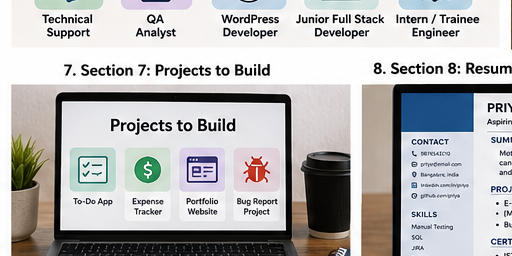
A To-Do App is a great first project if you’re learning frontend development. It sounds basic, and honestly, it is. But that’s the point. You learn how buttons work, how data is stored, and how users interact with an application.
Another beginner-friendly project is an Expense Tracker. You can create forms to add expenses, calculate totals, and display reports. It feels more like a real-world application, which recruiters usually like to see.
If you’re aiming for web development, build your own Portfolio Website. Think of it as your online resume. Add your story, skills, projects, GitHub profile, and contact details. It doesn’t have to look fancy. Clean and working is enough.
For software testing roles, don’t just say you know testing concepts. Show them.
Create a Login Form Testing Project where you write test cases for valid and invalid login attempts. Then move to an E-commerce Test Case Project. Write test scenarios for adding products to a cart, making payments, and checking order confirmations. These are things testers actually work on.
You can also create a simple Bug Report Sample Project. Find issues on a demo website and document them properly. This shows recruiters that you understand real testing processes.
If you know Java or Python, try building a Student Management System. It can store student records, update details, and generate reports. Nothing complicated, just enough to demonstrate coding skills.
Want something a little more interesting? Build a Weather App using an API. When I first worked with APIs, it felt confusing. After a few days, it suddenly clicked. That’s usually how learning goes.
For data-related roles, create a SQL Sales Dashboard. Use sample sales data and build reports showing revenue, top-selling products, and monthly trends.
And if coding feels overwhelming right now, create a WordPress Business Website for a local shop, tuition center, or small business. Real projects often matter more than perfect projects.
One more thing. Don’t just upload code to GitHub and leave it there.
Every project should have a simple README file that explains:
- What the project does
- Tools used
- Features included
- Problems you faced
- What you learned
Recruiters often spend only a few minutes looking at a project. A clear README helps them understand your work quickly.
Remember, after a 15-year career gap, projects become your proof. They show effort. They show consistency. Most importantly, they show that you’re not just studying software—you are actually building it.
8. How to Write Resume After 15 Years Career Gap
I’ll be honest. For many people, writing the resume feels harder than learning coding or software testing.
The moment you sit down to create it, that little voice in your head starts asking uncomfortable questions.
“What will recruiters think about my 15-year gap?”
“Should I hide it?”
“Will anyone even call me for an interview?”
If you’ve had these thoughts, you’re not alone. Almost everyone returning to work after a long break worries about the same thing.
The good news? You don’t need a perfect story. You need an honest one.
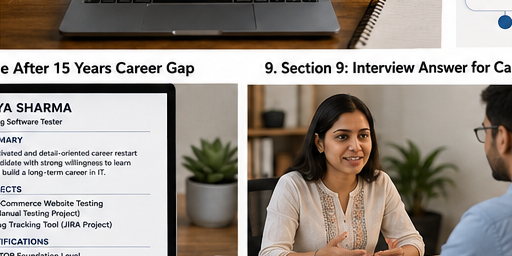
Many recruiters care less about the gap itself and more about what you’ve done recently to prepare for your comeback. If you’ve spent the last few months learning skills, building projects, earning certifications, or practicing interviews, that’s what your resume should highlight.
Start With a Clear Career Objective
The first section should tell recruiters exactly what you’re looking for.
Keep it simple.
For example:
“Motivated software job seeker with recent training in Python, SQL, and software testing. Looking for an entry-level opportunity where I can apply my technical skills, continue learning, and contribute to real-world projects.”
No need for fancy words. Nobody talks like that in real life anyway.
Highlight Your Technical Skills
This section should be easy to scan.
You can list skills like:
- Python
- Java
- SQL
- HTML, CSS, JavaScript
- Selenium
- Manual Testing
- Git and GitHub
- Jira
- Power BI
Only include skills you can actually discuss in an interview. Trust me, nothing feels worse than adding a technology to your resume and then freezing when the interviewer asks about it.
Show Your Projects
Projects are often the strongest proof that you’re serious about returning to the software industry.
Even small projects matter.
Some examples:
- Expense Tracker using Python
- Personal Portfolio Website
- Student Management System
- E-commerce Testing Project
- Weather Application using API
For each project, mention what tools you used and what problem the project solves.
A recruiter may forgive a career gap. They won’t ignore visible effort.
Add Certifications
Certifications help show that your skills are current.
Include relevant certifications such as:
- Python Programming
- Software Testing
- Java Development
- Data Analytics
- AWS Cloud Fundamentals
Don’t collect certificates just for the sake of collecting them. One useful certification is worth more than ten random ones.
Explain the Career Break Honestly
This is where many people get nervous.
You don’t have to write a long emotional story.
A simple statement works:
“Career Break (2009–2024): Took time away from full-time employment due to family responsibilities. During this period, continued learning and recently completed training in software development and testing.”
That’s enough.
Be truthful. Recruiters appreciate honesty far more than complicated explanations.
Include Your Education
List your degree, college, university, and graduation year.
For example:
- MCA – Kakatiya PG College, Hyderabad
- B.Sc Mathematics – Sri Sai Degree College
Keep this section clean and straightforward.
Add GitHub and LinkedIn Links
A lot of people skip this part. That’s a mistake.
Your GitHub profile lets recruiters see your projects.
Your LinkedIn profile shows that you’re active and serious about restarting your career.
Even if your projects aren’t perfect, sharing them is better than having nothing to show.
At the end of the day, your resume doesn’t need to hide your 15-year career gap. It needs to show who you are today.
Think about it this way. The gap is part of your story, but it shouldn’t be the headline. Your new skills, projects, certifications, and willingness to learn should take center stage. That’s what gives recruiters a reason to call you.
Read More: How to Get DevOps Software Job in 2026?
9. Best Interview Answer for 15 Years Career Gap
I’ll be honest. This is the question that scares most people.
Not coding tests. Not technical rounds. Not even English communication.
It’s that one moment when the interviewer looks at your resume and asks:
“I see a 15-year gap in your career. Can you explain that?”
Your heart starts beating faster. Your mind suddenly wants to explain every detail of the last fifteen years.
But here’s something I’ve noticed.
Most interviewers are not looking for a dramatic life story. They don’t need every personal detail. They mainly want to know two things:
- What happened?
- Are you ready to work now?
That’s it.
A simple and honest answer usually works much better than a long emotional explanation.
You can say something like this:
“I took a long career break due to personal and family responsibilities. During that period, my focus was on managing those commitments. Now my situation has changed, and I am fully ready to restart my professional career. Over the last several months, I have been updating my skills by learning Python, SQL, and software testing. I also completed a few practice projects and spent time preparing for technical interviews. I’m looking for an entry-level opportunity where I can contribute, continue learning, and grow steadily.”
Notice something?
The answer doesn’t spend five minutes talking about the gap.
It quickly moves toward the future.
That’s what recruiters want to hear.
I remember speaking with a hiring manager who said that candidates often make one common mistake. They keep talking about the reasons behind the gap but forget to talk about what they’ve done recently.
Imagine two people.
The first person says, “I had family issues, health issues, personal issues…” and spends three minutes explaining the past.
The second person says, “I had a career break, but during the last six months I learned Java, built two projects, and completed certification training.”
Who sounds more job-ready?
The second person. Every single time.
Your goal is not to defend the gap. Your goal is to show that you’re prepared for the next chapter.
So keep your answer short. Be truthful. Stay confident.
And most importantly, talk about your skills, projects, certifications, learning efforts, and commitment to work.
The gap is part of your story, but it shouldn’t become the whole story. What matters most now is showing employers that you’re ready to move forward and add value from day one.
10. Where to Apply for Jobs After Career Gap
One mistake I see many people make after a long career break is spending months learning new skills but never actually applying for jobs. I get it. After 10 or 15 years away from work, hitting that “Apply” button can feel scary. You start thinking, “What if they reject me because of my gap?” But honestly, the only way to get a job is to start putting yourself out there.
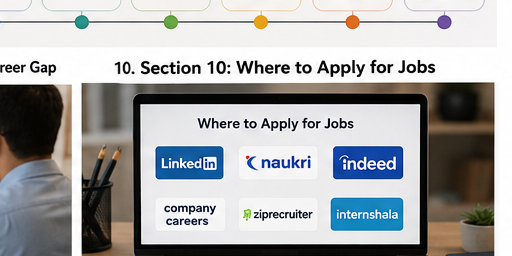
A good place to begin is LinkedIn. Don’t think of it as just another job portal. It’s where recruiters, hiring managers, and professionals spend their time. Create a simple profile, add your skills, projects, certifications, and connect with people working in your target field. I’ve seen candidates get interview calls simply because they stayed active and talked to the right people.
Naukri and Indeed are also worth using. Many companies regularly post entry-level software jobs, testing roles, support positions, and trainee openings there. Set up job alerts so you don’t have to search every day. New opportunities can show up when you least expect them.
Another thing many people overlook is company career pages. Some companies post openings on their own websites before they appear on job portals. If there are companies you would love to work for, visit their careers section once a week and keep checking.
If you’re returning after a very long break, returnship programs can be a huge advantage. These programs are specifically designed for professionals who paused their careers and now want to come back. Some well-known examples include Accenture Career Reboot, TCS Rebegin, Amazon Rekindle, Salesforce India Return to Work, Persistent Women Returnship, and Intuit Again. These programs understand career gaps better than traditional hiring processes.
Don’t underestimate referrals either. A referral from a former colleague, friend, neighbor, or even someone you met online can help your resume reach a real person instead of getting lost in a pile of applications.
You can also look at internship platforms and local startups. Some people ignore startups because the salaries may be lower at first. But startups often care more about what you can do today than what happened 15 years ago. That can be a big advantage when you’re rebuilding your career.
At the end of the day, don’t rely on just one platform. Apply through LinkedIn. Use Naukri. Check Indeed. Explore returnship programs. Reach out for referrals. Keep your options open. You only need one company to say “yes,” and sometimes that opportunity appears where you least expect it.
11. Common Mistakes to Avoid
When you’re trying to get a software job after a long career gap, it’s easy to make mistakes without even realizing it. I’ve seen many people spend months learning and applying for jobs, yet they get very few interview calls. Most of the time, the problem isn’t their age or career gap. It’s the way they’re approaching the job search.
One mistake that shows up again and again is applying for jobs without any projects. Think about it from a recruiter’s side. If someone says they learned Python, Java, or software testing, how can they prove it? A simple project speaks much louder than a certificate. Even a small expense tracker app or a testing project can make a difference.
Another trap is trying to learn everything at once. I’ve watched people jump from Java to Python, then move to AWS, Data Science, Cybersecurity, and AI within a few weeks. The result? They end up confused and don’t become good at any one thing. Pick one path and stay with it for a while.
Some candidates try to hide their career gap completely. Honestly, that usually creates more questions than answers. Recruiters are going to notice missing years anyway. It’s better to be open about it and focus on what you’ve done recently to restart your career.
I also notice many people still use resume formats that look like they came from 2010. Long paragraphs, outdated objectives, and pages full of old information can hurt your chances. Today’s resumes need to be clear, simple, and focused on relevant skills and projects.
Then there’s interview preparation. Many candidates spend months studying but hardly practice speaking. The first interview arrives, and suddenly they struggle to explain even the things they know well. Knowledge matters, but communication matters too.
Another mistake is waiting only for big MNCs to call. That’s a tough road. Smaller companies, startups, and local software firms often provide valuable opportunities to gain experience and rebuild confidence.
And please don’t write “I know the basics” on your resume without showing proof. Recruiters hear that every day. Show a GitHub profile, project links, a portfolio website, or something real. Evidence builds trust.
At the end of the day, your career gap doesn’t have to be the biggest problem. The bigger problem is giving recruiters no reason to believe you’ve stayed current. Show your work, keep learning, and make it easy for employers to see what you can do today—not what you did years ago.

12. FAQ Section
Can I get an IT job after a 15-year gap?
Yes, you can. Is it easy? Probably not. But it’s definitely possible.
I’ve seen people assume that a long career gap automatically ends their chances of working in IT. That’s not really true anymore. Companies care a lot about what you can do today. If you can show recent skills, small projects, certifications, or even a GitHub profile, you already have something valuable to talk about.
The gap is part of your story. Your current skills are what will get you interviews.
Can I become a software developer after 40?
Absolutely.
A lot of people think software development is only for fresh graduates in their early twenties. That’s one of the biggest myths in tech.
The computer doesn’t care whether you’re 22 or 42. It only cares if your code works.
Sure, learning new technologies may take some patience. But many people over 40 successfully switch careers into software development, testing, data analysis, and other IT roles. In fact, maturity, discipline, and life experience can be huge advantages during interviews and at work.
Is software testing a good option after a career gap?
For many people, yes.
Software testing is often one of the most practical paths back into IT. You don’t always need deep programming knowledge to start with manual testing. You can learn concepts like test cases, bug reporting, Jira, SDLC, and STLC within a few months.
Later, if you enjoy it, you can move into automation testing and learn tools like Selenium.
I’ve noticed that many career returners choose testing because it feels less overwhelming than jumping straight into full-stack development.
Can a housewife become a software engineer after a long gap?
Yes, and many have already done it.
Life happens. Some women take career breaks to raise children, care for family members, or manage responsibilities at home. That doesn’t mean their career is over.
The key is to start small and stay consistent. Even one or two hours of learning each day can create surprising progress over time.
Many companies now run returnship programs specifically designed to help women restart their careers. The journey may feel scary at first, but every software engineer started as a beginner once.
Which course is best after a long career gap?
There isn’t one perfect course for everyone.
The best course depends on the type of job you want.
If you like testing, learn Manual Testing, SQL, and Selenium.
If you enjoy building websites, focus on HTML, CSS, JavaScript, and React.
If you’re interested in data, learn Excel, SQL, Power BI, and Python.
One mistake I see people make is collecting ten different certificates without building any projects. A single project often impresses recruiters more than a pile of certificates.
Can I get a job after a 10-year gap in India?
Yes.
Thousands of people in India return to work after long breaks every year. Some join startups, some enter through internships, and others find opportunities through referrals and returnship programs.
The challenge isn’t usually the gap itself. The challenge is proving that you’re ready to work now.
Recruiters want confidence, updated skills, and evidence that you’ve been learning. That’s what moves your resume from the “maybe” pile to the interview list.
Is Python good for a career restart?
Python is one of the best choices.
It’s beginner-friendly, easy to read, and used in many fields including software development, automation, data analytics, artificial intelligence, and testing.
When I talk to people restarting their careers, Python often comes up because it doesn’t feel as intimidating as some other languages. You can build useful projects fairly quickly and start seeing results without getting lost in complicated syntax.
Is Java good for freshers after a career gap?
Yes, Java is still a strong option.
Many large companies continue to use Java for enterprise applications, banking systems, and business software. Because of that, Java developers are still in demand.
The learning curve can feel steeper compared to Python, especially for beginners. But if you’re willing to spend time understanding the fundamentals, Java can open doors to many software development roles.
At the end of the day, don’t spend months worrying about whether Python or Java is better. Pick one, build projects, practice regularly, and keep moving forward. Consistency beats endless comparison every single time.
13. Conclusion: Realistic Motivation
If you’ve read this far, you’re probably carrying a question that keeps coming back to your mind: “Can I really get a software job after a 15-year career gap?”
My answer is simple. Yes, you can.
Will it be easy? Probably not.
A long gap does make things harder. Some recruiters may hesitate. Some companies may choose candidates with recent experience. That’s just the reality. But a career gap doesn’t erase your ability to learn, work, and grow.
I’ve seen people restart careers after years spent raising children, caring for family members, running small businesses, or dealing with personal challenges. Life doesn’t always move in a straight line. Sometimes it takes unexpected turns.
What matters now isn’t what happened 15 years ago. It’s what you’re doing today.
If you’re learning new skills, building projects, improving your resume, practicing interviews, and applying for jobs consistently, you’re already moving forward. One small project can show more commitment than a hundred excuses. One good interview can change everything.
Don’t spend months worrying about whether companies will accept your gap. Spend that time becoming someone they can’t ignore.
A software job after career gap is possible. A fresher IT job is possible. Many people have managed to restart software career paths that once seemed completely out of reach.
Keep learning. Keep applying. Some days will feel frustrating, I won’t lie. But all it takes is one opportunity, one hiring manager, and one “yes” to start a brand-new chapter.



Leave a Reply