Are you trying to learn how to increase domain authority because your DA score looks too low?
First, breathe.
Domain authority is a score from 0 to 100. It is made by SEO tools like Moz, not by Google.
So, yes, you can improve domain authority.
But no, you should not lose your sleep for it.
Google asks you to create helpful content for people, not content made only to push search ranks.
That means your real job is simple:
- write useful posts
- earn good links
- fix basic SEO
- help readers better than others
- stay steady for months
In my view, DA is like a mirror.
It can show progress, but it cannot write your blog.
So, use domain authority as a guide, not as your boss.
If you want to increase website authority, start with strong content, clean links, and patient work.
That is the safest way to improve domain authority without killing your love for blogging.
A beginner blogger once asked me: “How do I increase my domain authority?”
At first, I thought it was a small question, but then we talked for almost two hours.
We talked about backlinks, Google ranking, old domains, toxic links, DA checker tools, and why his domain authority was still low.
Then I told him one simple thing: domain authority is useful, but it is not your life.
Moz Domain Authority is only a score from 0 to 100, and Google does not use Moz DA as a direct ranking score. Google says its systems look for helpful, reliable, people-first content.
So, yes, learn how to increase domain authority.
But do not chase it like a hungry man chasing smoke.
Focus on these first:
- Write useful posts.
- Earn real backlinks.
- Fix weak pages.
- Build trust.
- Stay consistent.
After years of blogging, I believe this strongly: don’t chase Domain Authority; build real authority.
What Is Domain Authority?
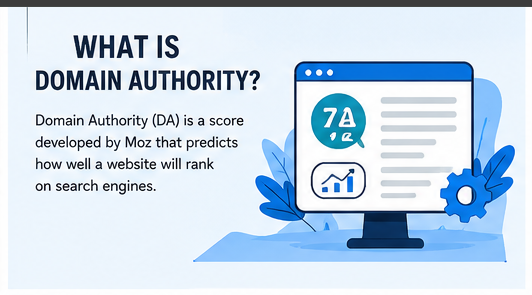
Domain Authority is a score that shows how strong your website may look in search, compared with other sites.
Moz developed this SEO metric, and it uses a score from 1 to 100. A higher DA score means your site may have better ranking power, but it does not promise Google rankings.
Think of it like a cricket player’s form rating. It helps you compare, but the match still depends on real performance.
Domain Authority is mainly based on your backlink profile. So, links from trusted sites can help your website authority grow.
| DA Score | Simple Meaning |
|---|---|
| 1–20 | New or weak site |
| 21–40 | Growing site |
| 41–60 | Strong niche site |
| 61–80 | Very strong site |
| 81–100 | Huge authority site |
But remember this: Domain Authority is not owned by Google. Google does not use Moz DA as a direct ranking factor.
So, use DA as a comparison tool, not as your life goal. Check your Domain Authority against similar blogs, then focus on better content, useful links, and reader trust.
Does Google Actually Use Domain Authority?
No, Google does not use Domain Authority as a direct ranking factor.
So, when you ask, “does Google use Domain Authority,” the clean answer is: Google has never said it uses Moz DA to rank pages.
Domain Authority is a Moz score from 0 to 100.
It helps you compare sites, but it is not Google’s own score.
Google talks about helpful, reliable, people-first content.
That means your page should help a real person, not just please an SEO tool.
Here is the simple difference:
| SEO Tool Score | Google Search |
|---|---|
| Looks at link strength | Looks at helpful content |
| Helps compare sites | Helps users find answers |
| Gives a third-party score | Uses its own ranking systems |
| Can guide SEO work | Does not guarantee ranking |
So, do not panic if your DA is low.
A new blog can still rank if one page gives a clear, useful answer.
I have seen small blogs beat big sites.
Why? The small blog answered the question better.
Google also warns against spam tricks.
This includes buying expired domains only to push weak content or using spam methods to manipulate search rankings.
Use Domain Authority like a thermometer.
It can show a signal, but it is not the illness, the cure, or the doctor.
Key Points
- Google has not confirmed Moz DA as a ranking factor.
- DA is useful for comparison, not for final judgment.
- Google wants helpful content, clear pages, and real value.
- Spam tricks can hurt your site.
- Your best work is still simple: write useful content, improve trust, and serve the reader.
So, does Google use Domain Authority?
No; but if your content earns trust, links, and love from readers, your real authority can grow naturally.
Domain Authority vs Domain Rating vs Authority Score
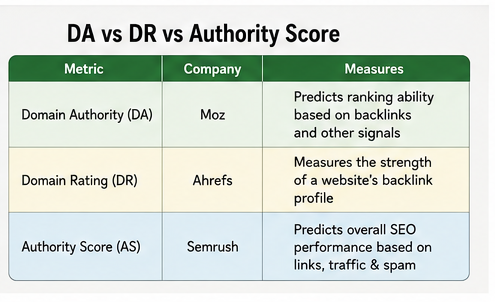
If you search domain authority vs domain rating, you will see three names again and again: Moz DA, Ahrefs DR, and Semrush Authority Score.
They look similar, but they do not mean the same thing.
| Metric | Tool | Score | What It Mainly Checks | Best Use |
|---|---|---|---|---|
| Domain Authority | Moz | 1–100 | Ranking chance based on links | Compare sites in your niche |
| Domain Rating | Ahrefs | 1–100 | Backlink strength | Check link power |
| Authority Score | Semrush | 1–100 | Links, traffic, and spam signs | Judge overall site trust |
Moz Domain Authority is a guess: it predicts how well a site may rank in Google.
Ahrefs Domain Rating is more link-focused: it checks the strength of backlinks pointing to a site.
Semrush Authority Score is wider: it looks at link power, organic traffic, and spam signals. Semrush also says its score updates every two weeks.
Here is the simple way I use them.
- Use DA when a client asks for Moz-based website authority.
- Use DR when you want to study backlink strength.
- Use Authority Score when you want a safer view of links, traffic, and spam risk.
But do not worship any one score.
I have seen small Indian blogs with low DA rank above big sites because the article answered the query better.
So, in the domain authority vs domain rating debate, remember this: use these numbers as road signs, not as your destination.
What Is a Good Domain Authority Score?
A good domain authority score depends on your niche. There is no magic DA number for every blog.
Moz Domain Authority uses a 0 to 100 score. But Google does not rank you only because your DA is high; Google looks for helpful and reliable content first.
Simple DA Score Guide
| Website Type | DA Range | What It Means |
|---|---|---|
| New blog | 1–10 | Normal starting stage |
| Small blog | 10–30 | Good for low-competition topics |
| Medium website | 30–50 | Strong enough for many niche keywords |
| Authority website | 50+ | Trusted by many sites and readers |
Still, compare yourself only with your real competitors. A DA 25 food blog in India may beat a DA 50 site for a local recipe if the post is more useful.
My Practical Rule
I never judge a blog by DA alone. I check three things first: traffic, content quality, and useful backlinks.
For a new blogger, DA 10 is not shameful. It means your blog is still a child; feed it with good posts, links, and time.
What Should You Aim For?
- New blog: reach DA 10 first.
- Small blog: aim for DA 20–30.
- Medium blog: aim for DA 30–50.
- Serious brand: aim for DA 50+.
But do not chase the number daily. Check your good domain authority score once a month, then go back and write better content.
How Is Domain Authority Calculated?
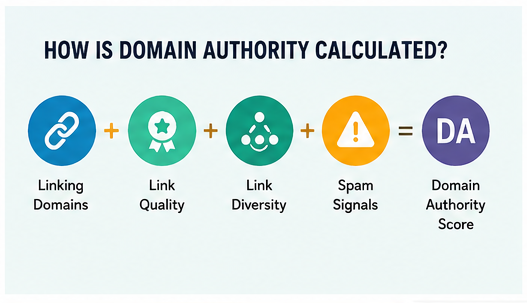
Domain Authority is calculated by Moz with a score from 1 to 100. In simple words, it checks how strong your site looks compared with other sites.
Moz does not share the full formula. But it mainly studies your links, link quality, spam risk, and how your site may perform in search results.
The Simple Flow
Your site does not gain authority by magic. It gains it when trusted websites point to you.
Website
↓
Quality Links
↓
Trust
↓
Authority
↓
Domain Authority
Key Things That Affect Domain Authority
| Factor | Simple Meaning | What You Should Do |
|---|---|---|
| Referring domains | Different websites linking to you | Get links from many real sites |
| Backlink quality | How trusted those sites are | Prefer niche and useful sites |
| Link diversity | Links from different sources | Avoid one repeated link pattern |
| Spam signals | Risky or fake link signs | Stay away from cheap backlinks |
| Authority flow | Trust passed through links | Build strong internal links too |
How It Works in Real Life
Suppose 20 real food blogs link to your recipe site. That helps more than 200 fake links from random sites.
Also, one link from a trusted niche site can beat many weak links. So, chase useful links, not big numbers.
My Practical View
When I check a new blog, I do not first ask, “What is the DA?” I ask: “Who trusts this site enough to link to it?”
That one question gives the real answer. If good sites mention you, your authority slowly grows.
Key Points
- More referring domains can help your DA.
- Better backlink quality matters more than link count.
- Spammy links can weaken trust.
- Internal links help authority move inside your site.
- Domain Authority is a guide, not Google’s final judgment.
So, when you think about how Domain Authority is calculated, remember this: real trust builds real authority. Build links that a human would proudly click.
12 Proven Ways to Increase Domain Authority Naturally
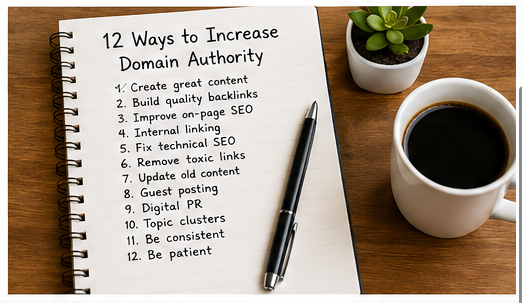
If you want to increase domain authority naturally, stop hunting for tricks first. Start building a site that deserves trust.
Domain Authority is not a Google score. Still, better content, clean SEO, and strong backlinks can help your site grow in real search.
Create Exceptional Content
Write the post that you wanted to read when you were confused. That is the best content for backlinks.
Add your own test, your own example, and your own small story. Google says useful content should help people first, not search engines first.
Publish Consistently
Do not publish 20 posts in one week and disappear for 3 months. Publish in a rhythm you can keep.
For a new blog, 2 strong posts per week is better than 10 weak posts. Consistency trains you, your readers, and search engines.
Improve Internal Linking
Internal links are free power inside your own site. Link old posts to new posts and new posts to old posts.
Use clear anchor text like “on-page SEO checklist” or “free DA checker tools.” Do not use lazy words like “click here.”
Earn Quality Backlinks, Not Buy Them
One good backlink from a trusted niche site beats 100 spam links. So, chase relevance, not numbers.
Never buy cheap backlinks from random sellers. Google’s spam policies warn that manipulative link tactics can hurt or remove pages from Search.
Try Guest Posting
Guest posting still works when you do it like a real writer. Write for websites that have real readers, not just high DA.
Send a short pitch with one useful topic. Then write better than you write for your own site.
Use Digital PR
Digital PR means earning mentions from blogs, news sites, podcasts, and industry pages. You do this by sharing something worth quoting.
Example: survey 50 bloggers in India, the USA, or the UK about their biggest SEO fear. Turn that into a small report, then pitch it.
Fix Technical SEO
Your content may be good, but Google must crawl and index it first. So, check speed, mobile view, broken links, sitemap, and indexing.
Use Google Search Console for search traffic, indexing, Core Web Vitals, and site issues. It is free and made by Google.
| Technical Check | What You Should Do |
|---|---|
| Crawlability | Make sure Google can access pages |
| Indexing | Submit sitemap in Search Console |
| Speed | Compress images and remove heavy scripts |
| Mobile | Test every key page on phone |
| Broken links | Fix or redirect dead pages |
Remove Toxic Backlinks Carefully
Do not panic when you see spam links. Every site gets some ugly links.
Use Google’s disavow tool only when links are clearly harmful or linked to manual action risk. Google says wrong disavow use can hurt your search performance.
Improve On-Page SEO
On-page SEO helps readers and search engines understand your page. Use one clear H1, helpful H2s, short URLs, image alt text, and simple meta titles.
Also add schema where it fits, like FAQ schema for questions. But never decorate a weak post with SEO makeup.
Update Old Articles
Old articles are sleeping assets. Wake them up with fresh examples, better headings, new screenshots, and clearer answers.
Check posts every 6 months. If a post gets impressions but low clicks, improve the title and intro first.
Build Topic Clusters
One lonely post is easy to ignore. A full topic cluster makes your blog look serious.
For example, do not write only “how to increase domain authority.” Also write about backlinks, internal linking, technical SEO, toxic links, and blog consistency.
Be Patient
SEO is slow, but it compounds. A post you write today may bring traffic after 3, 6, or 12 months.
So, do the boring things longer than others. That is the safest way to increase domain authority naturally.
Fastest Way to Increase Domain Authority
The fastest way to increase domain authority is simple: earn better links, not more links.
Still, do not chase DA like a race; chase trust first.
Moz DA and Ahrefs DR both use a 0–100 scale, but Google does not rank you by that number directly.
Google warned in March 2024 that spam tricks like expired domain abuse can hurt search quality and rankings.
So, use this clean path:
- Write one strong guide people want to save.
- Add internal links from your old posts.
- Ask real bloggers to read and link.
- Write guest posts on trusted sites.
- Share useful data, tools, or stories.
- Fix broken pages, slow pages, and thin posts.
Here is my honest view: one good backlink from a real niche site beats 100 cheap links.
I have seen small blogs grow faster when they stop begging for DA and start solving one reader pain very well.
| Method | Speed | Risk |
|---|---|---|
| Guest post | Medium | Low |
| Digital PR | Fast | Medium |
| Paid links | Fast | High |
| Internal links | Fast | Low |
In short, the fastest way to increase domain authority is to build proof.
Publish useful work, show it to the right people, and let trust come back as links.
Should You Buy an Old Domain?
Should you buy expired domain for faster SEO growth?
Sometimes yes, but only when the old domain fits your niche and has a clean past.
An old domain is not magic.
It is only useful if real people can trust it today.
Pros of Buying an Old Domain
An old domain may save time.
It may already have backlinks, mentions, and some brand memory.
It can help when the topic is still the same.
For example, an old food blog can become a new food blog.
Cons of Buying an Old Domain
The bad part is simple: you may buy someone else’s mess.
Old spam links, copied content, or past penalties can follow the domain.
Also, the name may not match your voice.
A strange old name can confuse readers.
Main Risks
Google added expired domain abuse to its spam policies in March 2024.
Google says buying an expired domain mainly to push low-value content in Search is spam.
So, do not buy an old school site and turn it into a casino blog.
Google gives this as a clear bad example.
| Check Before Buying | Why It Matters |
|---|---|
| Old content topic | It must match your new site |
| Backlink quality | Bad links can hurt trust |
| Google index status | Deindexed domains are risky |
| Wayback history | It shows past spam |
| Brand name | Readers must feel safe |
When It Makes Sense
Buy an old domain when it has a clean history.
Also buy it when the old topic and your new topic are close.
Example: you find an old Hyderabad travel blog.
You want to write about Telangana trips, food, and weekend places.
That domain can make sense.
The readers, links, and topic still match.
When You Should Avoid It
Avoid it if you only want quick Domain Authority.
That is not SEO; that is gambling.
Avoid it if the domain has adult, casino, pharma, crypto spam, or random foreign pages.
Also avoid it if you cannot explain why the old name fits your new blog.
My Practical Advice
I would not buy an old domain just for DA.
I would buy it only if I can proudly build a real site on it for 5 years.
If you are new, start fresh.
Write well, build trust, and let your domain authority grow slowly.
So, should I buy expired domain?
Yes, only when it is clean, relevant, useful, and not a shortcut.
Free Domain Authority Checker Tools
A free DA checker helps you check your site score before you plan SEO work. But use it like a compass: not like a final exam.
Here are the tools I use when I want a quick, honest look.
| Tool | What You See | Free or Paid | Limitation | Best For |
|---|---|---|---|---|
| Moz | Domain Authority, Page Authority, links | Free + paid | Free checks are limited | Original DA score |
| Ahrefs | Domain Rating, backlinks | Free + paid | Shows DR, not Moz DA | Backlink strength |
| Semrush | Authority Score, traffic, spam signs | Free + paid | Free data is limited | Overall site trust |
| Ubersuggest | Domain score, traffic, links | Free + paid | Around 3 free daily reports | Beginners |
| Small SEO Tools | DA, PA, spam score | Free | Data may vary | Fast checks |
| Website SEO Checker | DA, PA, backlinks | Free | Not deep enough for audits | Quick bulk checks |
Moz created Domain Authority as a 1–100 score. So, when you search for a free DA checker, Moz is the cleanest starting point.
Ahrefs uses Domain Rating, not DA. It also uses a 0–100 scale and mainly looks at backlink strength.
Semrush uses Authority Score. It checks link power, organic traffic, and spam signals together.
Ubersuggest is good when you are new. It gives simple SEO data, but the free use is limited.
My small rule is simple: check the same domain in 3 tools. If all tools show weak links, thin traffic, or spam signs, then fix the site.
Do not cry if Moz says DA 8 and Semrush says Authority Score 14. Each tool has its own data, so the number will never match.
Use these tools for 4 things only:
- Check your current site strength.
- Compare your blog with similar blogs.
- Find weak backlinks.
- Track slow growth every month.
Do not check DA every morning. That habit kills your writing mood.
The best free Domain Authority checker is the one that helps you act. Check, learn, fix, publish, and move on.
Common Mistakes Beginners Make
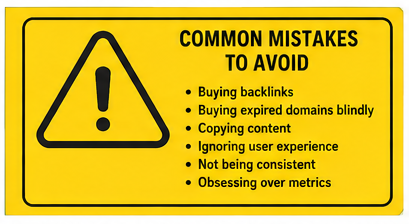
Many common mistakes beginners make in domain authority come from fear. You see a low DA score, then you rush.
But rushing hurts your blog. Slow, clean SEO wins more often.
1. Buying Cheap Fiverr Backlinks
Cheap backlinks look sweet at first. But most of them come from weak, spammy, or fake sites.
Google says spam tactics can make a page or full site rank lower, or even disappear from Search. So, never trade long-term trust for a ₹500 shortcut.
2. Buying DA Like a Product
You cannot buy real trust. You can only fake numbers for a short time.
A high DA with no traffic is like a big shop with no customers. It looks large, but it does not earn.
3. Buying Expired Domains Blindly
An old domain is not always gold. It may carry spam, bad links, or a dead past.
Google named expired domain abuse as a spam issue in March 2024. So, buy an old domain only after checking its history, links, niche, and old pages.
4. Ignoring Content Quality
Many beginners ask for backlinks before writing ten useful posts. That is like asking for applause before singing.
Write helpful posts first. Then build links to pages that deserve links.
5. Publishing Once a Month Without a Plan
Publishing once a month is not wrong. But random posting slows your growth.
Make a simple plan: publish, update, interlink, and track. Even one strong post per week can build real website authority.
6. Obsessing Over Metrics
DA, DR, traffic, clicks, and impressions matter. But they are signals, not your life.
Check numbers once a week. Then close the tool and write.
7. Ignoring User Intent
A reader does not search only for words. A reader searches for help.
Before writing, ask: “What problem should this post solve today?” That one question improves on-page SEO fast.
8. Writing Thin Articles
A 500-word post can rank if it solves the query. But a thin post with no answer is useless.
Add examples, steps, warnings, and your own view. That makes the page worth reading.
9. Publishing AI-Only Content
AI can help you draft. But your blog needs your eyes, your tests, and your pain.
Google’s March 2024 update also targeted scaled content abuse, especially low-value content made mainly for rankings. So, add your own story before you publish.
Quick Fix Table
| Mistake | Better Action |
|---|---|
| Buy backlinks | Earn niche links |
| Buy DA | Build real trust |
| Buy expired domains blindly | Audit first |
| Ignore content | Write useful posts |
| Chase metrics daily | Review weekly |
| Use AI-only posts | Add human experience |
In short, the biggest common mistakes beginners make in domain authority are simple: they chase numbers, skip readers, and look for shortcuts. Do the opposite, and your blog becomes stronger.
The Conversation I Had with That Beginner Blogger
A beginner blogger once asked me how to increase domain authority naturally.
He looked more worried about his DA score than his next blog post.
His First Question: “How Much DA Is Good?”
I told him: “DA is not your exam mark.”
Moz Domain Authority is a 0 to 100 score, but Google does not use Moz DA as its own ranking score.
So, do not ask only, “Is my DA good?”
Ask this: “Is my content good enough for my reader?”
His Next Question: “Why Is My DA Not Increasing?”
I asked him one thing: “How many useful posts did you publish in the last 90 days?”
He said: “Only three.”
That was the answer.
You cannot plant three seeds and cry because there is no forest.
Then He Asked About Backlinks
He asked: “Should I create backlinks on reputed sites?”
I said: “Yes, but earn them like respect, not like cheap coins.”
Do this:
- Write one useful guide in your niche.
- Add real examples from your work.
- Share it with bloggers who need it.
- Guest post only on related sites.
- Avoid random link exchange groups.
A backlink from one real niche site can help more than 50 weak links.
Then Came the Old Domain Question
He asked: “Should I buy an old domain?”
I said: “Only if the old topic and your new topic match.”
Google has warned about expired domain abuse, especially when people buy old domains only to push low-quality content in search.
So, an old cooking domain for a recipe blog may make sense; an old school domain for casino or loan posts is a red flag.
Then He Asked About Toxic Links
He said: “Should I remove toxic backlinks?”
I said: “First audit, then act.”
Do not panic when a tool shows spam links.
Use Google’s disavow tool only when you are sure bad links were built to manipulate rankings, because wrong use can hurt your site.
Then He Asked the Dangerous Question: “Should I Buy Backlinks?”
I gave him a straight answer: “No, not as a beginner.”
Paid links can look fast, but they can damage trust, rankings, and peace of mind.
Use this simple rule:
| Question | Safe Answer |
|---|---|
| Want faster DA? | Build useful assets |
| Want better links? | Do niche outreach |
| Want quick shortcuts? | Avoid them |
| Want long-term ranking? | Write better content |
The Lesson I Gave Him
I told him: “Domain authority is a mirror, not the face.”
Fix the face: content, links, speed, trust, and reader love.
So, yes, learn how to increase domain authority naturally.
But after that, close the DA checker, open your editor, and write one post that helps one real person today.

My Honest Advice After Years of Blogging
If you want to increase domain authority naturally, stop staring at the DA score every day.
That number can guide you, but it should not rule your mind.
Google does not use Moz Domain Authority as its own ranking score.
Google talks more about helpful content, real value, and clean search results.
So, here is my plain advice: write for people first.
Then fix SEO, links, speed, and structure after that.
Do not buy links just to look powerful.
Google clearly treats paid ranking links and excess link exchanges as link spam.
Also, do not buy an old domain only for shortcut SEO.
In March 2024, Google named expired domain abuse as a spam problem.
I have seen new bloggers waste weeks checking DA tools.
In that same time, they could write four useful posts.
So, do this instead:
- Write one clear post.
- Publish it.
- Link it to related posts.
- Share it with real readers.
- Update it after 60 or 90 days.
- Repeat this for one year.
That is boring advice.
But boring work often wins.
Your best backlink is not a trick.
It is a post someone wants to save, quote, and share.
Your best SEO tool is not always paid software.
It is your eye for reader pain.
When you feel tired, leave the laptop.
Walk near a river, sit under a tree, or get wet in the rain.
Then come back with a fresh mind.
Write like one human helping another human.
Google changes.
Readers remember.
Algorithms shift.
Good writing travels.
DA may rise slowly.
But trust grows each time your reader says, “This helped me.”
So, yes, learn how to increase domain authority naturally.
But never forget this: consistency, useful content, and patience build real authority.

FAQ
Does Domain Authority matter?
Yes, Domain Authority matters, but only as a guide.
Use it to compare your site with other sites in your niche, not as your life goal.
How long does DA take to improve?
DA takes time because it grows with trust, links, and content.
For a new blog, give it at least 6 to 12 months of steady work.
Is 20 DA good?
Yes, 20 DA is good for a small or new blog.
If your posts rank and people read them, your blog is already moving well.
Is 50 DA good?
Yes, 50 DA is strong.
At this level, your site may have good backlinks, useful posts, and better trust in your niche.
Can DA decrease?
Yes, DA can go down.
It may drop when you lose backlinks, get spam links, or when tools update their score system.
Does traffic increase DA?
Traffic alone does not increase DA.
But good traffic can bring shares, mentions, and backlinks; those can help your domain authority grow.
Can I increase DA without backlinks?
You can improve your site without backlinks.
But to increase Domain Authority faster, you need good links from trusted and related sites.
Is buying backlinks safe?
No, buying backlinks for ranking is risky.
Google says link schemes can make a page or full site rank lower or even disappear from Search.
Should beginners care about DA?
Care a little, but do not worry too much.
As a beginner, focus on this first:
- Write useful posts.
- Fix on-page SEO.
- Add internal links.
- Build real backlinks.
- Remove only truly bad links.
- Keep publishing.
Google also says the disavow tool is advanced, so do not use it casually.
In short: increase Domain Authority naturally, but do not chase it like a trophy.
Chase better writing, better answers, and better reader trust.
Conclusion: Stop Chasing DA, Start Building Trust
If you want to know how to increase domain authority naturally, start with one simple rule: help real people first.
Domain Authority is a 0–100 score, but Google does not rank your blog only by that number.
So, use DA as a mirror; do not use it as your master.
Check it, learn from it, then go back to the real work.
Key Points to Remember
- Write useful posts.
- Build real backlinks.
- Fix weak pages.
- Improve internal links.
- Avoid paid link tricks.
- Remove bad links only when needed.
- Stay steady for months, not days.
Google says helpful, reliable content matters more than content made only to game rankings. So, your best SEO tool is still your honest work.
My Final Advice
Domain Authority is just a number.
Real authority is earned.
Help readers.
Write honestly.
Be consistent.
SEO changes.
Algorithms change.
But valuable content survives.
So, write.
Publish.
Forget.
Walk beside a river.
Feel the rain.
Observe life.
Come back.
Write again.
Years later, you will see the truth: your readers, not your DA score, built your authority.
That is the cleanest way to increase domain authority naturally.

Leave a Reply