Yes, it is still worth learning how to start a blog in the AI era. Yet AI tools, Google AI Overviews, and instant answers have changed how people search and read.
Generic posts no longer give you a strong edge. AI can share common facts in seconds, so your blog must add real experience, proof, clear views, useful examples, and advice readers can trust.
Google also says creators should publish helpful, original, people-first content rather than mass-produced pages with little added value. Its current AI-search guidance asks publishers to create expert-led content that goes beyond common knowledge.
In this guide, you will learn how to choose a strong niche, set up your blog, and use AI without sounding robotic. You will also learn how to gain search traffic, reach readers through other channels, earn money, and build a blog that lasts.
How Has AI Changed Blogging?
AI has changed blogging, but it has not ended it. Google Search, ChatGPT, and other AI tools now give quick answers before a reader opens a website.
Google says AI Overviews now reach more than 2 billion users each month across over 200 countries and territories. So, a basic post that only explains common facts may get fewer clicks.
AI tools also help people create posts in minutes. As a result, you now compete with more content, but much of it sounds the same.
Readers want a fast answer, clear steps, and proof that your advice works. Google also asks creators to publish helpful, reliable, people-first content with real knowledge and experience.
Is Blogging Dead Because of ChatGPT?
No, blogging is not dead; weak and copied blogging is losing value. People still open blogs when they need more than a short AI summary.
They visit blogs for:
- Step-by-step tutorials.
- Honest product tests.
- Personal stories and mistakes.
- Case studies with real results.
- Original research and expert views.
- Templates, tools, and trusted advice.
Can a New Blog Still Compete?
Yes, but do not begin with a broad topic like “fitness” or “money.” Cover one small problem deeply, such as “how night-shift nurses can plan healthy meals.”
Google says AI search can help people find useful and original web content. Therefore, AI has changed blogging in your favour when you share clear steps, real proof, and knowledge that a machine cannot copy.
Step 1: Choose a Blog Niche That AI Cannot Easily Replace
To choose a blog niche that AI cannot easily replace, start with what you know, do, test, or live through. Then balance your skill with real demand, earning options, topic depth, and your wish to stay with it for years.
Do not pick a niche only because a keyword tool shows high traffic. Pick one where your work, results, mistakes, photos, costs, or local knowledge can prove your advice.
Look for Experience-Driven Topics
AI can explain how to visit Hyderabad, but it cannot test the last metro time after a late IPL match. That small, real detail is your edge.
Good experience-led niches include:
- Career lessons from real interviews.
- Personal money wins and mistakes.
- Software guides with tested steps.
- Parenting stories from daily life.
- Travel plans with actual costs.
- Fitness progress with weekly results.
- Home repairs with before-and-after photos.
- Product tests after long use.
- Local guides for your town or region.
- Work advice from your own field.
Google says useful content should show first-hand skill and serve people, not search rankings.
Validate Your Blog Niche
Before you buy a domain, test the niche:
- Search it on Google.
- Note autocomplete ideas.
- Read People Also Ask.
- Check Reddit, Quora, forums, and Facebook groups.
- List common doubts and complaints.
- Find related products, services, or affiliate offers.
- Write down at least 50 useful post ideas.
Commercial demand also matters: a 2025 study covered over 1,500 marketers and creators across eight countries.
The best blog niche that AI cannot easily replace is not free from AI. It gives you room to share proof that AI cannot create, test, or honestly claim.
Step 2: Identify Your Exact Audience and Problem
To start a blog in the AI era, you must identify your exact audience and problem. Do not write for everyone, because broad content helps no one.
Use this simple line: “I help [audience] get [result] without [main problem].” For example: “I help new bloggers build useful blogs without using weak AI content.”
Next, write down who your reader is and what they need. Note their skill level, key problem, past attempts, desired result, and biggest block.
Picture one real person, not a large crowd. For example, write for a working parent in India who has one hour each night to build a blog.
This clear reader profile guides your keywords, blog posts, offers, and income plan. When you identify your exact audience and problem, each content choice becomes simple.
Step 3: Choose a Blogging Platform, Domain and Hosting
When you start a blog in the AI era, you need a place that you can control. Your platform, domain, and hosting form the base of your blog.
WordPress, Medium, or a Website Builder?
Choose self-hosted WordPress when you want full control over your design, ads, data, and income. You can also add your own themes, plugins, code, and SEO tools.
Medium and Substack help you publish fast, so they suit hobby writers and early testing. Yet, your blog still lives inside another company’s platform, even when you connect a custom domain.
Website builders are simple, but they may limit deep SEO work and future changes. My rule is clear: own your domain when you want to build a real online business.
Pick a Clear Domain Name
Choose a name that is:
- Short and easy to spell.
- Easy to say and recall.
- Free from trade marks.
- Wide enough for new topics.
- Close to your blog niche.
Complete the Basic Blog Setup
Buy reliable hosting, and turn on an SSL certificate for HTTPS. Free SSL certificates are available through services such as Let’s Encrypt.
Next, add a fast mobile theme, backups, security, analytics, and an SEO plugin. Finally, verify your domain in Google Search Console to track search traffic and fix site issues.
Step 4: Build a Topic Cluster Before Writing
To build a topic cluster, plan your posts before you start writing. Random posts split your focus and make it hard to build trust.
A topic cluster has one main pillar page and several smaller support posts. Each support post answers one clear question and links to the main page.
Example Topic Cluster
Pillar page: How to Start a Blog in the AI Era
Supporting posts:
- Is blogging still profitable after AI Overviews?
- How can you find low-competition blog keywords?
- How can you use AI without sounding robotic?
- How can your blog appear in AI search?
- Which blog niches need human experience?
- How can you recover lost Google traffic?
- What is the difference between SEO and GEO?
- How can you earn without display ads?
Start with three to five easy questions about one reader problem. Then write the pillar page, publish each support post, and connect them with clear internal links.
Google says internal links help it find pages and understand their meaning. It also says useful and original content still matters in AI search.
This plan moves your reader from one useful answer to the next. It also helps you build a topic cluster and grow authority over time.
Step 5: Find Real Questions People Are Asking
To find real questions people are asking, start with your main blog topic. Type it into Google, then note the autocomplete suggestions and People Also Ask questions; Google says these predictions come from real searches, freshness, location and language.
Next, search the same topic on Reddit, Quora, niche forums and YouTube. Read the comments carefully because people often share the missing step, failed result or doubt that polished articles ignore.
Use This Simple Research Process
- Save Google autocomplete and related questions.
- Read Reddit and forum threads.
- Check YouTube comments and community posts.
- Study poor product and service reviews.
- Scan competitor FAQs and reader comments.
- Check demand with a keyword research tool.
- Group each question by search intent.
- Pick questions with weak or vague answers.
Do not chase search volume alone. Google recommends creating unique, expert-led content that gives readers more value than common information.
Complaints often reveal stronger blog topics than standard keywords. Instead of “Best AI writing tools,” write “Why AI blog posts sound repetitive,” “How to fact-check AI content,” or “Which blogging tasks should never be automated.”
Your best topic is a clear problem that people keep raising but no page solves fully. That is how you find real questions people are asking and turn them into useful, people-first content.
Step 6: Create Content AI Cannot Easily Reproduce
To create content AI cannot easily reproduce, share what you saw, tried, measured, and learned. AI can repeat common advice, but it cannot live your exact story.
Google now asks creators to publish unique, expert-led work that adds value beyond common knowledge. It also warns against making many AI pages without adding real value.
Add proof that comes from your own work:
- Show original screenshots, bills, settings, notes, or results.
- Share the time, cost, tools, and exact steps.
- Explain your mistakes and what fixed them.
- Compare your before-and-after results.
- Add your own template, checklist, or process.
- Quote a real expert after a direct interview.
- State your view, and support it with clear proof.
For example, do not write, “Publish often to grow a blog.” Write, “I published eight posts in 30 days, but only two gained clicks; both answered small, clear questions.”
Use an Experience-First Article Structure
Start with the reader’s problem, and then give a direct answer. Next, show what you tried and how you did it.
Follow this simple order:
- State the real problem.
- Give the answer early.
- Share what you tried.
- Show each step.
- Add proof or examples.
- Explain what failed.
- Show how you fixed it.
- End with one clear action.
Add Information Gain
Information gain means giving readers something they cannot find on ten other pages. This may include the real cost, time taken, tool settings, screenshots, results, errors, and limits.
Also explain when your method may not work. That honest detail builds trust and helps you create content AI cannot easily reproduce.
Step 7—Use AI as an Assistant, Not as the Author
Use AI as a blogging assistant, not as your author. It can save time, but you must own each idea, claim, and final word.
AI works well for topic ideas, keyword groups, rough outlines, note summaries, headings, tables, simple edits, content reuse, and missing questions. Google also says AI can help with research and content structure, but each page must still give real value.
Do not let AI invent your story, product use, expert view, brand voice, data, source, or final advice. You must also check medical, legal, and money facts with trusted sources.
A Safe AI-Assisted Workflow
- Research the topic by hand and read trusted sources.
- Collect your own notes, tests, photos, screenshots, and results.
- Ask AI to sort your notes into clear groups.
- Use AI to create a rough outline or first draft.
- Add your own views, examples, errors, and lessons.
- Check each fact, date, number, quote, and link.
- Cut repeated lines, weak claims, and stiff words.
- Read the post aloud before you publish it.
A simple rule works well: AI may arrange the bricks, but you must build the house. Your real tests, honest views, and useful proof make the post worth reading.
Never publish hundreds of raw AI posts just to gain traffic. Google warns that scaled pages without added value may break its spam rules, so use AI as a blogging assistant and keep human judgement in charge.
Step 8—Optimise for Google and AI Search Engines
You must optimise for Google and AI search engines at the same time. Both systems need clear, useful, trusted content that gives people a real answer.
Start each section with a direct answer to the heading. Then add your steps, proof, examples, limits, and results.
Use clear H2 and H3 headings that match real search questions. Also, explain hard terms in one short sentence so readers can act fast.
Follow this simple page plan:
- Answer the main question near the top.
- Add numbered steps in the right order.
- Use a table only when it makes a choice easier.
- Link to your useful related posts.
- Cite trusted sources for facts and claims.
- Show the author’s name, skill, and real experience.
- Review dates, prices, tools, and facts often.
- Add valid Article schema when it fits.
- Earn honest links and mentions from trusted sites.
Google says structured data can help it understand a page and may make the page fit for rich results. However, schema does not replace good content, and it gives no ranking promise.
SEO Versus GEO
SEO helps your page appear in normal search results. GEO, or Generative Engine Optimisation, helps AI tools understand, quote, and cite your work.
Still, do not chase GEO tricks such as fake mentions, forced keyword forms, or special AI files. Google says strong SEO, crawlable pages, original value, and people-first writing also support AI search visibility.
So, use GEO to support SEO—not replace it. When you optimise for Google and AI search engines, write first for the person who needs your help.
Step 9: Build Traffic Beyond Google
You must build traffic beyond Google because one search update can cut your blog visits overnight. Your blog is safer when readers can find you through more than one source.
Pick Two Traffic Channels
Choose one owned channel and one discovery channel: start with email, then add YouTube, Pinterest, LinkedIn, Facebook groups, podcasts, niche partners, or trusted online communities. For example, use Pinterest for a food blog, LinkedIn for a career blog, or YouTube for a software guide.
Start your email list in the first month; you can contact subscribers when search or social reach falls. Send one useful email each week, and avoid sending only sales links.
Repurpose Each Blog Post
Turn one useful post into:
- One short video and carousel.
- One newsletter and social thread.
- One checklist or free template.
- Three short community answers.
Do not copy and paste the same text everywhere; change the hook, format, and example for each platform. YouTube also expects reused content to add clear original value or useful comments.
So, build traffic beyond Google from day one: publish once, reshape the idea, and share it where your readers already spend time.
Step 10: Monetise Your Blog Realistically
You can monetise your blog realistically, but income rarely comes fast. Most blogs grow step by step as trust, traffic, and useful content grow.
Match Income With Reader Needs
Start with what your readers already want to buy or solve. Then choose one simple income stream that fits their search goal.
A tutorial blog can promote tools through affiliate marketing. A career blog can sell coaching, CV templates, interview guides, or short courses.
An experience-based blog can recommend products you have tested. A professional blog can bring freelance, consulting, or service leads.
Add More Income Streams Later
You can also earn through display ads, sponsored posts, memberships, paid newsletters, digital products, templates, and tools. However, do not add everything at once; one clear offer works better than ten weak offers.
In my view, waiting for huge traffic is a costly mistake. A small blog with 500 focused readers may earn more than a large blog with 10,000 random visitors.
Start with one useful offer, track clicks and sales, and improve it each month. That is the safest way to monetise your blog realistically without depending only on ads.
Common AI-Era Blogging Failures and How to Recover
AI-era blogging failures often start when you chase fast traffic instead of real reader trust. You can recover when you find the weak point, fix it, and track the result.
1. You Publish Too Much Generic AI Content
Do not publish 50 thin posts just because an AI tool writes them fast. Google warns that mass AI content with no added value may break its spam rules.
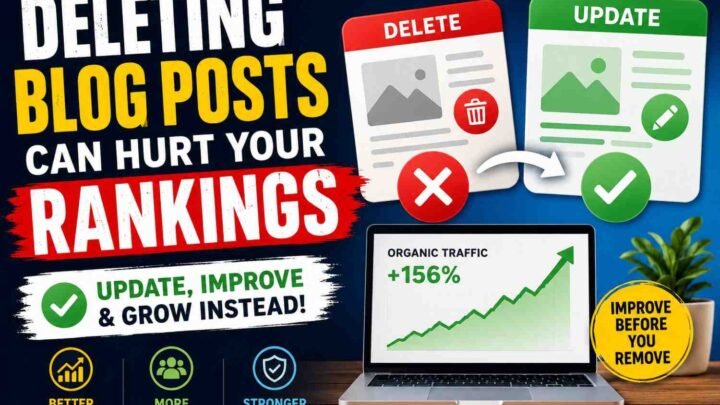
Merge repeated posts, delete useless pages, and rewrite strong pages with your own tests, screenshots, costs, mistakes, and results. Keep each page only when it gives the reader something new.
2. You Target Only Big Keywords
Large keywords bring tough rivals and mixed search intent. Instead, target clear questions such as “how to start a Telugu food blog from Hyderabad” or “why my new blog gets impressions but no clicks.”
3. You Depend Only on Google Traffic
Google traffic can rise or fall without warning. Build an email list, and choose one more channel such as YouTube, Pinterest, LinkedIn, or a niche community.
4. You Get Impressions but Few Clicks
Search Console defines CTR as clicks divided by impressions.
Rewrite dull titles, match the search need, and show your unique answer in the first two lines. Then compare CTR after 28 days.
5. You Lose Traffic After an Update
Check affected pages, queries, countries, and dates before changing everything. Update old facts, remove weak parts, merge similar posts, and add clear proof of experience.
6. You Quit Too Soon
Do not judge your blog by income alone after three months. Track impressions, clicks, rankings, subscribers, leads, and sales because steady improvement is the real cure for AI-era blogging failures.
A Practical 90-Day Blogging Plan
A clear 90-day blogging plan helps you turn one idea into a useful website. You work in small stages, so you can learn before you spend more time or money.
Days 1–15: Build the Foundation
Pick one niche, one reader, and one clear problem you can solve. Then buy a simple domain, choose reliable hosting, set up your blog, and collect 50 real questions from Google, Reddit, forums, and customer reviews.
Group those questions into three to five topic clusters. Each cluster should cover one main problem and its smaller doubts.
Days 16–45: Publish Your First Content
Write one detailed pillar post, then publish six to eight supporting articles. Link each article to the pillar page because clear internal links help readers and Google find related pages.
Create a useful email gift, such as a checklist or template. Also, connect Google Analytics and Search Console to track indexing, search terms, impressions, clicks, and traffic.
Days 46–75: Build Trust and Authority
Publish real tests, mistakes, results, screenshots, and case studies. Google now advises site owners to create unique, expert-led content that adds value beyond common answers.
Answer useful questions in niche groups, but never drop spam links. Next, contact relevant bloggers, share one article on one social platform, and improve older posts with real search data.
Days 76–90: Earn and Improve
Add one simple income source: an affiliate link, small service, template, or paid guide. Mark paid or affiliate links correctly, and recommend only products you trust.
Improve pages that gain impressions but few clicks, then create comparison and buying-guide posts. Finally, review clicks, email sign-ups, sales, and indexed pages; use your 90-day blogging plan results to choose the next topic cluster.
Frequently Asked Questions
Is Blogging Still Profitable in the AI Era?
Yes, blogging in the AI era can still earn money when you solve a clear problem. You can earn through affiliate links, services, paid guides, courses, ads, or email plans.
Can AI-Generated Blog Posts Rank?
Yes, AI-written content can rank when it gives people clear, correct, and useful help. However, copied AI drafts rarely build trust because they lack real tests, proof, views, and personal lessons.
Will Google Penalise AI-Written Content?
Google does not ban content only because you used an AI tool. Yet, it may act against many low-value pages made only to gain search traffic.
Use AI to plan or shape your draft; then check every claim yourself. Add your own photos, steps, results, costs, errors, and honest views.
How Many Posts Should a New Blogger Publish?
There is no perfect number because topic quality matters more than post count. Start with one main guide and eight to twelve linked posts that answer close user questions.
How Long Does It Take to Get Blog Traffic?
You may see your first Google impressions within a few weeks, but steady traffic can take months. Track impressions, clicks, search terms, and page growth in Google Search Console.
What Content Works Best in the AI Era?
Create content based on real use: show what you tried, what failed, what changed, and what worked. Google also advises site owners to publish unique, useful, first-hand content instead of common summaries.
In short, successful blogging in the AI era needs proof, clear steps, fresh facts, and a human point of view. Give readers something they cannot get from a quick AI answer.
Conclusion: The Future Belongs to Experience-Driven Bloggers
You can still start a blog in the AI era and build real value. But you must share more than facts that any AI tool can repeat.
Build Around Real Problems
Choose one clear niche and learn what your readers need. Then answer their real questions with simple steps, honest views, useful examples, and proof.
Build topic clusters so each post supports another post. Use AI to plan, sort ideas, and save time; however, keep your voice and final judgement human.
Do not depend only on Google for blog traffic. Grow an email list, use one social platform, and earn money by solving a clear problem.
Start today: choose one small reader problem and collect ten questions about it. Turn those questions into your first topic cluster, and use it to start a blog in the AI era.



Leave a Reply