If you want to rank your blog content in 2026, you need a new way of thinking. Traditional SEO still matters, but it no longer brings steady traffic by itself because AI search has changed how people discover websites.
Many bloggers ask the same questions: Why is my blog not ranking in Google?, Is SEO dead in 2026?, and Why is traffic dropping? The good news is that SEO is not dead, but the rules have changed, and this guide shows you exactly how to adapt.
Today, people search through Google AI Overview, ChatGPT, Gemini, and other AI search tools before they visit websites. Because of this change, your content must help both people and AI understand, trust, and recommend your information.
In this guide, you will learn a practical AI SEO strategy instead of old theories. Every step comes from a real website project where I solved ranking problems for a business that had a good website but almost no organic customers.
What you will learn
- Why many blogs lose rankings even after doing on-page SEO.
- How Google AI Overview changes search engine ranking.
- Why technical SEO, off-page SEO, and backlinks are no longer enough by themselves.
- How to create unique content that AI search engines want to cite.
- A practical content strategy that helps both Google Search and AI search understand your expertise.
- My complete SEO case study, including the problems, solutions, and final results.
Search behavior is changing faster than ever. Recent studies show that many searches now end without users clicking a website because AI answers appear directly in search results, making visibility and citations just as important as rankings.
That is why this guide focuses on what works in SEO 2026 instead of repeating outdated advice. By the end, you will understand how to rank on Google in 2026, improve your blog SEO, and build content that earns long-term traffic, AI citations, and real customers.
Read=> Content ranking problems and fixes.
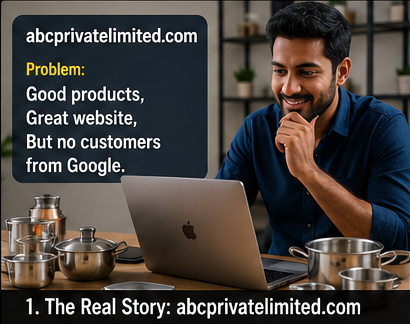
One Day abcprivatelimited.com Visited Me
One day, the owner of abcprivatelimited.com visited me with a simple question: “Why is my website not ranking on Google in 2026?” That question reminded me how hard it has become to rank blog content on search engines today.
His company makes quality house utensils in India. Every product is useful, well-designed, and priced fairly.
The website also looked clean and loaded fast. Even better, basic On-page SEO, Off-page SEO, and Technical SEO were already completed.
Still, almost nobody visited the website. Google traffic stayed close to zero, and sales depended mostly on existing customers.
Then we checked the search results together. Bigger brands appeared everywhere, while his pages remained hidden behind hundreds of competitors.
Next, I studied the website like a real customer. I also looked at what people searched before buying kitchen products and home tools.
Soon, I found the real problem: the website talked only about products. It did not solve everyday household problems that people searched for before making a purchase.
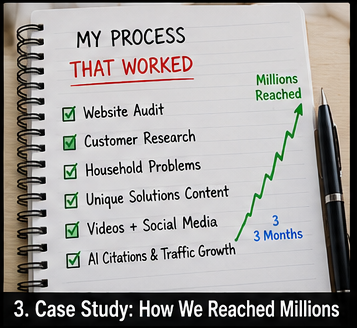
So, we changed the complete content strategy. We created practical guides, simple tips, real kitchen solutions, short videos, and helpful answers that people could use immediately.
After that, we shared the content through YouTube, Facebook, Instagram, Pinterest, and other places where homeowners already spent time. Within about three months, the website reached millions of people, while brand searches, customer trust, and organic visibility kept growing together.
Today, search has changed again. Studies show that AI-powered search results often answer users directly, reducing clicks even for pages that rank well, so simply reaching the first page is no longer enough.
That day I realized something huge. In 2026, fixing On-page SEO, Off-page SEO, and Technical SEO alone no longer guarantees business growth.
Why SEO Changed Completely in 2026
If you want to rank your blog content in AI search, you need to understand one big change first. SEO 2026 is no longer only about reaching the first page of Google, because search itself now works differently.
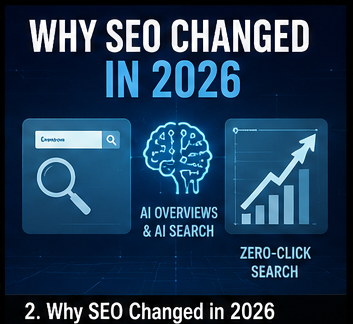
Today, people often get answers from Google AI Overview, ChatGPT Search, Gemini, and Perplexity before they even open a website. As a result, many searches end without a click, even when your page ranks well.
Many people now ask: Is SEO dead? The short answer is no, because SEO has changed instead of disappearing.
Traditional SEO still helps search engines find and understand your pages. However, AI SEO also helps AI systems trust your content enough to mention it in their answers.
Ranking, Visibility, Citation, and Brand Recall Are Different
| Term | What you should aim for |
|---|---|
| Ranking | Your page appears in Google’s search results. |
| Visibility | Your brand appears across Google Search, AI search, videos, images, and other search features. |
| Citation | AI tools like Google AI Overview or ChatGPT Search use your content as a trusted source. |
| Brand Recall | People remember your website or company name and search for it later. |
Earlier, reaching position #1 often brought the most visitors. Now, being mentioned inside an AI answer can be just as valuable because users see your brand even if they do not click immediately.
What Changed in AI Search?
- AI gives direct answers instead of only showing links.
- Google AI Overview summarizes information from multiple trusted sources.
- ChatGPT Search, Gemini, and Perplexity compare many websites before answering.
- Zero-click searches continue to grow, so rankings alone no longer guarantee traffic. Recent studies report that AI Overviews can reduce click-through rates by nearly 60% for affected searches.
So, if you still think AI vs SEO is a battle, you are asking the wrong question. The better question is: How can your content become the source that AI chooses to cite?
Read=> how to recover from a Google update.
My Real Case Study: How I Helped abcprivatelimited.com Reach Millions
Your real SEO case study starts with one simple question: Why is a good website still not getting customers? That question changed my entire SEO case study approach in 2026.
One day, the owner of abcprivatelimited.com met me. He made quality kitchen and household utensils, but his website had very few visitors.
The Problem I Found
His products were useful, and his prices were fair. However, Google, AI search, and potential customers barely noticed his website.
A quick website audit showed several issues:
- Pages targeted only keywords.
- Product content looked similar to competitors.
- Very few real customer stories existed.
- Social media was inactive.
- Product videos were missing.
- Household problems were never explained.
Everything followed old SEO methods. However, nothing helped people solve real daily problems.
I Started With Customer Research
Instead of adding more keywords, I spoke with real people. I asked families, shop owners, homemakers, and retailers about the problems they faced every day.
Their answers completely changed the content plan. They wanted practical solutions, not product descriptions.
| Customer Problem | Content We Created |
|---|---|
| Food sticks to cookware | Step-by-step cooking guide |
| Rust on utensils | Cleaning tutorial with product demo |
| Wrong utensil selection | Buying guide with comparison |
| Kitchen storage issues | Organization tips using products |
Every Content Piece Solved One Problem
Next, we stopped writing generic SEO articles. Every page answered one real household question with original photos, simple videos, and product demonstrations.
Then we shared the same ideas in different formats:
- Facebook posts
- Instagram Reels
- Pinterest Pins
- YouTube Shorts
- Short product demonstrations
- Real customer success stories
Each platform brought a different audience. Together, they built trust around the brand.
AI Search Started Trusting the Website
Within about three months, the website looked completely different. It became a helpful resource instead of an online product catalog.
Many pages started appearing in Google Search and AI-powered search results because they solved real problems with original experience instead of repeating existing information. As AI search expands, websites with firsthand experience and unique, useful content are increasingly favored over generic articles.
The Result
Organic visitors grew month after month. Social shares increased, customers spent more time on the website, and product enquiries rose because people trusted the helpful content before buying.
That project taught me one lesson you can apply today: in 2026, fixing On-page SEO, Off-page SEO, and Technical SEO is only the beginning. Your biggest ranking advantage comes from solving real problems with original experience that people and AI search engines both find worth sharing.
Read=> The most important SEO content ranking factors.
Traditional SEO Still Matters—But It Is Only the Foundation
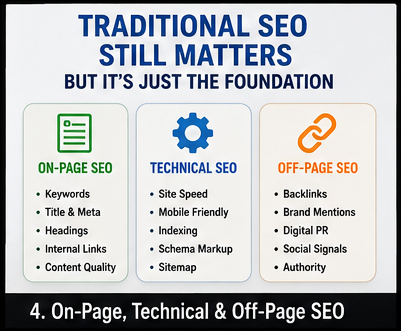
Here’s the next layer you should understand. Traditional SEO still matters, but it only prepares your website for search engines. In 2026, your goal is much bigger: help both search engines and AI engines trust your content enough to rank it and cite it naturally.
On-page SEO
On-page SEO tells search engines what your page is about. It also helps your readers find answers faster.
Use these basics on every page:
- Write one clear title tag with your main keyword.
- Use proper H1, H2, and H3 headings to organize ideas.
- Add internal links to related articles on your website.
- Optimize image SEO with meaningful file names, alt text, and compressed images.
Do not stuff keywords into every sentence. Instead, answer one problem clearly, use related words naturally, and keep your content easy to read.
Technical SEO
Technical SEO helps search engines discover, crawl, and understand your website. Without it, even excellent content may not appear in search results.
Focus on these essentials:
- Improve Core Web Vitals for a better user experience.
- Check that every important page is indexed.
- Add Schema Markup to explain your content.
- Keep your XML sitemap updated.
Google recommends good Core Web Vitals because they improve loading, responsiveness, and visual stability. A good page should aim for LCP within 2.5 seconds, INP below 200 milliseconds, and CLS below 0.1.
Off-page SEO
Off-page SEO builds trust outside your website. Search engines see these signals as proof that real people value your content.
Work on these areas:
- Earn quality backlinks from trusted websites.
- Build your brand through digital PR.
- Publish original research that others naturally mention.
- Encourage genuine brand mentions across blogs, news sites, podcasts, YouTube, Reddit, and social media.
Today, one trusted mention from an industry website often brings more value than dozens of weak backlinks. AI search systems also pay close attention to trustworthy third-party mentions.
| 2020 SEO | 2026 SEO |
|---|---|
| Rank pages | Rank pages + earn AI citations |
| Focus on keywords | Focus on entities, experience, and user intent |
| Build backlinks | Build brand mentions and authority |
| Publish blog posts | Create blogs, videos, images, podcasts, and social content |
Traditional SEO gives your website a strong foundation. However, how to rank blog content in 2026 depends on what you build on top of that foundation: original experience, practical solutions, trusted brand signals, and content that people genuinely share and AI engines confidently cite.
Read=> how to increase domain authority naturally.
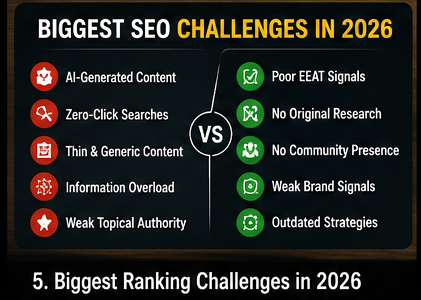
The Biggest Ranking Challenges in 2026
Your blog ranking challenges in 2026 are no longer only about keywords and backlinks. Search engines and AI now look for real experience, useful answers, and trusted brands before they show your content.
AI-Generated Duplicate Content
- Challenge: Thousands of websites publish almost the same AI-written articles every day.
- Issue: Your page looks like everyone else’s, so search engines find little reason to rank it.
- Solution: Share your own testing, photos, case studies, mistakes, results, and personal experience that AI cannot copy. Recent research also warns that AI-generated content can create repetitive information across the web.
Zero-Click Searches
- Challenge: Many people now get answers without opening a website.
- Issue: Even if your page ranks well, you may receive fewer clicks because AI Overviews answer the question first.
- Solution: Write clear answers, add original insights, and build a memorable brand so people search for you directly. Studies in 2026 show that more than half of Google searches now end without a click.
Thin Content
- Challenge: Short pages with basic information rarely stand out.
- Issue: Readers leave quickly because they learn nothing new.
- Solution: Add practical steps, examples, comparisons, checklists, and real solutions that help readers finish the task themselves.
Information Overload
- Challenge: Millions of new pages appear online every day.
- Issue: Your content gets lost among similar articles.
- Solution: Focus on one problem, answer it completely, and keep every paragraph useful.
Weak Topical Authority
- Challenge: Writing about random topics confuses search engines.
- Issue: Your website never becomes an expert in one subject.
- Solution: Build related articles around one niche and connect them with strong internal links.
Poor E-E-A-T
- Challenge: Anonymous content creates less trust.
- Issue: Readers and AI cannot see your experience or expertise.
- Solution: Show your real projects, author profile, achievements, and trusted sources throughout the article.
No Original Research
- Challenge: Many blogs only rewrite existing articles.
- Issue: AI search prefers fresh information instead of repeated facts.
- Solution: Collect customer questions, survey results, product tests, interviews, or real-world data from your own work.
Generic AI Writing
- Challenge: Robotic writing sounds the same everywhere.
- Issue: Readers lose interest, and your content offers little information gain.
- Solution: Write in your own voice, share real stories, and explain what actually worked for you.
No Community Presence
- Challenge: Nobody talks about your brand outside your website.
- Issue: You miss natural mentions that help people and AI discover your content.
- Solution: Answer questions on community platforms, publish videos, join discussions, and solve real user problems instead of dropping links.
Weak Brand Signals
- Challenge: People do not remember your website after reading it.
- Issue: Search engines see fewer branded searches and fewer trusted mentions.
- Solution: Create original content, publish consistently, and give readers a reason to search for your brand again.
In 2026, blog ranking challenges become easier to solve when you stop chasing search engines and start helping real people first. That simple change helps your content earn trust, build authority, and stay visible across both traditional search results and AI-powered search experiences.
Read=> how Google Search algorithm works.
The New SEO Formula That Actually Works in 2026
For AI SEO in 2026, you need a better plan than only chasing rankings. You need content that solves real problems, earns trust, and gives people something new to learn.
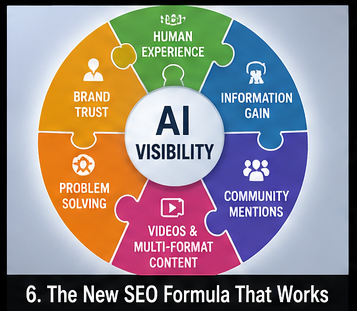
The SEO Formula You Should Follow
| Layer | Your Goal | Practical Action |
|---|---|---|
| SEO | Help search engines understand your page | Use clear titles, headings, schema, and internal links |
| Human Experience | Share what you really did | Write from your own testing and experience |
| Information Gain | Add something nobody has shared | Publish original tips, data, photos, or case studies |
| Community Mentions | Build trust outside your website | Answer questions on Reddit, Quora, Facebook, and LinkedIn |
| Videos | Show instead of only telling | Create short videos, tutorials, and demonstrations |
| Problem Solving | Fix one real reader problem | Give simple steps that readers can apply today |
| Brand Trust | Become a trusted source | Keep facts correct, update articles, and show author expertise |
1. Build a Strong SEO Foundation
Start with traditional SEO because search engines still need clear page signals. Then improve page speed, headings, internal links, image SEO, and structured data before publishing new content.
2. Share Your Own Human Experience
Next, write about work you have actually completed because your experience makes your content different. Readers trust practical lessons more than copied advice, and AI systems also look for unique viewpoints supported by evidence.
3. Add Information That Nobody Else Has
This is where many websites fail because they repeat the same ideas already found on hundreds of pages. Instead, collect your own photos, customer questions, product tests, survey results, mistakes, and lessons to create genuine information gain.
Simple ways to create information gain:
- Test a product yourself.
- Share before-and-after results.
- Interview real customers.
- Compare two methods.
- Publish original screenshots.
- Add your own checklist.
- Explain mistakes you fixed.
4. Earn Community Mentions
After publishing, don’t stop because promotion is now part of SEO. Join conversations where your audience already spends time, answer real questions, and share useful solutions instead of dropping links everywhere.
Popular communities include:
- Facebook Groups
- Quora
- X
- YouTube comments
5. Create Helpful Videos
Many people now prefer watching before reading because videos explain faster. Therefore, turn every important blog post into a short tutorial, product demo, or problem-solving video.
6. Solve One Problem Completely
Every article should answer one main question from beginning to end. When readers leave without searching again, your content has done its job well.
7. Build Long-Term Brand Trust
Finally, keep your content fresh because search changes every month. Update statistics, improve screenshots, fix broken links, and add new examples so your website stays useful in 2026 AI search. Recent industry research also shows that AI search rewards content with original value instead of pages that simply rewrite existing articles.
Remember this simple formula:
SEO + Human Experience + Information Gain + Community Mentions + Videos + Problem Solving + Brand Trust = AI Visibility
If you follow every layer together, your content becomes useful for people first. As a result, search engines and AI search platforms have a stronger reason to rank it, recommend it, and cite it.
How to Create Content Nobody Else Has Published
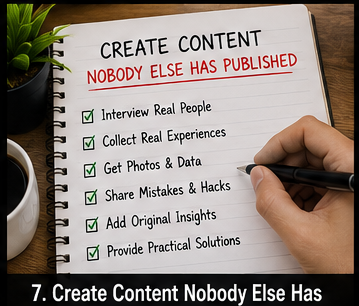
If you want to win with unique content ideas in 2026, stop copying search results and start learning from real people. That is how you create content with real information gain SEO that search engines and AI cannot find anywhere else.
Start with Real Conversations
Do not begin with keyword tools or AI prompts. Instead, spend one or two weeks talking to people who solve problems every day.
Interview people like:
- Customers
- Shop owners
- Technicians
- Parents
- Farmers
- Doctors
- Engineers
Ask simple questions such as:
- What problem do you face every week?
- What mistake do most people make?
- What trick saves your time?
- What product do you trust, and why?
- What surprised you after years of experience?
Collect Things AI Cannot Create
While talking, collect small details that only real people know. These details make your article original and useful.
| Collect | Why it matters |
|---|---|
| Real mistakes | Help readers avoid problems |
| Daily hacks | Give quick solutions |
| Personal experiences | Build trust |
| Original photos | Show proof |
| Numbers and results | Support your advice |
| Product comparisons | Help readers decide |
Turn Every Interview into Useful Content
After each interview, group similar answers into one topic. Then explain what worked, what failed, and what you learned from those people.
For example: if five shop owners say customers often buy the wrong pressure cooker size, write a guide that explains the mistake, compares sizes, and recommends the right choice. That article becomes far more useful than another generic buying guide.
Why AI Cannot Replace Firsthand Experience
AI reads what already exists on the internet, but it cannot visit a local shop or ask a farmer about this year’s crop problems. It also cannot test a kitchen tool in your home or capture a new photo before anyone else publishes it.
That is why your own interviews, photos, experiments, comparisons, and lessons become your biggest SEO advantage. When you consistently publish this type of original blog ideas and information gain SEO content, both search engines and AI systems have fresh information worth citing instead of another rewritten article.
Read=> What is keyword cannibalization in SEO.
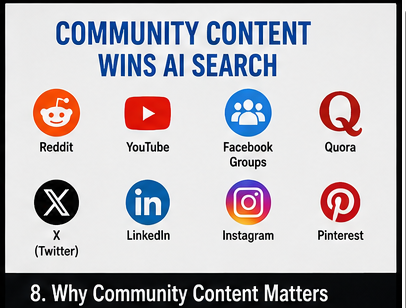
Why Community Content Wins AI Search
If you want better AI Search visibility, start helping real people where they already ask questions. Your useful answers across online communities can become trusted signals that support your blog over time.
Help First, Promote Later
Many people still use Reddit SEO or Quora SEO only to drop links. That no longer works because people ignore it, and moderators often remove it.
Instead, solve a real problem before sharing your article. Your answer should be complete, useful, and based on your own experience.
Where You Should Be Active
Each platform helps you reach a different audience:
| Platform | Best Use |
|---|---|
| Share real experience and practical solutions | |
| YouTube | Publish tutorials, product demos, and case studies |
| Facebook Groups | Answer everyday questions from your target users |
| X | Share quick tips, industry updates, and useful threads |
| Quora | Write detailed answers that solve one problem well |
| Publish professional insights and real business results |
Why AI Notices Community Discussions
Google continues to add more public opinions and firsthand experiences into AI-powered search. In 2026, Google announced new AI search features that preview helpful discussions from social platforms, community forums, and other firsthand sources inside AI search results.
That means your helpful answers can support your website even before someone visits your blog. This is one reason AI citations and social SEO are becoming more important every month.
A Simple Plan You Can Follow
Do these small tasks every week:
- Answer 5 questions on Reddit.
- Publish 2 helpful Quora answers.
- Upload 1 YouTube tutorial.
- Share 3 useful posts on X.
- Join 2 Facebook Group discussions.
- Publish 1 LinkedIn case study.
Keep your answers honest, practical, and based on real work. When people trust your experience, AI systems are more likely to notice your content, mention your brand, and help your AI Search visibility grow naturally.
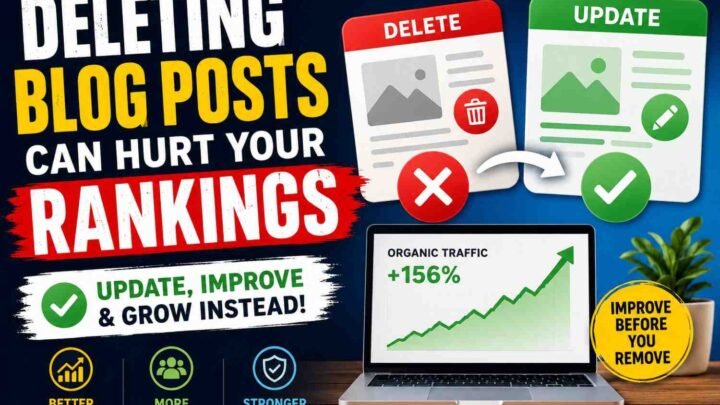
Read: deleting blog posts can hurt rankings.
Exact Content Workflow I Follow Before Publishing
Your content workflow decides whether your blog helps readers or becomes another forgotten page. I follow the same process before every post, and it keeps my content useful for both people and AI-powered search.
Step 1: Start with Real Research
First, I search Google, AI search, forums, and recent news. Then, I collect fresh facts, new trends, and common problems instead of copying existing articles.
Step 2: Collect Customer Questions
Next, I write down every question real people ask. These questions come from comments, emails, search suggestions, support chats, and social media because they show real search intent.
Step 3: Find Competitor Gaps
Now, I read the top-ranking pages carefully. After that, I list everything they miss so your article answers more questions in one place.
Step 4: Verify Expert Opinions
Then, I check trusted sources before writing. I only use updated facts, practical experience, and reliable recommendations because trust matters more than opinions.
Step 5: Learn from Community Discussions
Next, I read discussions on Reddit, YouTube, Facebook Groups, and Quora. Real experiences often reveal practical solutions that ordinary SEO articles never mention.
Step 6: Add Original Proof
I create original photos whenever possible. Then, I add charts, screenshots, comparison tables, and short videos because they make learning faster and improve trust.
Step 7: Answer More Questions
Before publishing, I add a useful FAQ section. Clear questions and direct answers also help AI search understand your page better, especially when combined with FAQ schema.
Step 8: Improve Technical SEO
Finally, I complete every important SEO task:
- Add schema markup.
- Build internal links.
- Write a clear title and meta description.
- Optimize images and alt text.
- Check mobile speed.
- Test every link.
Step 9: Publish, Promote, and Update
Publishing is only the beginning. I share the article on social platforms, watch its performance, and refresh it whenever new facts, search changes, or customer questions appear because fresh, helpful content stays competitive in content workflow for 2026 AI search.

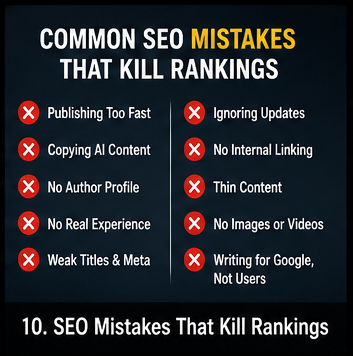
Common SEO Mistakes That Kill Rankings in AI Search
If your goal is to rank your blog content on search engines, avoid the mistakes below from your first post. Small problems slowly reduce your visibility in both Google Search and AI search.
1. Publishing Too Fast
Many people publish every day without checking quality. Instead, publish only after you verify facts, improve readability, and test every page.
2. Copying ChatGPT Output
Never copy AI text and publish it as it is. Add your own experience, examples, screenshots, results, and opinions because AI search looks for original value instead of repeated words.
3. No Author Profile
Show who writes the article and why readers should trust you. A simple author page with your real experience builds stronger trust signals for both users and search engines.
4. No Real Experience
Explain what you tested and what happened. Real projects, mistakes, numbers, and lessons make your content different from thousands of similar pages.
5. No Product Testing
Recommend only products or tools you have actually used. Share photos, pros, cons, and practical results instead of repeating marketing claims.
6. No Images
Add original screenshots, charts, comparison tables, and photos. They help readers understand faster and improve engagement.
7. Weak Titles
Write titles that clearly promise one useful result. Strong titles improve clicks because people instantly know what they will learn.
8. Ignoring Content Updates
Review important articles every few months. Fresh facts, new screenshots, and updated examples keep your content useful in 2026 AI search.
9. No Topical Clusters
Do not write only one article about a topic. Build related guides and connect them with internal links because complete topic coverage improves authority.
10. Writing for Google Instead of People
Write to solve one real problem at a time. When your content genuinely helps readers, search engines and AI systems are much more likely to trust, rank, and cite it.
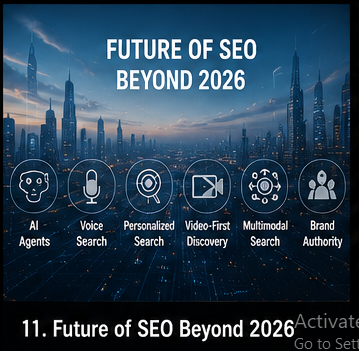
Future of SEO Beyond 2026
Your future of SEO depends on helping both people and AI understand your content. So, build every page for real readers first, because AI search engines still learn from trusted websites.
AI Agents Will Find Answers for People
AI agents now compare websites before showing one final answer. Therefore, your content should solve one problem completely, use clear headings, and include fresh facts from your own experience.
Personalized Search Will Keep Growing
Search results are becoming more personal every year. As a result, write for one clear audience instead of trying to satisfy everyone with one article.
Voice Search Needs Natural Questions
Many people now search by speaking instead of typing. So, answer simple questions, keep sentences short, and add FAQ sections that sound like everyday conversations.
Multimodal Search Is the New Normal
People search with text, images, videos, and even screenshots. Because of this, add original images, comparison tables, charts, and descriptive image text to every important page.
Video Builds Faster Trust
Many users watch a short video before reading a full article. Therefore, publish YouTube videos or Shorts that explain the same topic and link them to your blog.
Brand Authority Matters More Than Ever
Search engines trust brands that stay active across websites, social platforms, and communities. So, publish original research, real case studies, customer stories, and keep your information consistent everywhere.
Human Experience Will Stay Your Biggest Advantage
AI can summarize existing information, but it cannot replace your real testing and practical lessons. That is why your own results, mistakes, photos, and experiences help your content stand out from thousands of similar pages.
| Focus Area | What You Should Do |
|---|---|
| AI agents | Answer one problem completely |
| Personalized search | Write for one audience |
| Voice search | Use natural questions and FAQs |
| Multimodal search | Add images, videos, and tables |
| Video-first discovery | Create helpful short videos |
| Brand authority | Build trust across multiple platforms |
| Human experience | Share original work and real results |
The future of SEO is not about replacing old SEO with something new. Instead, traditional SEO builds your foundation, while Answer Engine Optimization (AEO) helps AI systems understand, cite, and recommend your content, so both strategies work together for long-term visibility.
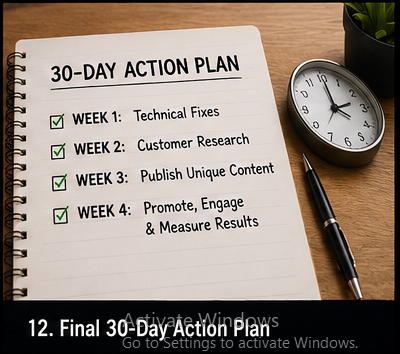
Final Action Plan
If you truly want to rank your blog content in 2026, follow one clear plan instead of trying everything at once. Small daily improvements build strong SEO, and they also help AI search engines trust your content.
Week 1: Fix Your Website First
Start with your technical SEO because search engines cannot rank pages they cannot read. Next, fix broken links, improve page speed, check mobile view, add schema, submit your sitemap, and make sure every important page is indexed.
Week 2: Learn What Your Readers Really Need
Now stop writing and start listening because your readers already tell you what they need. Collect real questions from Google Search, Reddit, YouTube comments, Facebook groups, customer emails, and product reviews, then create a list of problems that nobody explains well.
Week 3: Publish Helpful and Original Content
Write one complete article that solves one real problem from start to finish. Add your own experience, fresh examples, simple images, comparison tables, and practical steps because unique content earns more trust from both people and AI search.
Week 4: Promote, Improve, and Measure
Share your article on social media, answer questions in communities, and update the page whenever you learn something new. Finally, track your Google traffic, clicks, impressions, and watch whether AI platforms begin mentioning or citing your content, because AI visibility is becoming an important success signal alongside traditional rankings.
| Week | Your Main Goal | Expected Result |
|---|---|---|
| Week 1 | Technical fixes | Better crawling and indexing |
| Week 2 | Customer research | Strong content ideas |
| Week 3 | Publish unique content | Higher search value |
| Week 4 | Promotion and updates | Better rankings, AI visibility, and long-term growth |
Keep repeating this 30-day cycle every month, and your rank your blog content strategy becomes stronger with every update.
Frequently Asked Questions About SEO in 2026
Is SEO still worth learning in 2026?
Yes. If you want to rank blog content and grow free traffic, SEO is still one of the best skills you can learn. Google, Bing, AI search, and other search engines still need helpful, trusted, and original content.
Can AI-generated content rank?
Yes, but only when you improve it with your own ideas, experience, examples, and updated facts. Plain AI-written content usually looks similar to thousands of other pages, so it rarely builds long-term trust.
How long does SEO take in 2026?
Most websites start seeing meaningful results in about 3 to 6 months, while competitive topics often need 6 to 12 months. The exact time depends on your niche, content quality, website authority, and how often you publish useful updates.
Is backlink building enough?
No. Backlinks still matter, but they are only one ranking signal. You also need strong content, technical SEO, fast pages, clear site structure, and real user value.
How do I rank in Google AI Overviews?
Write clear answers, add original research, use headings, include real examples, and support your claims with trusted sources. AI Overviews often prefer pages that show experience, authority, and helpful structure instead of keyword stuffing.
How often should I update blog posts?
Check your important articles every 3 to 6 months. Update outdated facts, screenshots, links, statistics, and examples so your content stays fresh and useful.
Read=>how to update old blog posts for better rankings.
Does social media help SEO?
Social media does not directly improve rankings, but it helps more people discover and share your content. Those extra mentions can increase brand awareness, links, and visibility across AI search platforms.
Can a new website rank in AI search?
Yes. A new website can rank if you solve real problems, publish unique content regularly, build topical authority, and earn trust over time. Keep following this how to rank blog content guide, stay consistent, and improve every article after publishing.



Leave a Reply