If you want to learn How to Change Your Mindset for SEO in 2026, you must first accept one simple truth: SEO is changing because people now search with both Google Search and AI. Google now uses features like AI Overviews and AI Mode, but strong SEO still matters because these AI features rely on Google’s core search systems and quality signals.
This is not another basic SEO guide. Instead, you will learn a simple framework that helps you create content for Google, AI search, and real people at the same time.
Why Your SEO Mindset Must Change
Old SEO focused on keywords first. However, AI SEO focuses on solving the reader’s problem with helpful, trustworthy, and original content.
Google also recommends creating unique, people-first content, building topical authority, and following EEAT principles instead of looking for AI-specific shortcuts.
What You Will Learn
By the end of this guide, you will know how to:
- Understand old SEO vs 2026 SEO
- Build a Google and AI-friendly SEO strategy
- Create user-first content with EEAT and topical authority
- Follow a practical SEO framework that you can apply immediately
The future belongs to websites that help people before trying to rank. How to Change Your Mindset for SEO in 2026 is the first step toward building content that earns trust, stays visible, and performs well in both Google Search and AI search.
Why Your Old SEO Mindset Is Holding You Back
The biggest change in old SEO vs 2026 SEO starts in your mind, not on your website. If you still chase keywords before helping people, you will find it harder to grow your traffic in 2026.
SEO Is No Longer a Keyword Game
A few years ago, many websites ranked by repeating the same keyword many times. They also published hundreds of short articles and built backlinks without adding much value.
That method worked because search engines mainly matched words on a page. Today, Google understands topics, search intent, and content quality much better.
Why SEO Changed
Google now wants every page to help real people first. It also uses AI features like AI Overviews and AI Mode to answer many questions directly in search results.
Because of this change, keyword-first writing loses its power. Instead, unique ideas, practical experience, and useful answers help your content stand out.
The Impact of AI-Generated Content
AI helps you research, organize ideas, and improve writing faster. However, publishing large amounts of AI-written content without adding your own knowledge can hurt your website because Google focuses on value, not how the content was created.
Many websites now publish similar AI articles every day. As a result, Google gives more attention to pages that include original examples, personal experience, screenshots, research, or real testing.
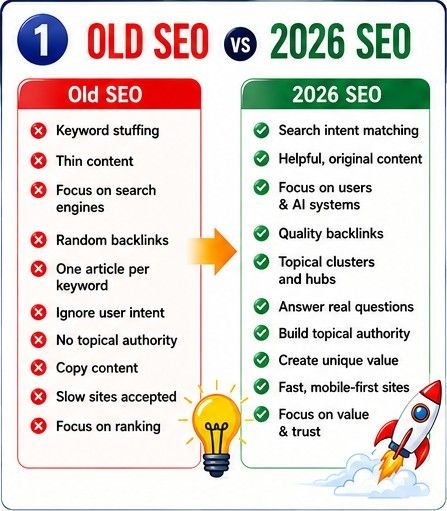
Old SEO vs 2026 SEO
| Old SEO | 2026 SEO |
|---|---|
| Target keywords first | Solve the reader’s problem first |
| Publish more articles | Publish better articles |
| Count keyword density | Match search intent |
| Copy competitors | Share original experience |
| Focus only on Google | Optimize for Google and AI search |
Is SEO Works in 2026?
Yes, SEO still works in 2026, but the way you do SEO marketing has changed. Google confirms that the same SEO fundamentals still matter for both traditional Search and AI-powered search experiences, as long as your content is helpful, original, and easy to understand.
You should also know that AI search is changing how people click websites. Recent industry reports show that many searches now end without a website click because users get quick answers directly in search results. That makes original and trustworthy content even more important for earning visibility and clicks.
Common Habits That Still Hurt Rankings
Stop doing these things if you want better rankings:
- Writing for search engines instead of readers.
- Publishing many thin AI articles.
- Stuffing the same keyword again and again.
- Copying competitor content.
- Ignoring search intent.
- Skipping internal links.
- Never updating old articles.
- Adding no real examples or experience.
Key Takeaway: The difference between old SEO vs 2026 SEO is simple: stop trying to impress Google’s algorithm and start becoming the most helpful answer for your reader. That mindset will improve your SEO marketing strategy and give your content a better chance to rank in both Google Search and AI-powered search experiences.
What Actually Changed in SEO During 2024–2026?
2026 SEO for AI and Search engines is very different from what you used a few years ago. Today, you need to help both people and AI understand your content, not just search engines.
The Biggest SEO Changes: 2024–2026
| Year | What Changed | What You Should Do |
|---|---|---|
| 2024 | Google launched AI Overviews for many searches. | Write clear answers near the top of your page. |
| 2025 | Google introduced AI Mode with follow-up questions and deeper search. | Cover related questions in one complete article. |
| 2026 | AI search becomes a normal part of Google Search. | Create original, trustworthy, and experience-based content. |
AI Overviews Give Fast Answers
Now, Google often shows an AI summary before the normal search results. Many users read that answer first and only click a website when they need more details.
So, your content must answer the main question quickly. Then, you should explain the topic with useful examples, practical steps, and fresh ideas.
AI Mode Changes How People Search
Google AI Mode lets people ask follow-up questions in the same search. Because of this, users search like they are talking to another person instead of typing short keywords.
For example:
- Old search: best SEO tool
- New search: Which SEO tool is best for a beginner with a small budget, and why?
This means your Website SEO strategy should answer complete questions instead of repeating one keyword.
Zero-Click Searches Are Growing
Many people now get their answer directly on the search page. They leave without opening any website, and this is called a zero-click search.
Because of this, your goal is not only to get clicks. You also want your content to become one of the trusted sources that Google and AI can reference.
Search Intent Beats Keyword Repetition
Google understands what people really want to know. Therefore, repeating the same keyword many times no longer helps your page rank better.
Instead, you should answer the reader’s question completely. Add examples, comparisons, checklists, and practical advice that solve the problem.
Entity-Based Search Is More Important
Google now connects topics, brands, people, products, and places instead of looking at keywords alone. This process is called entity-based search.
For example, if you write about AI SEO, naturally include related ideas like search intent, topical authority, helpful content, internal links, structured data, and user experience.
Google Rewards Experience and Trust
Google wants content created by people who know the topic well. Real examples, screenshots, case studies, personal testing, and honest advice make your content more trustworthy.
That is why copied articles and thin AI-written pages struggle to perform over time. Helpful content with real experience gives readers a better reason to trust you.
Key Takeaways
- Write for people first, then make your content easy for AI to understand.
- Answer the main question in the first few paragraphs.
- Focus on search intent instead of keyword repetition.
- Build trust with real experience and practical examples.
- Treat 2026 SEO for AI and Search engines as helping users find the best answer, not simply helping pages rank.
The New SEO Mindset You Need in 2026
To win with How to Change Your Mindset for SEO in 2026, you must stop chasing rankings and start solving real problems. This simple change improves your Website SEO, strengthens your SEO marketing, and helps your content appear in both Google Search and AI-powered search.
Google says the same SEO basics still matter for AI search. However, your content must be helpful, original, and easy for both people and AI systems to understand.
Stop Ranking Pages: Start Solving Problems
In the past, many people asked one question: “How can I rank this page?” Now ask a better question: “How can I completely solve this reader’s problem?”
When you answer every important question in one place, readers stay longer and trust your website more. As a result, search engines also understand that your page is useful.
Stop Targeting Keywords: Start Understanding Search Intent
Keywords still matter. However, search intent matters even more.
Before you write, ask yourself:
- What problem does the reader have?
- What answer do they expect?
- What action will they take after reading?
- What extra question might they ask next?
When you answer these questions, your content becomes much stronger than a page that only repeats keywords.
Stop Publishing More: Start Publishing Better
Many websites still publish hundreds of AI-written articles every month. However, quantity alone no longer builds trust.
Instead, create fewer articles with:
- Original examples
- Practical steps
- Updated facts
- Clear screenshots
- Personal observations
- Helpful comparisons
Google’s latest guidance recommends creating unique, people-first content instead of publishing pages only to attract search traffic.
Stop Writing for Google: Write for People First
Modern AI SEO begins with your reader. Then you make the page easy for search engines and AI systems to understand.
Use this simple process:
- Answer the main question early.
- Use clear headings.
- Keep paragraphs short.
- Add tables and bullet points.
- Explain every step with simple examples.
- Cover related questions on the same page.
This approach helps both readers and AI systems find important information quickly.
Old SEO vs Modern SEO Strategy
| Old mindset | New mindset |
|---|---|
| Rank pages | Solve problems |
| Target keywords | Understand search intent |
| Publish more | Publish better |
| Write for Google | Write for people first |
| Follow algorithms | Build trust and authority |
| Copy competitors | Share original experience |
Focus on Becoming the Best Answer
The future of SEO is not about finding shortcuts. Instead, it is about becoming the best answer for every search.
Google’s official guidance for 2026 explains that success in AI search still comes from strong SEO foundations, helpful content, technical quality, and real expertise. So, if you change your mindset first, your Website SEO, SEO marketing, and AI SEO strategy become stronger for both Google Search and AI search experiences.
The Exact Google SEO Framework for 2026
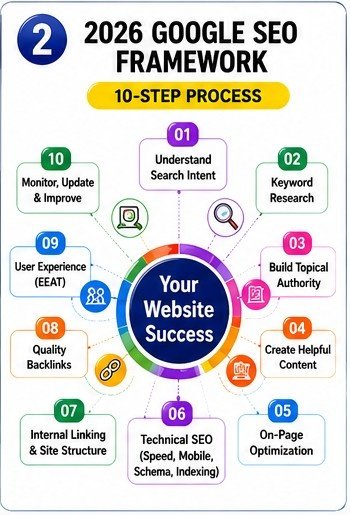
If you want to follow the exact Google SEO framework in 2026, stop thinking about tricks and start solving real problems. Google SEO for website success now depends on helpful content, strong website quality, and real experience instead of keyword stuffing.
Google also says you do not need special AI SEO hacks to appear in AI search. Instead, follow strong SEO basics because they also help your pages appear in AI Overviews and AI Mode.
How to Do SEO for Website Step-by-Step
Follow this simple workflow every time you publish a page.
User Search
      │
      ▼
Understand Search Intent
      │
      ▼
Research Topic + Entities
      │
      ▼
Create Original Content
      │
      ▼
Add Experience & Examples
      │
      ▼
Use Images & Visuals
      │
      ▼
Optimize On-Page SEO
      │
      ▼
Improve Technical SEO
      │
      ▼
Build Internal Links
      │
      ▼
Publish & Update Regularly
Step 1: Understand User Intent
First, learn why someone searches for your topic. Then write the exact answer they expect instead of guessing.
Ask yourself:
- What problem do they want to solve?
- What question do they want answered?
- What action will they take next?
Step 2: Build Topical Authority
Next, cover one topic from every important angle. This helps Google understand that your website has complete knowledge about the subject.
For example:
- Main guide
- Beginner guide
- Advanced guide
- Tools guide
- Common mistakes
- FAQs
Step 3: Research Entities, Not Just Keywords
After that, research important people, products, places, tools, and related topics. These connected ideas help search engines understand your content better than repeating one keyword many times.
Step 4: Create Original Information
Now add something readers cannot find everywhere else. Share your own examples, screenshots, case studies, checklists, or practical tips.
Step 5: Show First-Hand Experience
Next, prove that you have actually done the work. Real experience builds trust for both readers and search engines.
For example:
- Your own results
- Real project screenshots
- Lessons learned
- Common mistakes you fixed
Step 6: Add Supporting Visuals
Then make your page easier to understand with visuals. Images often explain complex ideas faster than long paragraphs.
Use:
- Flowcharts
- Tables
- Infographics
- Screenshots
- Checklists
Step 7: Optimize On-Page SEO
Now optimize every page before publishing. Keep everything clear and natural.
Check these items:
- Primary keyword in the title
- Helpful meta description
- Simple URL
- Clear H2 and H3 headings
- Short paragraphs
- Descriptive image alt text
- Internal links
- External trusted sources
Step 8: Optimize Off-Page SEO
Off-page SEO includes all optimization activities performed outside your website to improve its visibility in search engine results. It focuses on earning high-quality backlinks, increasing brand mentions, gaining customer reviews, and expanding your online presence to strengthen your website’s authority, trust, and credibility with search engines.
- Earn high-quality backlinks from authoritative, relevant websites.
- Publish original, link-worthy content that others naturally reference.
- Build relationships with bloggers, journalists, and industry experts.
- Use digital PR to gain mentions in trusted news and niche publications.
- Write valuable guest posts on reputable websites.
- Find and replace broken links with your relevant content.
- Get listed in trusted business and niche directories.
- Encourage genuine customer reviews on reputable platforms.
- Increase brand mentions through podcasts, webinars, and interviews.
- Stay active in relevant online communities without spamming.
- Share content on social media to increase visibility and link opportunities.
- Collaborate with influencers and complementary brands.
- Maintain consistent business information (Name, Address, Phone) across directories for local SEO.
- Monitor new and lost backlinks using SEO tools.
- Remove or disavow toxic backlinks only when necessary.
- Diversify anchor text to maintain a natural backlink profile.
- Track referral traffic, referring domains, and keyword rankings.
- Focus on long-term authority and trust instead of acquiring links quickly.
- Regularly analyze competitors’ backlink strategies for new opportunities.
- Continuously update and improve content to attract fresh backlinks naturally.
Step 9: Improve Technical SEO
Your content cannot rank well if your website performs poorly. Make sure every page loads quickly and works well on mobile devices.
Focus on:
- Fast loading speed
- Mobile-friendly design
- HTTPS security
- Clean website structure
- Easy crawling and indexing
Step 10: Strengthen Internal Linking
Connect related articles together with internal links. This helps visitors discover more content and helps search engines understand your website structure.
Link naturally to:
- Beginner guides
- Related tutorials
- Product reviews
- Comparison articles
- Category pages
Step 10: Update Content Regularly
Finally, review important pages every three to six months. Fresh examples, updated statistics, and current screenshots keep your content useful as Google Search and AI search continue to evolve.
Quick Google SEO Framework Checklist
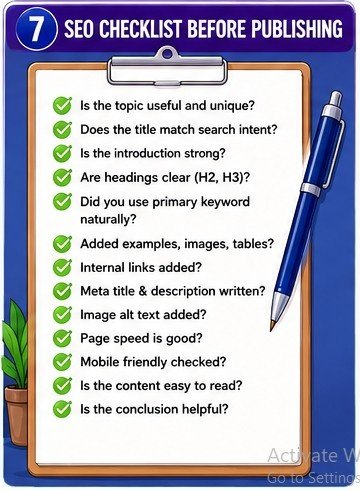
Use this checklist before publishing every page.
- ✅ Understand search intent.
- ✅ Build topical authority.
- ✅ Research entities and related topics.
- ✅ Add original information.
- ✅ Share first-hand experience.
- ✅ Use helpful visuals.
- ✅ Optimize on-page SEO.
- ✅ Improve technical SEO.
- ✅ Add internal links.
- ✅ Update content regularly.
This exact Google SEO framework gives you a practical way to improve Google SEO for website rankings in 2026. If you follow these steps consistently, your content becomes more useful for readers and easier for Google and AI-powered search to understand.
How to Write Content That Ranks for Google and AI
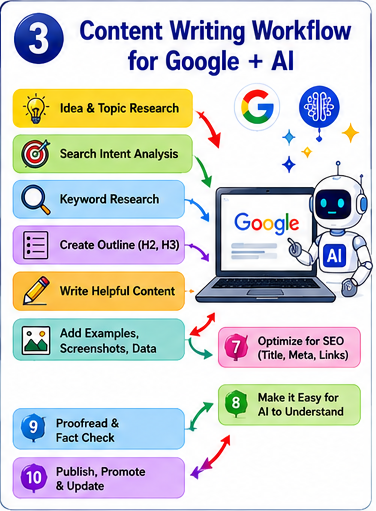
If you want SEO for content writing to work in 2026, change the way you write before you change your SEO tools. Your first goal is to solve one real problem better than every other page on Google.
Google says you should create unique, helpful, and people-first content because the same SEO basics also help your pages appear in AI search features like AI Overviews and AI Mode.
Start With Research, Not Writing
Never open a blank page and start writing. First, learn what people really want.
Before you write, answer these questions:
- What problem does the reader have?
- What answer do they expect first?
- What questions come next?
- Which examples will help them?
- Which facts need proof?
Next, search your main keyword on Google. Then study the top 10 results and note what each page covers.
After that, check the People Also Ask section and related searches. Finally, read Reddit, Quora, YouTube comments, and Google discussions to find real questions people ask.
Takeaway: Research saves time because you write exactly what readers need.
Answer the Main Question First
Do not make readers search for the answer. Give it within the first 100 words.
For example, if your title is How to Write SEO Content, explain the main process first. Then add details step by step.
This helps both readers and AI understand your page faster. It also improves your chance of appearing in AI-generated answers.
Takeaway: Give the direct answer first and explain it later.
Add Practical Examples
Readers trust examples more than long explanations. They can copy your method and use it on their own website.
Instead of saying “write better headings,” show one. Instead of saying “improve readability,” rewrite one paragraph.
| Poor Example | Better Example |
|---|---|
| Use keywords naturally. | Add your focus keyword in the title, first paragraph, one heading, image alt text, and conclusion only when it reads naturally. |
| Write useful content. | Answer the main question first, then explain each step with one real example and one common mistake. |
Takeaway: Every important idea should include one practical example.
Share Original Insights
AI can repeat common facts. You should add something readers cannot get everywhere.
Include:
- Your own experience
- Real screenshots
- Test results
- Case studies
- Mistakes you made
- Lessons you learned
- Updated examples
Google now recommends creating “non-commodity content.” This means adding value beyond information already available on thousands of websites.
Takeaway: Original experience makes your content harder to copy.
Answer Related Questions Naturally
A good article answers more than one question. This keeps readers on your page longer.
For example, if your topic is SEO content writing for beginners, also answer:
- What is SEO content writing?
- How many keywords should you use?
- Does AI-written content rank?
- How long should a blog post be?
- Which free SEO tools help beginners?
These questions improve topical coverage without stuffing keywords.
Takeaway: Solve the whole topic instead of one keyword.
Use a Simple Structure
The best SEO for content writing follows the same simple flow every time. Readers understand it quickly, and search engines understand it too.
Use this structure:
- Answer the main question.
- Explain why it matters.
- Show the process.
- Add an example.
- Explain common mistakes.
- Recommend useful tools.
- Finish with a short summary.
This structure also makes your article easier for AI systems to summarize.
Takeaway: Follow one clear structure from start to finish.
End Every Section With One Clear Lesson
Do not leave readers wondering what to do next. End each section with one short action they can remember.
Ask yourself:
- What should the reader do now?
- What mistake should they avoid?
- What is the most important lesson?
Small summaries improve understanding and make long articles easier to scan.
Key Points
- Research before writing.
- Answer the main question first.
- Add real examples.
- Share your own experience.
- Cover related questions.
- Follow one simple structure.
- End every section with one practical takeaway.
Now you know that SEO for content writing is no longer about adding more keywords. It is about giving readers the best answer, backed by real experience, so both Google and AI systems can trust and recommend your content.
H2: How to Target Easy and Hard Keywords
Your focus keyphrase: how to write content for hard keywords starts with one simple decision. First, choose whether your website can realistically compete for that keyword.
Easy Keywords: Build Traffic Faster
Easy keywords have low competition. So, they help new websites get traffic faster.
You should target easy keywords if your blog is new. Also, choose keywords with clear search intent and useful questions that people ask every day.
Examples:
- What is SEO stand for
- SEO content writing for beginners
- Free SEO tools
- How to use Google Search Console
Best practice:
- Write one complete article.
- Answer the main question first.
- Add practical examples.
- Link to related posts.
- Update the article every few months.
Many new websites can start seeing rankings within 3 to 6 months if the content is helpful, original, and matches user intent. However, the exact time depends on your niche, competition, and website authority.
Hard Keywords: Build Authority First
Learning how to write content for hard keywords needs more planning. Hard keywords have strong competition because many trusted websites already rank for them.
For example:
- Best SEO tool
- SEO marketing
- Website SEO
- AI SEO
Do not write only one article for these keywords. Instead, build a group of related articles around the same topic.
Before targeting hard keywords:
- Publish supporting articles.
- Build topical authority.
- Add internal links.
- Share original examples.
- Earn relevant backlinks from trusted websites.
Today, Google values topical authority, high-quality content, and relevant backlinks much more than publishing many short articles. Quality and relevance matter more than quantity.
Easy vs Hard Keywords: Which Should You Choose?
| Keyword Type | Best Time to Target | Expected Ranking Time* | Recommended Article Depth |
|---|---|---|---|
| Easy Keywords | New website | 3–6 months | 1,200–1,800 words |
| Medium Keywords | After building some authority | 6–9 months | 1,800–2,500 words |
| Hard Keywords | After building topical authority | 9–18+ months | 2,500–4,000+ words with supporting articles |
*Ranking time varies based on your niche, content quality, website trust, competition, and backlinks.
Key Takeaways
- Start with easy keywords if your website is new.
- Build topical authority before targeting hard keywords.
- Write one complete article instead of many thin articles.
- Add supporting articles and internal links.
- Focus on helping readers solve one problem completely.
Now you know how to write content for hard keywords and easy keywords. Start small, build trust step by step, and then move toward competitive keywords with confidence.
SEO Strategies for Different Website Types
Your how to make SEO for multi niche strategy depends on your website type. Each website has different goals, so you should build your SEO plan around how your visitors search and what they expect.
Google’s latest guidance for AI Search says you do not need a separate SEO method for AI. Instead, create helpful, original, and easy-to-crawl content for both Google Search and AI search experiences.
Multi-Niche Website
A multi-niche website covers many topics, so you need clear content silos. Create separate categories, and publish related articles inside each category to build strong topic authority.
Next, connect related articles with internal links. This helps visitors find more content, and it also helps search engines understand your website structure.
Quick tips:
- Create one category for each topic.
- Publish 20–30 related articles per category.
- Link articles within the same category.
- Keep URLs simple and descriptive.
Micro-Niche Website
A micro niche SEO strategy focuses on one small topic only. This gives you lower competition and helps you build authority much faster than a broad website.
Go deep instead of writing about many subjects. Answer every question your audience may ask, and update those articles whenever new information becomes available.
Quick tips:
- Cover one topic completely.
- Write supporting articles around the main topic.
- Add real examples and screenshots.
- Update content every 3–6 months.
News Website
A news website SEO strategy depends on speed and trust. Publish breaking news quickly, but always verify facts before you click the Publish button.
After publishing, update the article as new details become available. Google rewards fresh, accurate, and trustworthy information, especially for news-related searches.
Quick tips:
- Publish verified news first.
- Update stories regularly.
- Add the publication date and last updated date.
- Link to trusted sources.
- Avoid misleading headlines.
Tutorial Website
A tutorial website SEO strategy works best with evergreen content. Write simple step-by-step guides that readers can follow without confusion.
Review your tutorials often because software, tools, and technology change every year. Fresh screenshots, updated steps, and new examples help your content stay useful for both readers and search engines.
Quick tips:
- Use numbered steps.
- Add screenshots and diagrams.
- Explain one task at a time.
- Update guides after major product changes.
Organizational Website
An organizational website SEO strategy should build trust before selling products or services. Visitors want proof that your organization is real, experienced, and reliable.
Create strong trust pages with service details, customer reviews, case studies, contact information, and structured data where appropriate. These pages help search engines understand your business and can improve your visibility in both traditional and AI-powered search.
Quick tips:
- Create an About Us page.
- Build detailed service pages.
- Publish customer reviews.
- Add real case studies.
- Use structured data for your business.
- Keep contact information updated.
Which SEO Strategy Fits Your Website?
| Website Type | Main SEO Focus | Best Content |
|---|---|---|
| Multi-niche | Content silos and category authority | Topic clusters |
| Micro-niche | Deep topical coverage | Expert guides |
| News | Freshness and trust | Breaking news |
| Tutorial | Evergreen updates | Step-by-step tutorials |
| Organizational | Trust and credibility | Service pages, reviews, case studies |
The best how to make SEO for multi niche or any other website type is simple: match your SEO strategy to your website’s purpose. When you organize content well, publish original information, and update it regularly, you improve your chances of earning visibility in both Google Search and AI-powered search results.
Best Free and Paid SEO Tools Worth Using in 2026
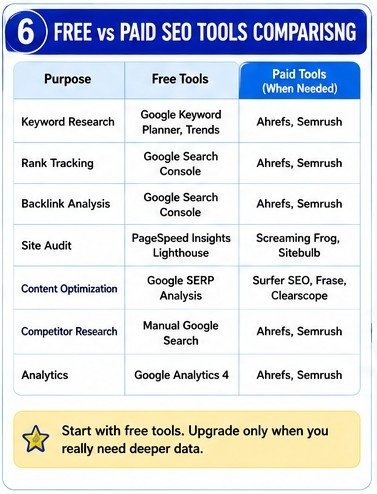
Choosing the right SEO tool saves your time and helps you make better SEO decisions. However, no single SEO Checker can improve your rankings by itself, so use tools to find problems and then fix them.
Best SEO Tools for Every Purpose
| Purpose | Free Tool | Paid Tool |
|---|---|---|
| Keyword research | Google Keyword Planner | Ahrefs |
| Technical audit | Google Search Console | Screaming Frog |
| Website performance | Google PageSpeed Insights | Semrush |
| Content optimization | Google Search | Surfer SEO |
| Competitor research | Google Search | Ahrefs |
Start with Free SEO Tools
If you are a beginner or have a new website, free tools are enough to learn SEO. They also use Google’s own data, so you can trust the reports for indexing, crawling, and search performance.
Use these free tools first:
- Google Keyword Planner: Find keyword ideas and search demand.
- Google Search Console: Check indexing, clicks, impressions, and crawl issues.
- Google PageSpeed Insights: Improve page speed and Core Web Vitals.
- Google Search: Study search intent and analyze your competitors.
When Should You Buy Paid SEO Tools?
Paid tools become useful when your website grows. They save hours of work and give deeper keyword, backlink, and competitor data.
Choose a paid tool if you:
- Publish articles every week.
- Manage many websites.
- Track hundreds of keywords.
- Research competitors often.
- Need detailed website audits.
Many SEO professionals use Ahrefs, Semrush, Screaming Frog, and Surfer SEO together because each tool solves a different problem.
Which Tool Does What?
- Ahrefs: Best for keyword research, backlinks, and competitor analysis.
- Semrush: Best all-in-one SEO platform for research, tracking, and reporting.
- Screaming Frog: A powerful SEO analyzer that finds broken links, duplicate pages, redirect issues, and technical SEO errors. Its free version crawls up to 500 URLs, while the paid version removes this limit and adds advanced features.
- Surfer SEO: Helps you improve your content by comparing it with top-ranking pages.
Do Not Depend Only on Tool Scores
A high score from a Google SEO Checker or SEO Optimizer does not guarantee better rankings. Google ranks pages that satisfy real users, not pages that simply achieve perfect tool scores.
Avoid these common mistakes:
- Chasing a 100/100 SEO score.
- Copying every competitor.
- Stuffing keywords to increase optimization scores.
- Ignoring search intent.
- Publishing content without real examples or experience.
Key Takeaway
The best SEO tool is the one that helps you make better decisions, not the one with the highest score. Start with Google’s free tools, then invest in paid software only after your website begins growing and your SEO needs become more advanced.
Common SEO Mistakes That Still Hurt Rankings
Your SEO mindset in 2026 matters more than any shortcut. If you avoid these common mistakes, you give both Google Search and AI search a better reason to trust your content. Google also says its AI search features still rely on the same strong SEO basics: create helpful, people-first content and follow good technical SEO practices.
| SEO Mistake | Fix It |
|---|---|
| Keyword stuffing | Use your main keyword naturally. Write for people first. |
| Publishing hundreds of AI articles | Publish fewer articles with original ideas and real examples. |
| Ignoring search intent | Answer the exact question your reader asks. |
| Weak introductions | Explain the answer within the first few lines. |
| No internal links | Link to your related articles naturally. |
| No original experience | Add your own screenshots, results, or practical tips. |
| Outdated content | Review and refresh important pages every 3–6 months. |
| Poor page speed | Compress images and remove unnecessary scripts. |
| Missing structured data | Add schema markup where it helps search engines understand your page. |
Keyword Stuffing
Adding the same keyword again and again does not improve Website SEO. Instead, use related words naturally because Google understands the topic, not just exact keyword matches.
Here, you have to remember Keyword Cannibalization which kills your unique content publication.
Fix It: Write naturally and place your focus keyphrase only where it helps the reader.
Publishing Hundreds of AI Articles
Using AI can save time, but publishing large amounts of low-value content rarely builds trust. Google accepts AI-generated content when it is useful, accurate, reviewed by humans, and created to help people.
Fix It: Edit every AI draft, add your own experience, and include fresh examples before publishing.
Ignoring Search Intent
A page fails when it answers a different question than the one your visitor searched for. Your article should solve one clear problem from the beginning.
Fix It: Search your target keyword first and match the reader’s real goal before writing.
Weak Introductions
Many visitors leave within seconds if they cannot find the answer quickly. Therefore, a slow opening can reduce engagement and trust.
Fix It: Give the direct answer in the first two or three sentences, then explain the details.
No Internal Links
Single articles rarely build authority on their own. Internal links help readers discover more pages and help search engines understand your website structure.
Fix It: Link to 3–5 relevant articles using clear anchor text.
No Original Experience
Generic content looks the same everywhere on the internet. However, real examples make your article more useful and memorable.
Fix It: Share screenshots, case studies, testing results, or lessons you learned yourself.
Outdated Content
SEO changes every year, especially after major Google updates. Old information slowly loses value if you never review it.
Fix It: Update statistics, tools, screenshots, and examples every few months.
Poor Page Speed
Slow pages frustrate visitors and can reduce conversions. Large images, heavy scripts, and unused code often cause the biggest delays.
Fix It: Compress images, enable caching, and test your pages with performance tools before publishing.
Missing Structured Data
Structured data helps search engines understand your content and can make your pages eligible for rich search features. While it is not required for Google AI features, it remains an important part of a strong SEO strategy.
Fix It: Add the correct schema markup for articles, FAQs, organizations, and authors where appropriate.
Avoid these mistakes and your SEO mindset in 2026 will become much stronger. Focus on helping real people first, and then make your content easy for Google and AI search systems to understand.
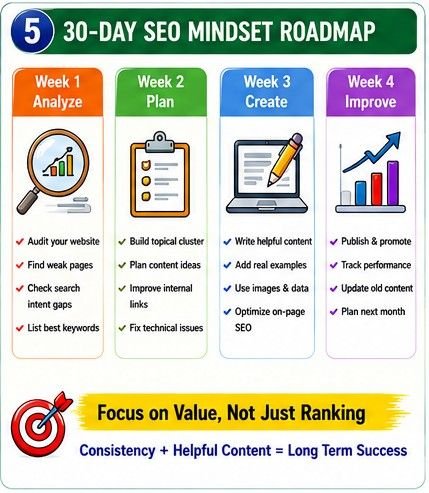
30-Day SEO Mindset Action Plan
Your 30-day SEO mindset action plan helps you stop guessing and start improving your website with a clear process. Instead of chasing every Google update, focus on small daily tasks that build long-term SEO success for both Google Search and AI search.
Week 1: Audit Your Website First
Start by checking every important page on your website. Then find pages with little value, old facts, broken links, duplicate topics, or low traffic.
Next, study what your readers really want before writing anything new. Search the same keyword in Google and note the questions, search intent, and content type that already rank.
Your Week 1 checklist:
- Audit your website.
- Remove or improve thin content.
- Check page titles and headings.
- Find pages with low traffic.
- Research search intent for your main keywords.
Week 2: Build Topic Clusters
Now connect related articles around one main topic. This helps Google and AI systems understand your expertise much better.
After that, improve your internal links. Every important article should link to related pages using natural anchor text.
| Task | Goal |
|---|---|
| Build topical clusters | Increase topical authority |
| Add internal links | Help users and search engines |
| Update category pages | Improve website SEO |
Week 3: Improve Existing Content
Next, update your old articles instead of writing only new ones. Add fresh facts, recent examples, better screenshots, and practical tips from your own experience.
Then improve every image on the page. Use clear file names, descriptive alt text, and helpful diagrams that make learning easier.
Focus on these updates:
- Add original examples.
- Replace outdated information.
- Improve images and charts.
- Answer new reader questions.
- Refresh the publish date only after meaningful updates.
Week 4: Measure and Plan
Finally, check your results with Google Search Console and Google Analytics. Look at clicks, impressions, rankings, and pages that are growing or losing traffic.
After that, create your next month’s content plan. Build new articles around your best-performing topics instead of chasing random keywords.
Track these SEO metrics:
- Organic clicks.
- Impressions.
- Average position.
- Indexed pages.
- Internal link growth.
- Updated content performance.
Key Takeaways
Your SEO mindset should focus on steady improvement, not quick tricks. Google’s latest guidance for AI search also recommends building unique, helpful, people-first content while following strong SEO basics because those same practices support visibility in both traditional Search and AI-powered experiences.
Final SEO Mindset Checklist for 2026
Your SEO mindset for 2026 should always start with your reader, not your ranking. If you follow this simple checklist before publishing, your content becomes more useful for both Google Search and AI search.
Solve a Real User Problem
Before you write, ask yourself one question: What problem will your reader solve after reading this page? Then answer that problem clearly with practical steps instead of adding extra words.
Match Search Intent
Next, make sure your page matches what people really want to find. If someone searches for a guide, give them a complete guide instead of a short sales page.
Add First-Hand Experience
Share your own results, screenshots, case studies, or lessons whenever you can. Real experience builds trust, and Google recommends creating unique, people-first content that adds value beyond common information.
Use Clear Headings
Break your content into short sections with simple headings. This helps readers scan your page quickly, and it also makes your content easier for search engines and AI systems to understand.
Include Comparisons and Examples
Compare methods, tools, or strategies whenever possible. Then add a simple example so your reader can use your advice without guessing.
Link Related Articles
Connect your related blog posts with helpful internal links. This keeps readers on your website longer and helps search engines understand your topic better.
Optimize Images
Rename every image with a clear file name and write useful alt text. Also, compress large images because faster pages create a better user experience.
Add Structured Data
Use structured data where it fits your content, such as articles, FAQs, or how-to guides. While Google says there is no special schema only for AI Search, accurate structured data still helps search engines understand your pages and qualify for rich results.
Review Your Content Every 3–6 Months
Update old articles with fresh facts, better examples, new screenshots, and current SEO practices. Regular updates keep your content useful as Google Search and AI search continue to change.
Write for Readers First
Finally, write naturally for people and make your content easy for machines to read with clear headings, simple language, and logical structure. This SEO mindset for 2026 helps your website stay useful, trustworthy, and ready for both traditional search results and AI-powered search experiences.
Frequently Asked Questions
If you want to change your mindset for SEO in 2026, these quick answers will help you make better decisions. They also clear up common myths, so you can spend your time on work that brings long-term results.
1. Does SEO still work in 2026?
Yes. SEO still works in 2026, but the way you do it has changed.
Google says its AI search features still use its core Search ranking and quality systems. So, if you create helpful, original, and trustworthy content, you can rank in both Google Search and AI search results.
2. Is AI replacing SEO?
No. AI is changing SEO, not replacing it.
You can use AI to research ideas, build outlines, and improve your writing. Still, your own experience, examples, and useful advice make your content stand out.
3. Can AI-written content rank?
Yes. However, AI content ranks only when it gives real value.
Always review AI drafts before you publish. Then, add your own examples, screenshots, data, and practical tips to make the content unique.
4. What is the biggest SEO change in 2026?
The biggest change is the growth of AI search and zero-click searches.
Google now answers many questions directly on the results page, so your content must become the best source that AI and people trust. Recent studies show that about 68% of Google searches end without a click.
5. How long does SEO take now?
SEO is still a long-term strategy.
Most new websites need 6 to 12 months to see strong results. An established website with quality content may see improvement within 2 to 6 months, depending on competition and content quality.
6. Should beginners still learn SEO?
Yes. SEO remains one of the best digital skills to learn.
Start with simple topics first. Then, write helpful articles every week, improve old posts, and learn from your performance in Google Search Console.
7. What is the difference between SEO and AI SEO?
Traditional SEO focuses on ranking pages in search results. AI SEO focuses on making your content easy for AI systems to understand, summarize, and cite.
The goal is now the same: create useful content that answers real questions clearly. Google recommends following strong SEO practices for both traditional and AI-powered search.
| Topic | Traditional SEO | AI SEO |
|---|---|---|
| Main goal | Rank in search results | Get cited in AI answers and search |
| Focus | Keywords and search intent | Clear answers, trust, and structure |
| Success | Organic clicks | Visibility, citations, and clicks |
8. How often should I update content?
Update important articles every 3 to 6 months.
Also, update them sooner after major Google changes, new statistics, product updates, or industry news. Fresh examples and current facts help keep your content useful.
9. Do backlinks still matter?
Yes. Good backlinks still matter.
However, quality is more important than quantity. A few trusted links from relevant websites are much better than hundreds of low-quality links.
10. What is the best free SEO tool?
There is no single best tool for every task. Instead, use a small set of free tools together.
- Google Search Console: Track indexing, clicks, and keywords.
- Google Analytics 4: Measure visitors and user behavior.
- Google Trends: Find growing search topics.
- Google Keyword Planner: Discover keyword ideas.
- Google PageSpeed Insights: Improve website speed.
These free tools give you enough data to grow most new websites before you invest in paid SEO tools.
Key Takeaways
- SEO still works in 2026.
- AI changes SEO, but it does not replace it.
- Helpful and original content performs best.
- Update your articles every 3–6 months.
- Build quality backlinks instead of many backlinks.
- Use Google Search Console and other free Google tools first.
- Write for people first, then make your content easy for search engines and AI to understand.
If you change your mindset for SEO in 2026 and focus on solving real problems instead of chasing shortcuts, you will build a website that can grow in both Google Search and AI-powered search for years to come.